The production of sulphuric acid is a cornerstone of the modern industrial world, serving as a critical component in countless processes, from fertilizer manufacturing to metal processing and petroleum refining. Its widespread use underscores its global importance, with demand consistently reflecting economic activity and population growth. Understanding the nuances of its production, including the processes, technologies, and innovations, is crucial for professionals across various sectors.
Globally, the demand for sulphuric acid is substantial, with estimates suggesting annual production exceeding 250 million tonnes. This demand is primarily driven by the phosphate fertilizer industry, which consumes approximately 60-70% of the world's sulphuric acid output. According to the World Bank, increasing agricultural needs, especially in developing nations, are projected to further escalate this demand. Efficient and sustainable production methods are therefore vital to meeting these demands while minimizing environmental impact.
The production of sulphuric acid isn’t merely a chemical process; it’s a vital link in the supply chains that support food production, resource extraction, and technological advancements. Its role extends beyond industrial applications, impacting essential sectors like water treatment and even the production of detergents. Therefore, optimizing the production of sulphuric acid directly contributes to global economic stability and overall societal well-being.
Introduction to the production of sulphuric acid
The production of sulphuric acid centers around transforming sulfur dioxide (SO2) into sulfuric acid (H2SO4) through a series of carefully controlled chemical reactions. This process, largely dominated by the Contact Process, is highly efficient and allows for large-scale production to meet global demand. Understanding the intricacies of this process, from raw material sourcing to waste management, is crucial for maintaining both economic viability and environmental responsibility.
The historical development of the production of sulphuric acid reflects advancements in chemical engineering and a growing understanding of reaction kinetics. Early methods were less efficient and produced lower-quality acid. However, the introduction of the Contact Process in the mid-19th century revolutionized the industry, significantly increasing yields and reducing production costs, paving the way for the widespread use of sulphuric acid in various applications.
The Contact Process: A Core Methodology
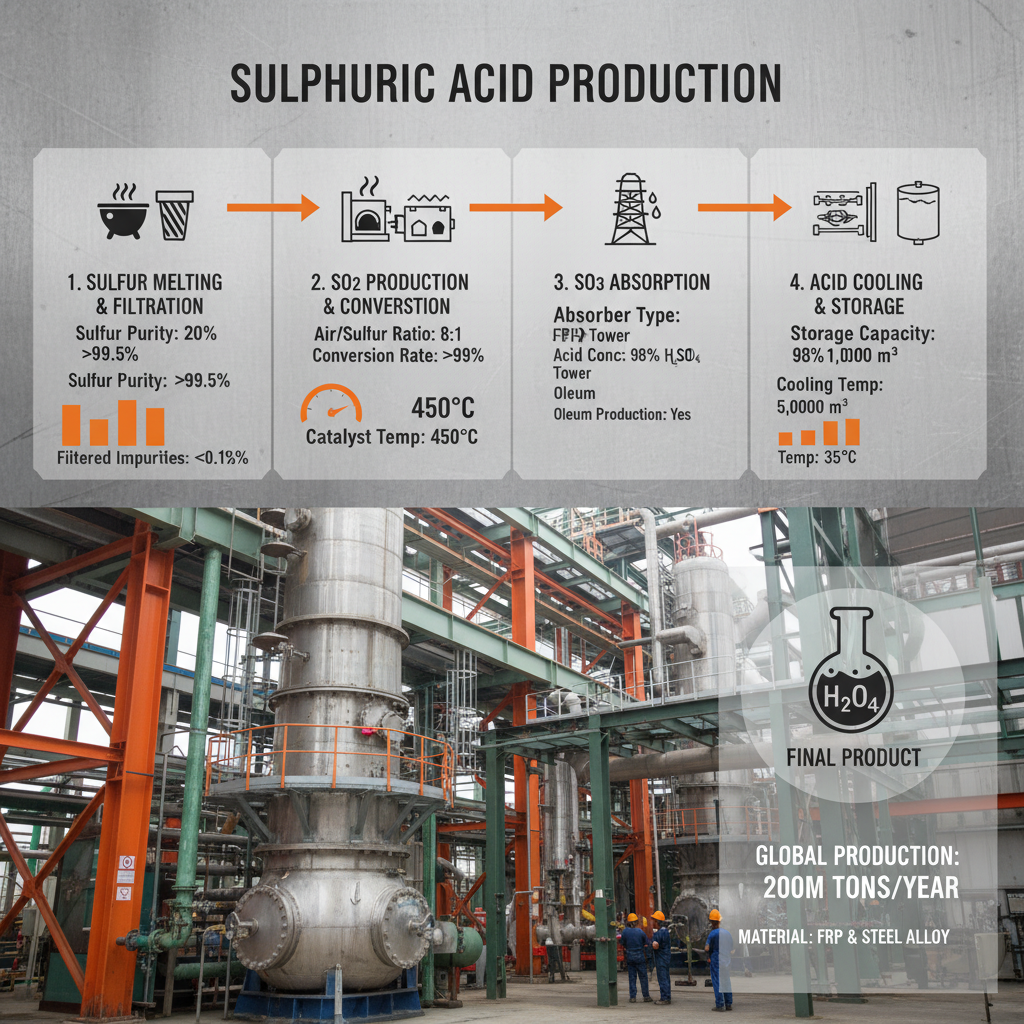
The Contact Process, the dominant method for the production of sulphuric acid, involves three key stages: sulfur burning, catalytic oxidation, and absorption. First, sulfur is burned to produce sulfur dioxide (SO2). This gas is then passed over a vanadium pentoxide (V2O5) catalyst to convert it to sulfur trioxide (SO3). Finally, SO3 is absorbed into concentrated sulfuric acid to create oleum, which is then diluted with water to produce the desired concentration of sulphuric acid. The efficiency of each step is critical for optimizing overall production.
Maintaining optimal conditions during the catalytic oxidation stage is paramount. Temperature and pressure must be carefully controlled to maximize the conversion of SO2 to SO3. The catalyst plays a crucial role in lowering the activation energy of the reaction, increasing the rate of conversion. Furthermore, impurities in the SO2 gas stream can poison the catalyst, reducing its effectiveness and requiring periodic replacement.
The absorption stage also requires careful attention. Utilizing concentrated sulfuric acid as the absorbent ensures efficient SO3 capture and prevents the formation of a corrosive mist. The resulting oleum, a solution of SO3 in H2SO4, is then diluted with water, generating heat that needs to be managed to maintain the stability and quality of the final product.
Key Raw Materials and Their Sourcing
The primary raw material for the production of sulphuric acid is sulfur. This can be obtained from various sources, including elemental sulfur recovered from natural gas and petroleum refining, pyrite (iron sulfide) ores, and volcanic deposits. The choice of sulfur source often depends on economic factors and geographical location. Increasingly, the recovery of sulfur from sour gas and oil sands is becoming a significant source.
The purity of the sulfur source directly impacts the quality of the resulting sulphuric acid. Impurities, such as arsenic and halogens, can contaminate the product and require additional purification steps. Moreover, the environmental impact of sulfur sourcing must be considered, with a preference for recovering sulfur as a byproduct of other industrial processes rather than mining it directly from the earth.
Oxygen, another essential raw material, is typically sourced from air separation units or, in some cases, directly from the atmosphere. The availability and cost of oxygen can influence the overall production economics. Proper handling and compression of oxygen are crucial for safety and efficiency within the production process.
Efficiency, Purity, and Environmental Considerations
Maximizing the efficiency of the production of sulphuric acid is vital for economic competitiveness. This involves optimizing process parameters, minimizing energy consumption, and reducing waste generation. Implementing heat recovery systems, utilizing advanced catalysts, and employing sophisticated process control technologies are key strategies for improving efficiency.
The purity of the final product is crucial for many applications, particularly in the electronics and pharmaceutical industries. Stringent quality control measures, including regular analysis and purification steps, are necessary to meet these demanding requirements. The presence of even trace amounts of impurities can significantly impact the performance and reliability of end products.
Production of Sulphuric Acid: Efficiency Metrics
Global Distribution and Major Production Hubs
The production of sulphuric acid is geographically concentrated, with major production hubs located in regions with abundant sulfur resources and high industrial demand. China is currently the world's largest producer, followed by the United States, India, and Russia. These countries serve as key suppliers to both domestic and international markets.
Proximity to phosphate rock deposits often drives the location of sulphuric acid plants, as a significant portion of the acid is used in the production of phosphate fertilizers. This concentration of production in specific regions can create logistical challenges and vulnerabilities in the global supply chain, highlighting the importance of diversified sourcing and resilient infrastructure.
Benefits and Sustainability of Optimized Production
Optimizing the production of sulphuric acid offers significant benefits, including reduced production costs, improved product quality, and a smaller environmental footprint. Lower energy consumption translates to lower operating expenses and reduced greenhouse gas emissions. Minimizing waste generation reduces the need for costly disposal and promotes resource conservation.
Sustainability is increasingly becoming a key driver of innovation in the sulphuric acid industry. Developing technologies that allow for the recovery and reuse of waste acid, utilizing renewable energy sources, and implementing closed-loop systems are all crucial steps towards creating a more sustainable production process.
Future Innovations in the production of sulphuric acid
Future innovations in the production of sulphuric acid are focused on improving efficiency, reducing environmental impact, and exploring alternative feedstocks. Research is underway to develop more active and selective catalysts, enabling lower operating temperatures and higher conversion rates. The use of membrane technology for SO3 absorption is also gaining traction, offering potential advantages in terms of energy efficiency and product purity.
The exploration of alternative sulfur sources, such as hydrogen sulfide (H2S) from biogas and industrial waste streams, offers the potential to reduce reliance on traditional sulfur sources and promote circular economy principles. Furthermore, advancements in process control and automation are enabling more precise and responsive operation, leading to further optimization of the production process.
The integration of digital technologies, such as artificial intelligence and machine learning, is poised to revolutionize the industry, allowing for predictive maintenance, real-time optimization, and improved process monitoring. These technologies will not only enhance efficiency but also contribute to a safer and more reliable operating environment.
Analysis of Key Factors Impacting the Production of Sulphuric Acid
| Factor |
Impact on Efficiency |
Environmental Consideration |
Cost Implication |
| Catalyst Type |
8/10 (High activity & selectivity) |
6/10 (Vanadium-based catalysts have environmental concerns) |
7/10 (Initial cost can be high, but long-term efficiency gains) |
| Raw Material Purity |
9/10 (Minimizes catalyst poisoning & corrosion) |
8/10 (Reduced waste generation & environmental contamination) |
6/10 (Higher purity raw materials often come at a premium) |
| Heat Recovery System |
7/10 (Significant energy savings & reduced fuel consumption) |
9/10 (Lower greenhouse gas emissions & reduced environmental impact) |
8/10 (Initial investment can be substantial, but long-term ROI is high) |
| Process Control Automation |
8/10 (Precise control of process parameters & optimization) |
7/10 (Reduced process variability & minimized emissions) |
7/10 (Initial investment in automation systems & training) |
| Waste Acid Management |
6/10 (Recycling reduces raw material demand & waste disposal costs) |
10/10 (Minimizes environmental pollution & promotes circular economy) |
9/10 (Cost-effective waste management solution & potential revenue generation) |
| Plant Location & Logistics |
7/10 (Proximity to raw materials & markets reduces transportation costs) |
5/10 (Potential environmental impact of transportation & infrastructure) |
8/10 (Significant impact on overall production costs) |
FAQS
The production of sulphuric acid can contribute to air pollution through the release of sulfur dioxide (SO2) if not properly controlled. Acid rain, caused by SO2 emissions, can damage ecosystems and infrastructure. Additionally, improper handling and disposal of waste acid can lead to soil and water contamination. Modern plants utilize advanced emission control technologies and waste management practices to mitigate these concerns, focusing on scrubbing SO2 and recycling waste streams.
Older methods, such as the lead chamber process, were significantly less efficient and produced lower-quality acid. The Contact Process utilizes a vanadium pentoxide catalyst to convert sulfur dioxide to sulfur trioxide, achieving much higher conversion rates and producing a purer product. The Contact Process also requires less energy and generates less waste, making it a more sustainable and cost-effective option. This has become the modern standard in the production of sulphuric acid.
Sulphuric acid is a highly corrosive substance, requiring stringent safety precautions. Personal protective equipment (PPE), including gloves, goggles, and acid-resistant clothing, is essential. Proper ventilation is crucial to prevent inhalation of acid fumes. Emergency eyewash stations and safety showers should be readily available. Spill containment and neutralization procedures must be in place to address accidental releases.
Waste acid can be neutralized with lime or other alkaline materials, but this generates large volumes of gypsum waste. More sustainable approaches include acid recovery and regeneration processes, where the acid is concentrated and purified for reuse. Waste acid can also be used in other industrial applications, such as wastewater treatment or mineral processing, promoting a circular economy approach.
Catalyst performance is paramount in the Contact Process. The vanadium pentoxide catalyst facilitates the conversion of sulfur dioxide to sulfur trioxide. Catalyst activity and selectivity directly impact the efficiency of this crucial step. Catalyst poisoning from impurities in the feed gas can reduce performance, necessitating regular monitoring and replacement. Developing more robust and resistant catalysts is a key area of ongoing research.
Emerging trends include utilizing renewable energy sources to power production facilities, implementing carbon capture technologies to reduce greenhouse gas emissions, and exploring alternative sulfur sources, such as recovered sulfur from industrial waste streams. The development of membrane-based separation technologies and advanced process control systems is also contributing to more sustainable and efficient production methods.
Conclusion
The production of sulphuric acid remains a foundational process within numerous industries, impacting global food production, resource management, and technological advancement. Optimizing this process – through advancements in catalysis, waste management, and energy efficiency – is not merely an economic imperative but a critical step towards a more sustainable and resilient industrial future. A holistic approach encompassing raw material sourcing, process control, and environmental stewardship is essential.
Looking ahead, continued innovation in catalyst development, the integration of digital technologies, and a commitment to circular economy principles will be crucial for addressing the challenges and opportunities facing the sulphuric acid industry. Further research into alternative feedstocks and sustainable production methods will ensure that this vital chemical remains a cornerstone of a thriving and responsible global economy. Visit our website for more information: the production of sulphuric acid.