Nov 30,2025

Discover Durable Fiber Tanks with Glass Fibers for Industry and Beyond

Fiber Tank with Glass: A Durable Solution Transforming Storage Globally

If you’ve ever pondered how a simple yet sophisticated container can solve complex storage challenges worldwide, then the fiber tank with glass deserves your attention. These tanks aren’t just containers; they’re the backbone for sustainable storage solutions in industries ranging from water management to chemical processing. Understanding their design and global impact reveals why they resonate in sectors striving for resilience, efficiency, and safety.

Global Context: Why Fiber Tanks with Glass Matter

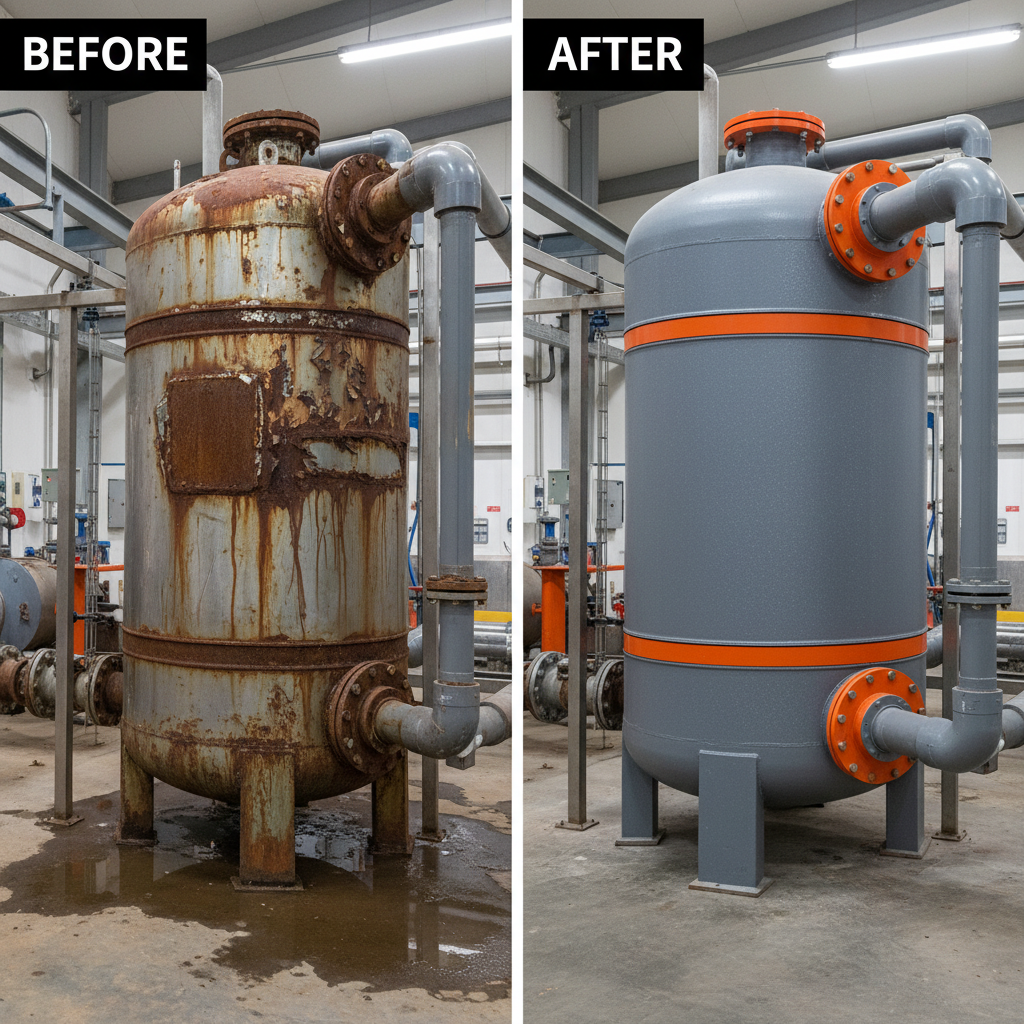
Globally, industries are racing to adopt storage solutions that are lightweight, corrosion-resistant, and easy to install. According to the UN Environment Programme, over 40% of global water infrastructure challenges stem from corrosion and leakage issues, costing billions annually. Fiber tanks reinforced with glass fibers strike directly at this problem by offering tanks that resist chemical corrosion and physical wear, especially critical in harsh environmental zones.

Oddly enough, a seemingly niche product like fiber glass tanks is making massive waves — especially in developing countries, disaster-relief efforts, and remote industrial operations. When infrastructure can’t keep up with demand or environmental challenges, these tanks step in to bridge that gap efficiently.

What Exactly Is a Fiber Tank with Glass?

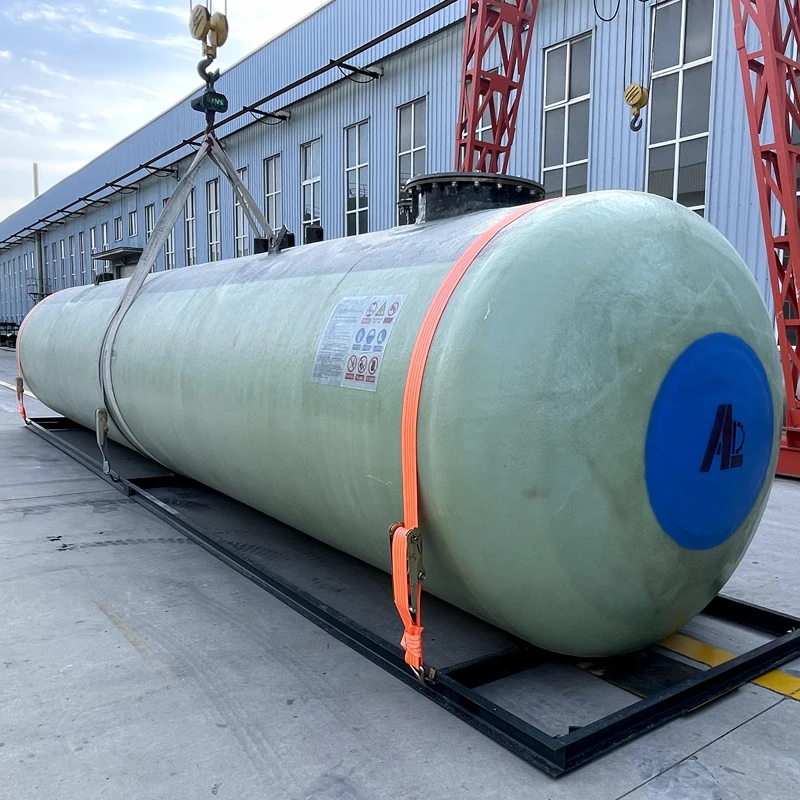
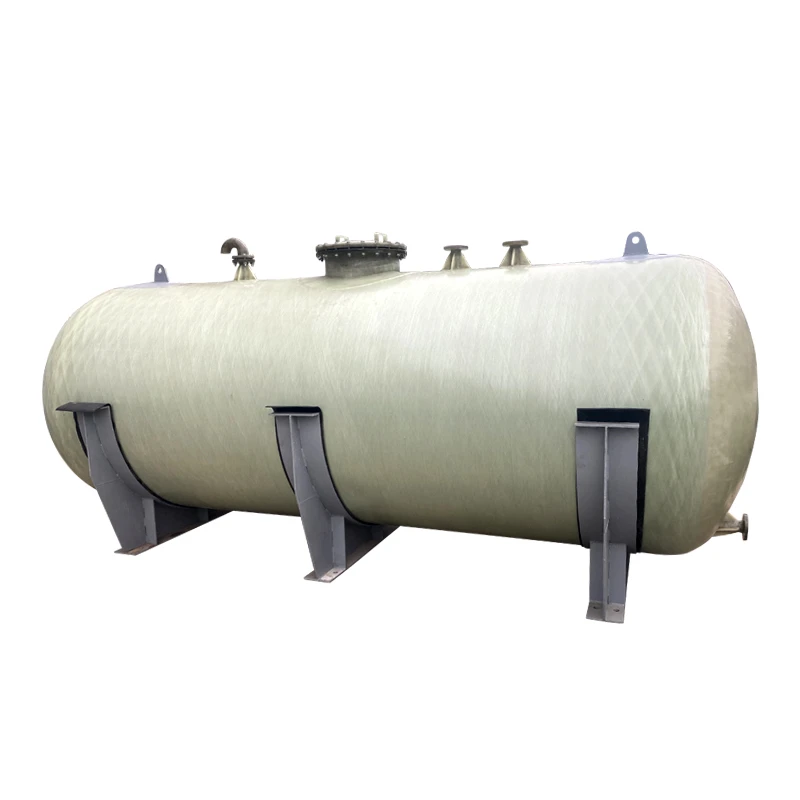
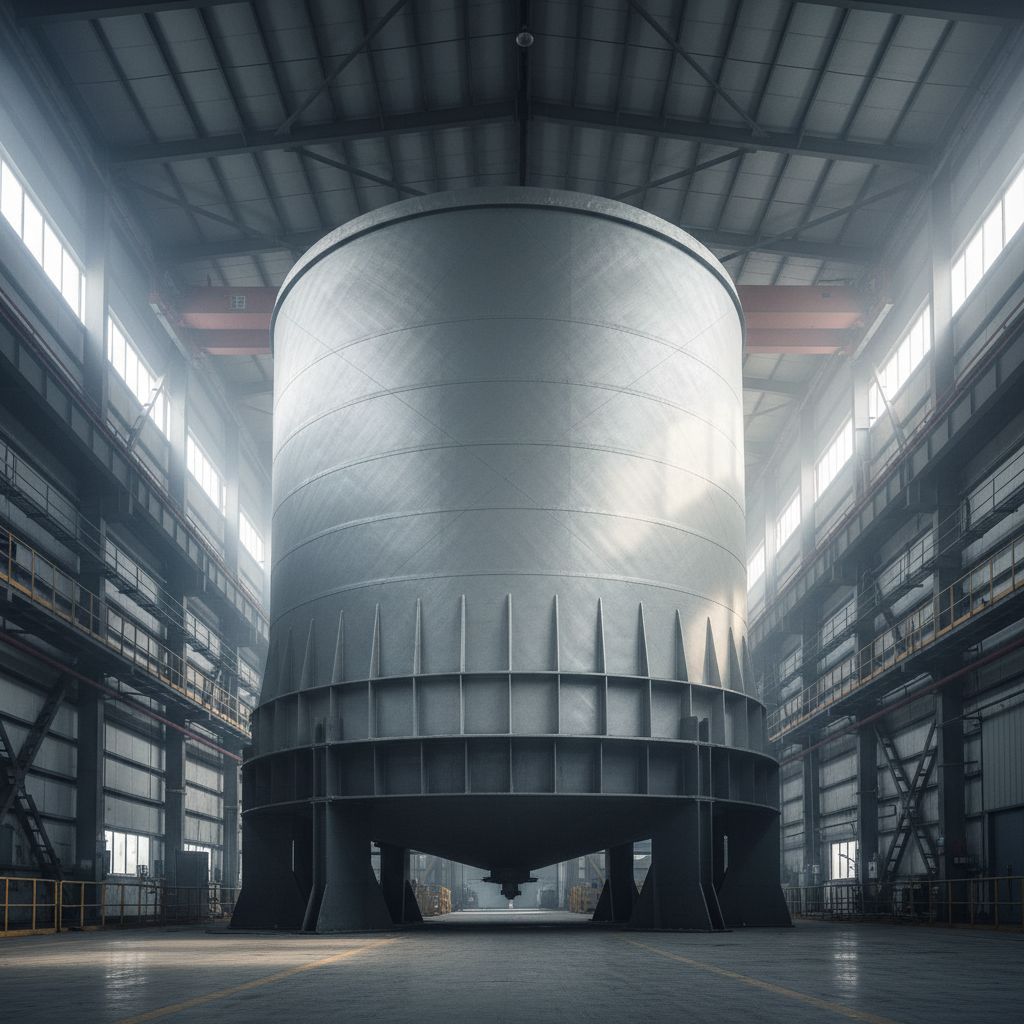
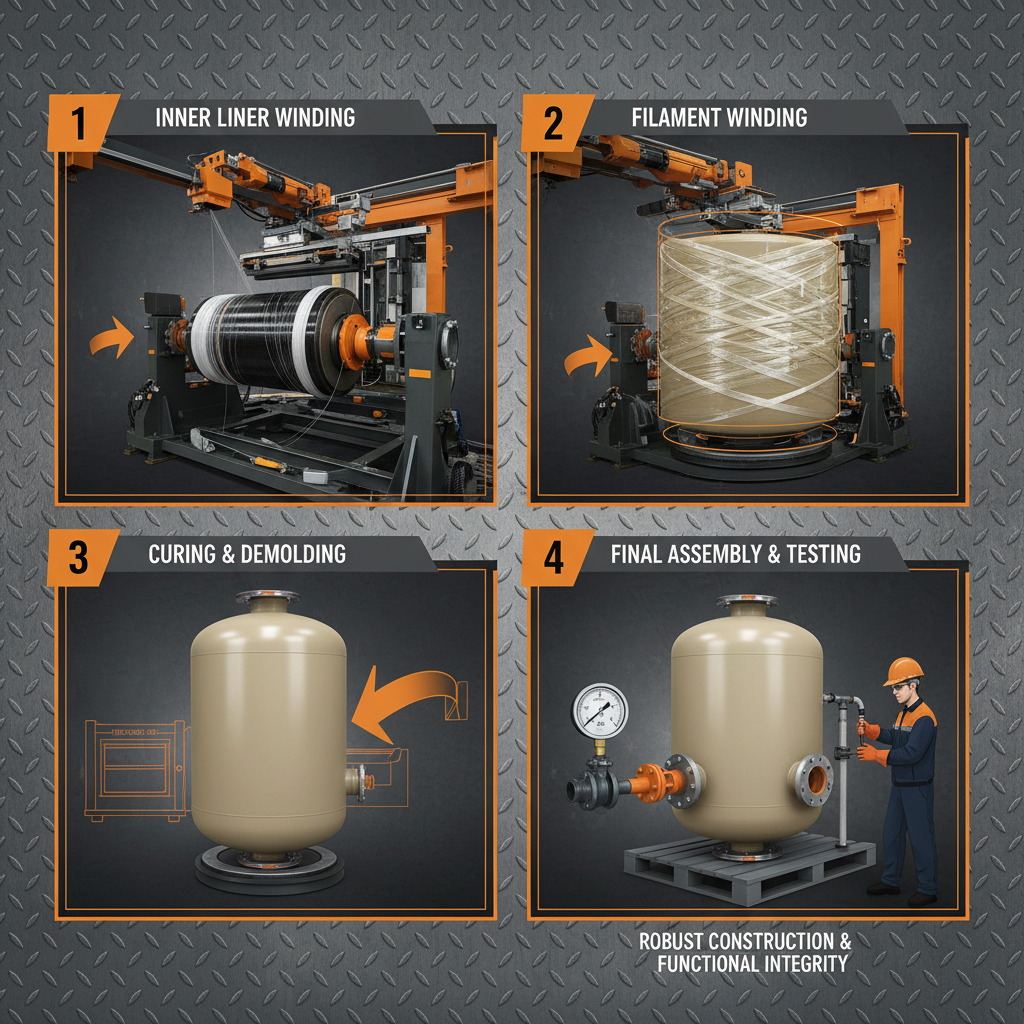
In simple terms, a fiber tank with glass typically refers to a storage tank made from fiberglass-reinforced plastics (FRP), where glass fibers are embedded in a resin matrix. This combination creates a tank that’s significantly stronger than plastic alone, yet lighter than metal.

Think of it as industrial-grade “composite armor” for your liquids or chemicals — resistant to rust, impact, and harsh chemicals. The use of glass fibers provides structural strength, durability, and flexibility. So beyond the cool technical term, it’s a practical solution keeping industries running smoothly and safely.

Key Components That Make Fiber Tanks Shine

Durability

Durability isn’t just about withstanding wear and tear; it’s about resisting UV rays, chemical exposure, and varying temperatures without cracking or corroding. Fiber tanks with glass reinforcements often last decades, whereas steel tanks might need costly maintenance every few years.

Lightweight Yet Strong

This material combo results in tanks that are easier to transport and install — even on tough terrain. Many engineers I spoke to say this factor alone cuts large project times by up to 30% in field setups.

Corrosion Resistance

Unlike metal tanks that invite rust, these fiberglass tanks shrug off corrosive chemicals and saltwater. For coastal or chemical plants, this is a game changer.

Customization and Scalability

Fiberglass tanks can be tailored in size, shape, and layering to suit any project, from small pilot plants to industrial-scale storage. Scaling up or modifying the tank design is much less cumbersome than with traditional materials.

Cost Efficiency

Initial costs may seem higher, but when factoring in lifespan, maintenance, and quick deployment, fiber tanks often offer better total cost of ownership.

Eco-Friendly Options

New resins and production methods are reducing ecological impact, and recyclable fiberglass composites are coming to market. It’s an evolving story here.

Fiber Tanks with Glass: Applications Around the World

These tanks have found homes worldwide in diverse scenarios:

  • Disaster Relief: In post-flood zones, quickly deployable fiber tanks provide safe water storage, replacing rusted or destroyed metal containers.
  • Agriculture: Remote farms use these lightweight tanks to collect rainwater or store fertilizers without worrying about corrosion.
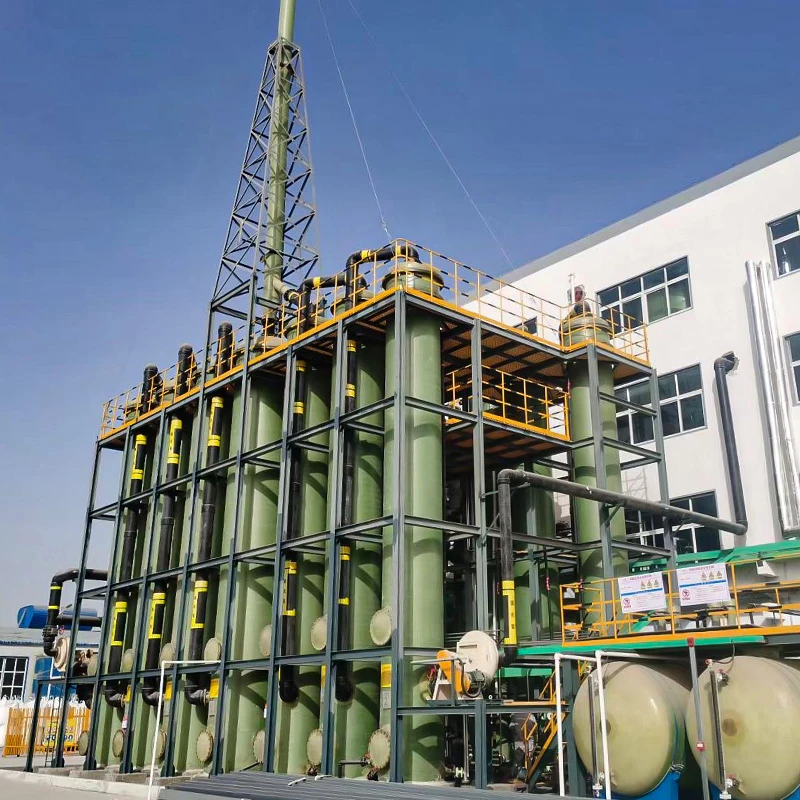
  • Chemical Processing: Factories that transport acidic or alkaline liquids rely on fiberglass tanks to ensure safety and longevity.
  • Municipal Water Systems: Several developing countries have integrated these tanks to modernize water supply and improve sanitation.

These are not just theory; for instance, the Red Cross deployed such tanks during the 2019 Mozambique cyclone recovery phase, ensuring durable potable water storage in challenging tropical conditions.

Advantages and Why They Matter Long-Term

People often ask if replacing metal tanks is “worth it.” The answer lies partly in peace of mind:

  • Reliability: Trusting your tank won’t leak or degrade unexpectedly is invaluable.
  • Safety: Resistance to chemicals means fewer environmental accidents and safer work environments.
  • Sustainability: Longer tank life with less frequent replacements equals raw material savings and reduced waste.
  • Innovation Brand Value: Using fiber tanks signifies investment in modern solutions, demonstrating forward-thinking to partners and clients.

Product Specification Table

Specification Typical Range Notes
Material Composition Glass Fiber + Polyester Resin Can customize resin types for chemical resistance
Tank Capacity 500 liters - 50,000 liters+ Scalable designs
Weight 5-15 kg/m² Depends on thickness and layering
UV Resistance Yes (with UV inhibitors) Important for outdoor storage
Lifespan 15-30 years Depends on environment & maintenance

Comparing Key Vendors in Fiber Tank Solutions

Vendor Specialization Typical Price Range Lead Time
FRP Global Tanks Industrial & Municipal $150 - $1200 / m³ 4-8 weeks
ClearGlass Fabrications Chemicals & Specialty Liquids $200 - $1500 / m³ 6-10 weeks
EcoFiber Tanks Eco/Sustainable Solutions $180 - $1400 / m³ 5-7 weeks

Looking Ahead: Innovation in Fiber Tank Technology

It feels like the fiberglass tank industry is on the brink of a green revolution. New bio-based resins and recyclable fibers are gradually replacing traditional petrochemical components — making these tanks not only stronger but greener. Digital monitoring with embedded sensors for pressure, temperature, and leak detection is also trending, seamlessly integrating tanks into smart industrial ecosystems.

Then there are modular designs that can be assembled on-site or reshaped to evolving demands. Given how fast climate and industry evolve, such flexibility is priceless.

Challenges and Ingenious Solutions

Despite their many benefits, fiberglass tanks do face hurdles. For example, improper installation or poor-quality resin can reduce lifespan drastically. Also, impacts from heavy machinery or falling objects can cause damage. However, companies now offer on-site training, quality certifications, and layered composite reinforcements to counter these challenges.

Additionally, disposal or recycling of older tanks is a concern, but recent partnerships between manufacturers and recycling firms are aiming to create closed-loop systems.

FAQ: Your Top Questions on Fiber Tank with Glass Answered

Q1: How long can a fiber tank with glass last outdoors without major maintenance?

Typically, fiber tanks last 15 to 30 years outdoors if protected with UV inhibitors and properly installed. Regular inspections prevent minor damages from escalating.

Q2: Are fiber glass tanks safe for storing drinking water?

Yes, when produced with FDA-approved resin systems, these tanks are safe for potable water storage and are widely used in municipal drinking water projects.

Q3: Can fiber tanks be customized for unusual chemicals?

Absolutely. Manufacturers tailor resin types and fiber layering based on the chemical’s properties to ensure corrosion resistance and safety.

Q4: How do fiber tanks compare in cost to steel tanks over 10 years?

Although initial investment may be higher, fiber tanks often prove more economical due to lower maintenance, longer life, and easier installation.

Q5: Is it possible to transport fiber tanks internationally for humanitarian projects?

Yes, their lightweight nature makes international shipping feasible. Many NGOs coordinate with vendors experienced in export logistics and customs clearance.

Wrapping Up: The Case for Fiber Tanks with Glass

In sum, fiber tanks with glass aren’t just storage receptacles; they're enablers of progress, reliability, and sustainability for a world increasingly demanding smarter infrastructure. Whether you’re a water project planner, an industrial engineer, or working in disaster relief, these tanks offer a compelling blend of strength, versatility, and cost-effectiveness worth exploring.

Curious to see what fiber tanks with glass can do for your needs? Visit our website to explore tailored solutions and get in touch with experts passionate about quality and innovation.


References:
  1. Fiberglass - Wikipedia
  2. Global Environment Outlook, UNEP
  3. ISO Standards on Composite Materials
Upsell Products
Upsell News
Durable FRP Vessel for Water Treatment and Industrial Filtration
Apr 16,2026
Durable FRP Vessel for Water Treatment and Industrial Filtration
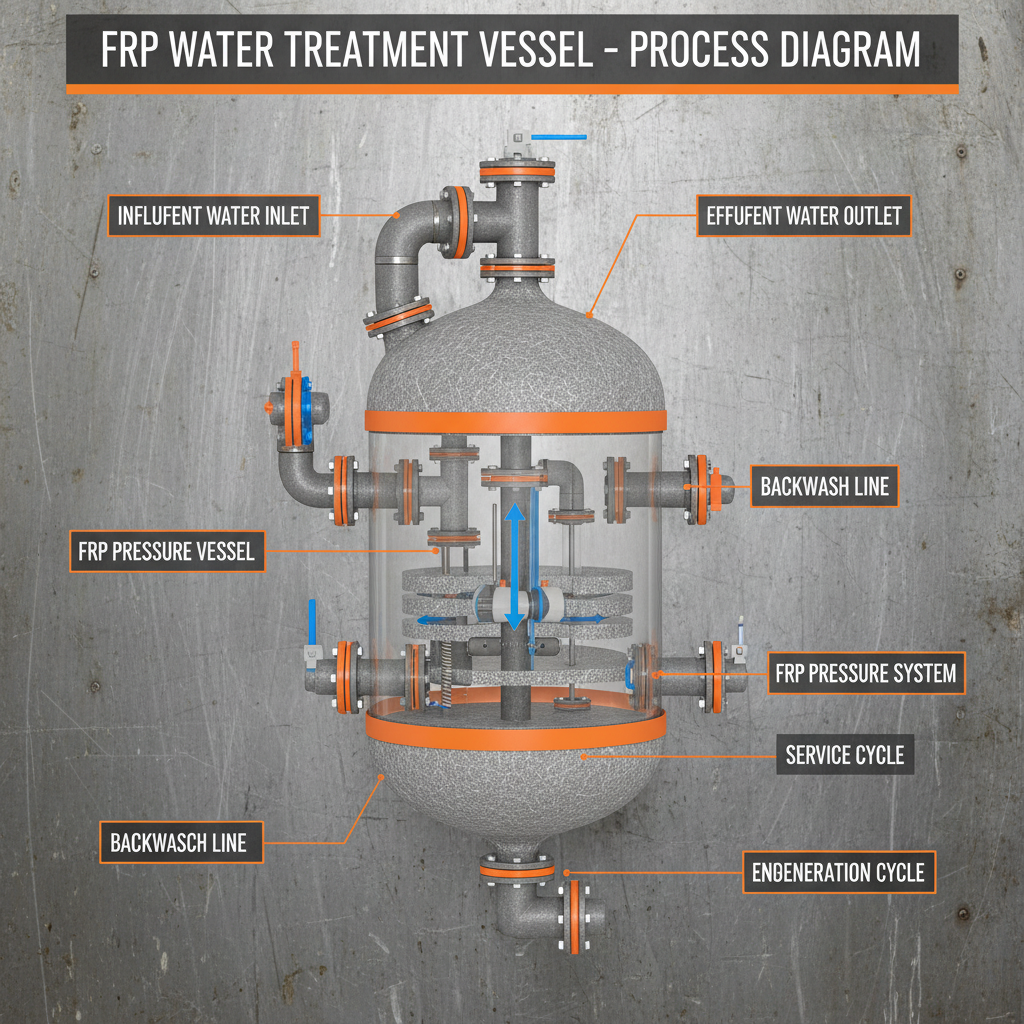
In the modern era of industrial and residential water purification, the choice of containment materials is critical for efficiency and longevity. An frp vessel for water treatment has emerged as the gold standard, replacing traditional steel tanks due to its superior corrosion resistance and lightweight properties. Whether you are dealing with desalination, softening, or filtration, using Fiber Reinforced Plastic (FRP) ensures that your system remains leak-proof and durable against aggressive chemicals. In this comprehensive guide, we will explore why FRP is the preferred choice for water treatment professionals worldwide and how to select the right vessel for your specific application.
Industrial Guide for Choosing the Right FRP Vertical Tank
Apr 09,2026
Industrial Guide for Choosing the Right FRP Vertical Tank
In today's industrial landscape, the storage of corrosive chemicals and aggressive liquids requires materials that can withstand extreme conditions without degrading. The frp vertical tank has emerged as a premier solution, offering an exceptional balance of strength, lightweight properties, and unmatched chemical resistance. Whether you are managing a water treatment plant or a chemical processing facility, understanding the nuances of Fiber Reinforced Plastic (FRP) is essential for ensuring operational safety and longevity. In this comprehensive guide, we will explore why vertical configurations are preferred and how these tanks outperform traditional metal alternatives.
Comprehensive Guide to FRP Underground Water Tank Solutions and Applications
Apr 07,2026
Comprehensive Guide to FRP Underground Water Tank Solutions and Applications
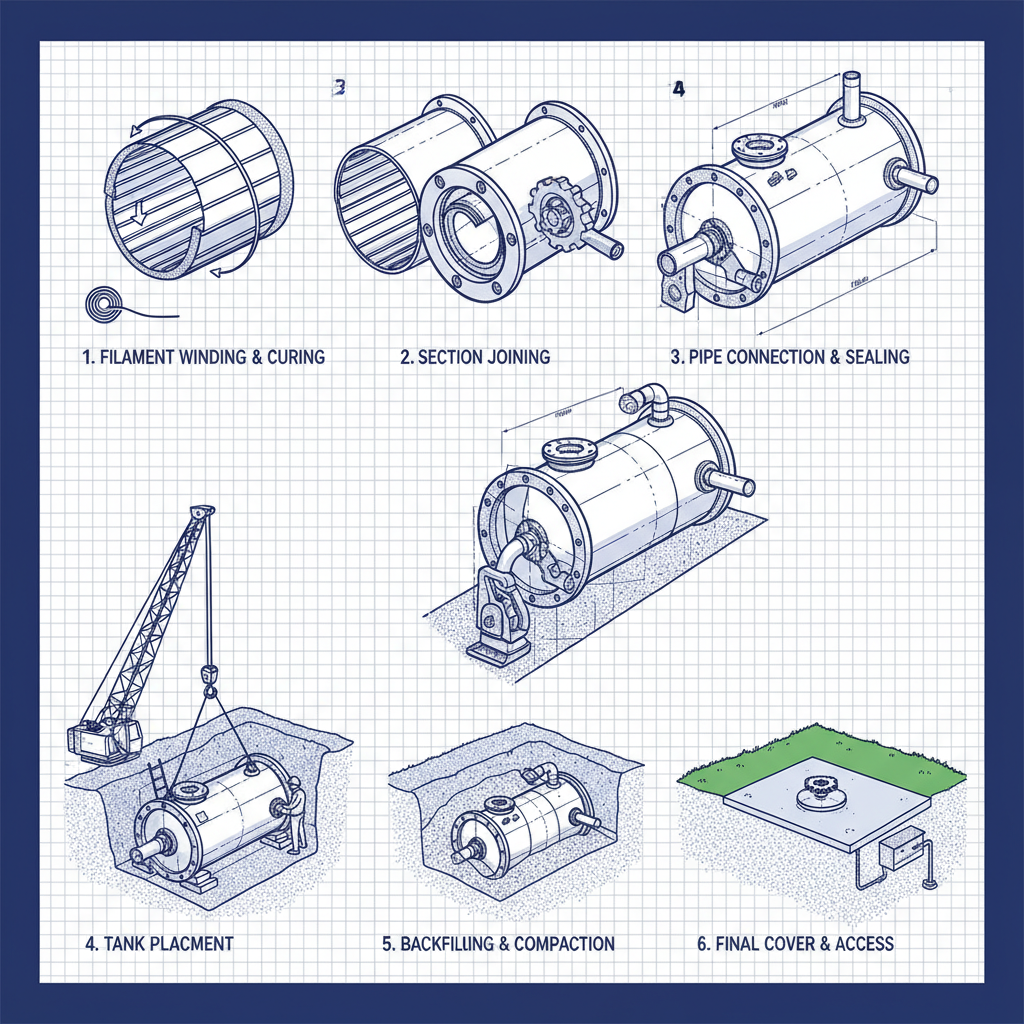
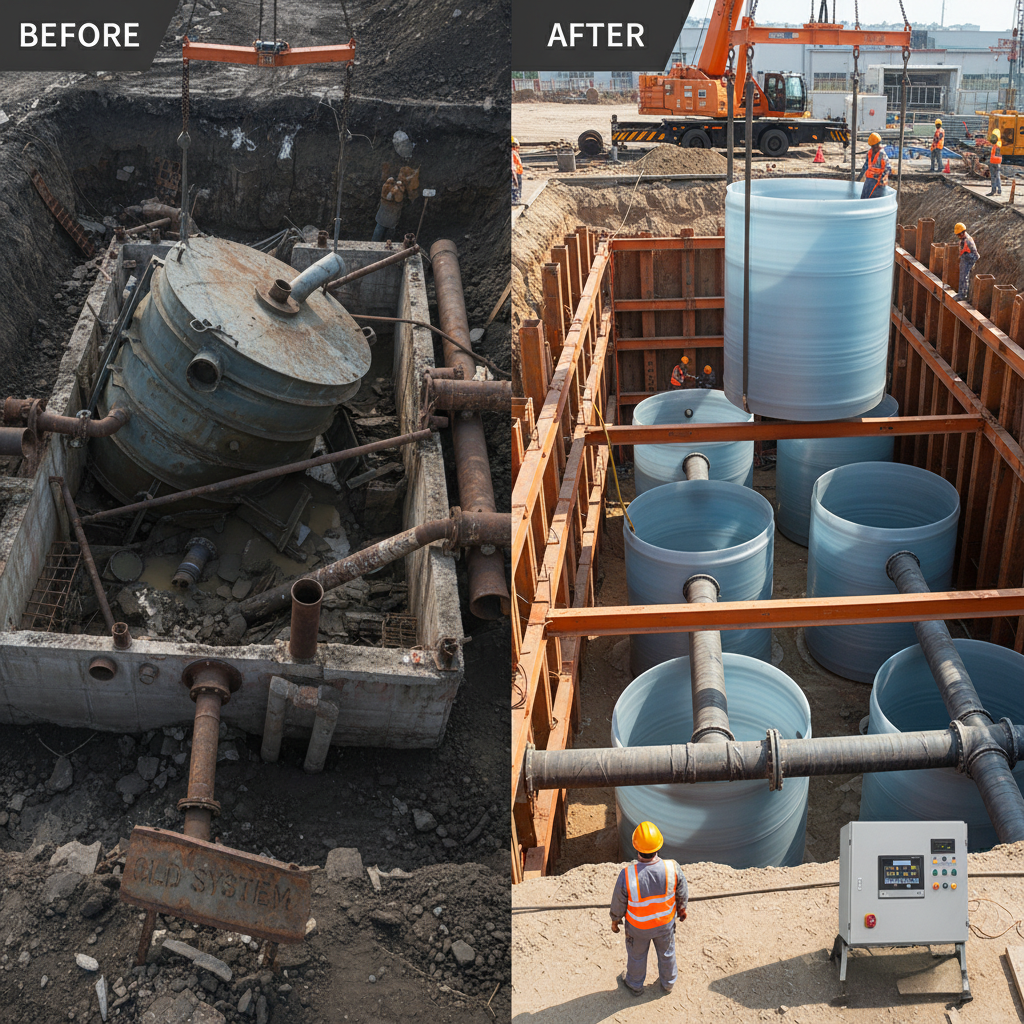
Fiberglass Reinforced Polymer (FRP) underground water tanks are becoming increasingly popular for a wide range of applications, from potable water storage to industrial wastewater containment. Their superior corrosion resistance, lightweight nature, and design flexibility make them an excellent alternative to traditional materials like concrete or steel. This article will delve into the benefits, applications, construction, and considerations for implementing FRP underground water tanks, providing a comprehensive overview for engineers, contractors, and project managers.
Comprehensive Guide to Frp Underground Water Storage Tanks and Their Applications
Apr 04,2026
Comprehensive Guide to Frp Underground Water Storage Tanks and Their Applications
When considering water storage solutions, particularly for industrial, agricultural, or municipal applications, frp underground water storage tanks stand out as a durable, cost-effective, and environmentally friendly option. These tanks are increasingly favored over traditional materials like concrete or steel due to their superior corrosion resistance, lighter weight, and ease of installation. This article delves into the benefits, applications, construction, and considerations when choosing an FRP tank, providing a detailed overview for potential buyers and project planners.
Comprehensive Guide to Frp Underground Storage Tanks for Reliable Storage Solutions
Mar 31,2026
Comprehensive Guide to Frp Underground Storage Tanks for Reliable Storage Solutions
Fiberglass Reinforced Polymer (FRP) underground storage tanks are becoming increasingly popular for a wide range of applications, from fuel storage to wastewater management. Their corrosion resistance, lightweight nature, and durability offer significant advantages over traditional materials like steel. This article will provide an in-depth look at FRP underground storage tanks, covering their benefits, applications, installation, and maintenance. Understanding these aspects is crucial for making informed decisions about long-term storage solutions.
Comprehensive Guide to Selecting the Ideal FRP Tank for Water Storage Solutions
Mar 28,2026
Comprehensive Guide to Selecting the Ideal FRP Tank for Water Storage Solutions
When it comes to reliable and durable water storage, FRP tanks for water are increasingly becoming the preferred solution for a wide range of applications. These tanks, constructed from Fiber Reinforced Polymer (FRP) materials, offer significant advantages over traditional storage options like steel or concrete. This article delves into the benefits, applications, and considerations when selecting an FRP tank for your water storage needs, providing a detailed overview for businesses and individuals alike.
Comprehensive Guide to Frp Tank and Vessel Applications and Manufacturing
Mar 26,2026
Comprehensive Guide to Frp Tank and Vessel Applications and Manufacturing
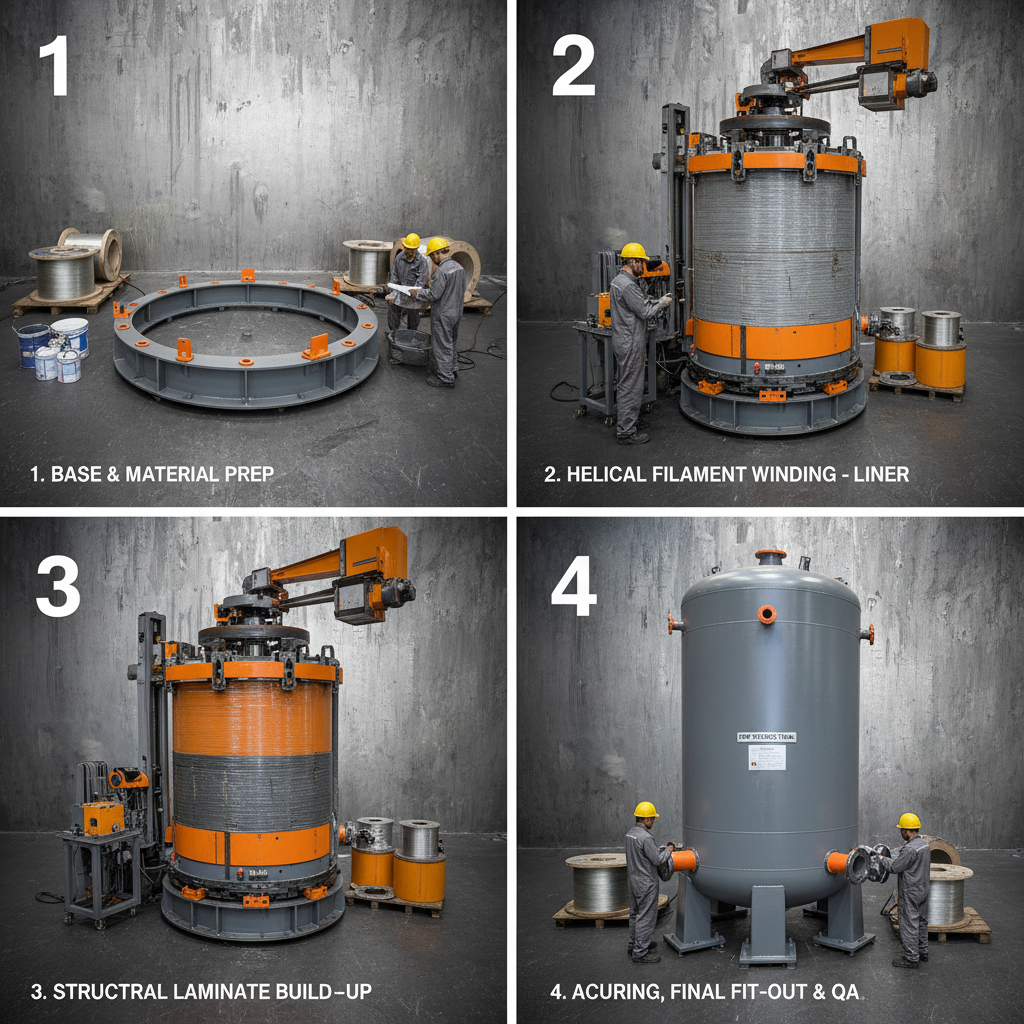
Fiber Reinforced Polymer (FRP) tanks and vessels are increasingly becoming the preferred choice for storage and processing across a multitude of industries. Their lightweight nature, corrosion resistance, and design flexibility offer significant advantages over traditional materials like steel. This article will delve into the intricacies of FRP tanks and vessels, exploring their applications, manufacturing processes, benefits, and considerations for selecting the right solution for your specific needs. We’ll also highlight why FRP tanks are a cost-effective and reliable long-term investment. FRP tanks and vessels are constructed from a combination of reinforcing fibers (such as fiberglass, carbon fiber, or aramid fiber) embedded in a polymer matrix (typically polyester, vinyl ester, or epoxy resin). This combination creates a composite material that boasts high strength-to-weight ratio, exceptional corrosion resistance, and the ability to be molded into complex shapes. They’re designed to safely contain a wide variety of liquids and gases, ranging from corrosive chemicals and water to food products and pharmaceuticals.
Optimizing Water Filtration with Durable FRP Sand Filter Vessels
Mar 24,2026
Optimizing Water Filtration with Durable FRP Sand Filter Vessels
In water treatment and filtration systems, the choice of filter vessel material is paramount. Fiber Reinforced Plastic (FRP), also known as Glass Reinforced Polymer (GRP), sand filter vessels are increasingly popular due to their superior corrosion resistance, lightweight nature, and cost-effectiveness. This article delves into the benefits, applications, design considerations, and factors to consider when selecting an FRP sand filter vessel. Whether you are involved in municipal water treatment, industrial wastewater management, or recreational water filtration, understanding FRP technology is essential for optimizing your filtration process. An FRP sand filter vessel is a containment unit designed to house filtration media, typically sand, gravel, and anthracite. These vessels are integral components in sand filtration systems used for removing suspended solids, turbidity, and other particulate matter from water. FRP construction involves layering glass fibers within a resin matrix (typically polyester or vinyl ester) to create a strong, durable, and chemically resistant shell. The strength and rigidity of the vessel are crucial for withstanding the pressure from the filtration media and the water flow.
Comprehensive Guide to FRP Round Tanks Applications and Benefits
Mar 21,2026
Comprehensive Guide to FRP Round Tanks Applications and Benefits
Fiber Reinforced Polymer (FRP) round tanks are increasingly becoming the preferred choice for storage solutions across a variety of industries. Their lightweight nature, corrosion resistance, and design flexibility offer significant advantages over traditional materials like steel. This article provides an in-depth look at FRP round tanks, exploring their applications, benefits, manufacturing processes, and key considerations when choosing the right tank for your needs. Whether you're in chemical processing, water treatment, or agriculture, understanding FRP round tanks is crucial for optimizing your storage infrastructure. FRP round tanks are constructed from a combination of reinforcing fibers (typically fiberglass, carbon fiber, or a blend) embedded in a polymer matrix (often polyester, vinyl ester, or epoxy resin). The round shape inherently provides excellent structural strength, distributing pressure evenly across the tank’s surface.
Comprehensive Guide to FRP Pressure Tanks Benefits and Applications
Mar 19,2026
Comprehensive Guide to FRP Pressure Tanks Benefits and Applications
Fiber Reinforced Polymer (FRP) pressure tanks are becoming increasingly popular in a wide range of industrial applications, offering a compelling alternative to traditional steel tanks. Known for their lightweight nature, corrosion resistance, and high strength-to-weight ratio, FRP tanks provide efficient and durable solutions for storing liquids and gases under pressure. This article will delve into the benefits, applications, construction, and key considerations when selecting an FRP pressure tank, helping you make an informed decision for your specific needs. Understanding the advantages of FRP technology can lead to significant cost savings and improved operational efficiency. Compared to steel, FRP pressure tanks offer several key advantages. The most significant is their superior corrosion resistance. Unlike steel, which is susceptible to rust and corrosion when exposed to various chemicals, FRP materials are inherently resistant to a wide range of corrosive substances. This translates to a longer lifespan, reduced maintenance costs, and increased safety. Furthermore, FRP is significantly lighter than steel, making installation easier and reducing transportation costs.
Comprehensive Guide to FRP Modular Tanks for Superior Storage Solutions
Mar 17,2026
Comprehensive Guide to FRP Modular Tanks for Superior Storage Solutions
Fiber Reinforced Polymer (FRP) modular tanks are revolutionizing storage solutions across various industries. These tanks offer a compelling alternative to traditional materials like steel and concrete, providing superior corrosion resistance, lighter weight, and design flexibility. This article will delve into the benefits, applications, construction, and considerations when choosing an FRP modular tank. We will explore why they are becoming the preferred choice for chemical storage, water treatment, and more. FRP modular tanks are constructed from pre-fabricated, interlocking sections made of fiber-reinforced polymer materials. These sections are typically composed of glass fiber, vinyl ester, or epoxy resins. The modular design allows for easy assembly and customization to meet specific volume and configuration requirements. Unlike monolithic tanks, modular tanks can be easily expanded or relocated, offering a significant advantage in dynamic operational environments.
Exploring the Benefits and Applications of FRP Horizontal Tanks for Storage Solutions
Mar 14,2026
Exploring the Benefits and Applications of FRP Horizontal Tanks for Storage Solutions
Fiber Reinforced Plastic (FRP) horizontal tanks are increasingly becoming the preferred choice for storage solutions across numerous industries. Known for their durability, corrosion resistance, and lightweight nature, these tanks offer a compelling alternative to traditional materials like steel. This article will delve into the intricacies of FRP horizontal tanks, exploring their applications, benefits, manufacturing processes, and key considerations for selecting the right tank for your needs. We’ll also discuss why choosing a reputable supplier like FRPGRPMachine ensures quality and reliability. FRP horizontal tanks are constructed using a combination of reinforcing fibers (such as fiberglass, carbon fiber, or aramid fiber) embedded in a polymer matrix (typically polyester, vinyl ester, or epoxy resin). The horizontal design allows for efficient use of space and facilitates easier installation and maintenance. The unique properties of FRP materials impart exceptional resistance to corrosion, chemicals, and UV radiation, making these tanks ideal for storing a wide variety of substances. They are manufactured through processes like filament winding, hand lay-up, and resin transfer molding, ensuring structural integrity and long-term performance.
Comprehensive Guide to FRP Fuel Tanks Benefits and Applications
Mar 12,2026
Comprehensive Guide to FRP Fuel Tanks Benefits and Applications
Fiber Reinforced Polymer (FRP) fuel tanks are rapidly gaining prominence as a robust and reliable alternative to traditional steel tanks. Offering significant advantages in terms of corrosion resistance, weight reduction, and design flexibility, they are becoming a go-to solution for a wide range of applications, from fuel storage at service stations to large-scale industrial facilities. This article delves into the benefits, applications, construction, and considerations when choosing an FRP fuel tank, providing a comprehensive overview for businesses and engineers. Investing in the right fuel storage solution is crucial for safety, compliance, and long-term cost efficiency. FRP fuel tanks offer a compelling set of advantages over traditional materials like steel. Their inherent resistance to corrosion is a primary benefit, significantly reducing maintenance costs and extending the tank's lifespan. Unlike steel, FRP won’t rust or corrode when exposed to fuels, water, or harsh environmental conditions. Furthermore, FRP is significantly lighter than steel – often by up to 60% – leading to easier installation, reduced transportation costs, and lower structural support requirements.
Comprehensive Guide to Durable Fibre Reinforced Plastic Tanks and Vessels
Mar 11,2026
Comprehensive Guide to Durable Fibre Reinforced Plastic Tanks and Vessels
In industries demanding robust, corrosion-resistant storage solutions, fibre reinforced plastic (FRP) tanks and vessels are increasingly becoming the material of choice. These tanks, crafted from materials like glass fibre reinforced polymer (GRP), offer superior performance compared to traditional materials like steel or concrete. This article delves into the benefits, applications, manufacturing processes, and considerations when choosing FRP tanks and vessels. We'll explore why they are a smart investment for various industrial needs. FRP is a composite material made by combining a polymer matrix (resin) with reinforcing fibres, typically glass, carbon, or aramid. This combination results in a material that is lightweight, incredibly strong, and highly resistant to corrosion. GRP, a common type of FRP using glass fibres, is particularly popular due to its cost-effectiveness and excellent chemical resistance. The properties of FRP can be tailored during manufacturing to meet specific application requirements.
Comprehensive Guide to Durable Double Wall FRP Tank Solutions for Industries
Mar 10,2026
Comprehensive Guide to Durable Double Wall FRP Tank Solutions for Industries
Double wall Fiber Reinforced Polymer (FRP) tanks are increasingly becoming the preferred choice for storing a wide range of chemicals and liquids across diverse industries. Offering superior corrosion resistance, durability, and safety compared to traditional materials like steel, these tanks are a valuable asset for any business dealing with potentially hazardous substances. This article will delve into the key features, benefits, applications, and considerations when choosing a double wall FRP tank, providing you with the information needed to make an informed decision. Investing in a reliable storage solution is crucial for operational efficiency and environmental responsibility. A double wall FRP tank consists of two layers of FRP material separated by a space. This design provides a critical layer of containment in the event of a leak or failure in the inner tank. The space between the walls can be monitored for leaks, allowing for early detection and preventing environmental contamination. The construction typically involves a resin matrix reinforced with fiberglass, offering excellent chemical resistance, and the ability to be customized for specific application requirements. These tanks offer a significantly enhanced safety profile compared to single-wall tanks.
Comprehensive Guide to FRP Water Storage Tank Solutions and Applications
Mar 09,2026
Comprehensive Guide to FRP Water Storage Tank Solutions and Applications
Fiber Reinforced Polymer (FRP) water storage tanks are increasingly becoming the preferred choice for a wide range of applications, from potable water storage to industrial chemical containment. Their lightweight nature, corrosion resistance, and durability offer significant advantages over traditional materials like steel and concrete. This article will explore the benefits, applications, and key considerations when choosing an FRP water storage tank, providing insights for engineers, project managers, and anyone involved in water management. Selecting the right tank is critical for ensuring long-term reliability and water quality. FRP tanks offer a compelling set of advantages. Their corrosion resistance is paramount, eliminating the need for costly linings and repairs often required with steel tanks. The lightweight nature of FRP significantly reduces installation costs, as less heavy machinery is needed.
For More Details Pls Contact Us
Thank you for your interest in our gloves! We offer high-quality, durable, and comfortable gloves with fast delivery and competitive prices. For any questions or customization, feel free to contact us. We look forward to working with you!

If you are interested in our products, you can choose to leave your information here, and we will be in touch with you shortly.