Dec 04,2025

Durable and Lightweight FRP Man Hole Covers for Modern Infrastructure

Understanding FRP Man Hole Covers: Durable Solutions for Modern Infrastructure

When you pause to think about all the unsung heroes of urban and industrial safety, the humble FRP man hole cover might just make that list. These covers are everywhere—in cities, highways, factories—and they bear a lot more significance than their size suggests. Globally, with rapid urbanization and expanding utilities networks, durable and cost-effective access points are essential. FRP (Fiber Reinforced Polymer) man hole covers stand out as lightweight, corrosion-resistant, and strong alternatives to traditional materials like cast iron. Understanding their benefits and applications helps industries and municipalities alike to optimize infrastructure safety and sustainability.

Introduction: Why FRP Man Hole Covers Matter Globally

It's no exaggeration to say the world’s infrastructure depends, in subtle but crucial ways, on well-made man hole covers. According to the World Bank, nearly 56% of the global population now lives in cities—creating vast underground networks for water, electricity, and data. The efficiency and safety of these networks hinge on accessible entry points sealed by man hole covers. Traditionally, these covers were heavy metal pieces prone to theft, rust, and heavy strain on workers. Enter FRP man hole covers: made from composites, they offer robust performance without excess weight.

Industries worldwide face challenges like corrosion, high replacement costs, and worker safety risks—making FRP solutions especially relevant for settings prone to aggressive chemicals or coastal environments. Oddly enough, a material innovation like this can ripple out to reduce urban accidents and maintenance headaches globally.

What Is an FRP Man Hole Cover?

Simply put, an FRP man hole cover is a protective panel crafted from fiber reinforced polymer composites, used to seal openings in roads, industrial plants, and utility systems. These covers allow authorized personnel to access underground utilities safely. The FRP material is a blend of resin (usually polyester or vinyl ester) and reinforcement fibers—glass fiber being the most common—giving it a unique combination of strength, corrosion resistance, and lightness.

In the modern industrial and humanitarian landscape, these covers play an essential role. For instance, rapid infrastructure deployment after natural disasters benefits greatly from lightweight, strong covers that are easy to handle. Likewise, in chemical plants or sewage treatment facilities, corrosion resistance is non-negotiable—and that’s where FRP excels.

Core Components and Key Factors of FRP Man Hole Covers

  • Durability: FRP covers resist rust, chemical degradation, and wear, vastly outliving metal counterparts in harsh environments.
  • Lightweight Design: Typically about 1/4 to 1/3 the weight of cast iron covers, making installation and maintenance safer and quicker.
  • Load Bearing Capacity: Designed to meet international standards (like ISO 1083), capable of handling vehicular traffic loads without cracking.
  • Non-Conductivity: FRP's inherent insulating properties reduce electrical hazards—a boon in utility zones.
  • Customization: Easily molded into various shapes and sizes, can integrate anti-slip surfaces, and are tamper-resistant.

These factors interlock to deliver real value. For example, reduced weight translates into fewer workplace injuries and faster job completion. The durability means lower lifecycle costs, which—frankly—is what many engineers care most about.

Typical Product Specifications of FRP Man Hole Covers

Specification Typical Value
Material Glass Fiber Reinforced Polyester (GRP)
Weight 8-20 kg (depending on size and load rating)
Load Capacity Up to 40 tons (depending on grade)
Corrosion Resistance Excellent (chemical and water resistant)
Surface Anti-slip, UV-resistant coating

Mini takeaway: FRP man hole covers balance durability and safety with ease of use, providing a trusted solution for diverse industrial environments.

Global Applications and Real-Life Use Cases

FRP man hole covers are found in numerous contexts. For example:

  • Urban Municipalities: Cities prone to corrosion-related maintenance use FRP covers extensively to reduce replacement cycles and enhance worker safety.
  • Industrial Zones: Chemical plants and factories value their resistance to harsh chemicals and electrical insulation characteristics.
  • Remote Infrastructure Projects: Lightweight covers ease transport and deployment in difficult-to-access areas, including rural electrification projects.
  • Post-Disaster Recovery: Quickly deployable, these covers help rebuild sewage and utility lines after floods or earthquakes.

Anecdotally, a Southeast Asian utility provider noted a 30% decrease in maintenance turnaround times after switching to FRP covers because workers could maneuver them unaided, unlike heavy cast iron.

Advantages and Long-Term Value

Digging deeper, FRP man hole covers bring more than just upfront convenience. They contribute to sustainability: their corrosion resistance means less frequent replacements, which lowers waste. From a social perspective, safer manual handling reduces workplace injuries—critical in developing regions where occupational safety standards fluctuate. Their non-corrosive nature literally protects environments by preventing toxic runoff, while the innovative materials employed signal a modern, forward-thinking approach to public infrastructure.

Vendor Comparison: Leading FRP Man Hole Cover Suppliers

Vendor Load Capacity Customization Options Lead Time Price Range
FRP Global Up to 40 tons Anti-slip surface; color variations 2-3 weeks Medium
UrbanTech Composite Up to 35 tons Custom logos; tamper-resistant locks 1-2 weeks High
EcoFRP Solutions Up to 30 tons Recycled materials; UV coatings 3-4 weeks Low to Medium

Future Trends & Innovations in FRP Man Hole Covers

The future seems bright for FRP covers, especially as sustainability and smart city technologies shape infrastructure. Innovations include:

  • Eco-friendly Resins: Using bio-based or recycled resins to reduce carbon footprint.
  • Smart Integration: Embedding sensors for real-time monitoring of traffic loads and cover status.
  • Improved UV and Fire Resistance: Extending lifespan even further in extreme environments.
  • Automation in Manufacturing: Allowing lower costs and increased precision.

Oddly enough, while FRP is decades old, its evolution continues, driven by new materials science and digital advances.

Challenges & Practical Solutions

Despite many advantages, FRP man hole covers face challenges like inconsistent quality from some vendors, and reservations in adopting “non-traditional” materials by certain regulatory bodies. Installation errors or improper load testing can undermine safety too. Expert advice? Choose certified products tested to international standards, and invest in training maintenance crews. Also, ongoing research into smart coatings and standardization will ease acceptance over time.

Frequently Asked Questions About FRP Man Hole Covers

Q: How much lighter are FRP man hole covers compared to traditional metal ones?
A: FRP covers typically weigh about 25-33% of cast iron covers of comparable size — making them much easier and safer to handle during installation and maintenance.
Q: Are FRP man hole covers slip-resistant for pedestrian safety?
A: Yes, most FRP man hole covers come with anti-slip textured surfaces or coatings, complying with safety standards suitable for pedestrian and vehicular traffic.
Q: Can FRP covers withstand heavy vehicular loads?
A: Absolutely. Modern FRP covers are designed and tested to handle vehicle loads up to 40 tons or more, suitable for roads, industrial zones, and highways.
Q: What maintenance is required for FRP man hole covers?
A: Minimal. Their corrosion resistance means they rarely need treatment, though periodic inspections for surface wear or damage are recommended.
Q: How do FRP man hole covers contribute to sustainability?
A: By reducing replacement frequency and using recyclable or bio-based materials, FRP covers lower environmental impact over their lifecycle compared to traditional covers.

Conclusion: Why Choose FRP Man Hole Covers?

In real terms, FRP man hole covers represent a fusion of strength, safety, and sustainability. They’re engineered to tackle long-standing infrastructure challenges with a modern twist—lighter, corrosion-resistant, and smart-ready. Their global adoption will likely grow as urban environments expand and infrastructure demands evolve. If you’re interested in upgrading your access solutions or simply curious about the future of utility safety components, consider the proven advantages of FRP man hole covers. For more information or to explore quality options, visit frp man hole cover.

Mini takeaway: Investing in FRP man hole covers means safer, more sustainable infrastructure—and isn’t that what modern engineering strives for?

References:
  1. Wikipedia: Manhole Cover
  2. ISO 1083: Fibre Reinforced Plastics
  3. World Bank Urban Development
Upsell Products
Upsell News
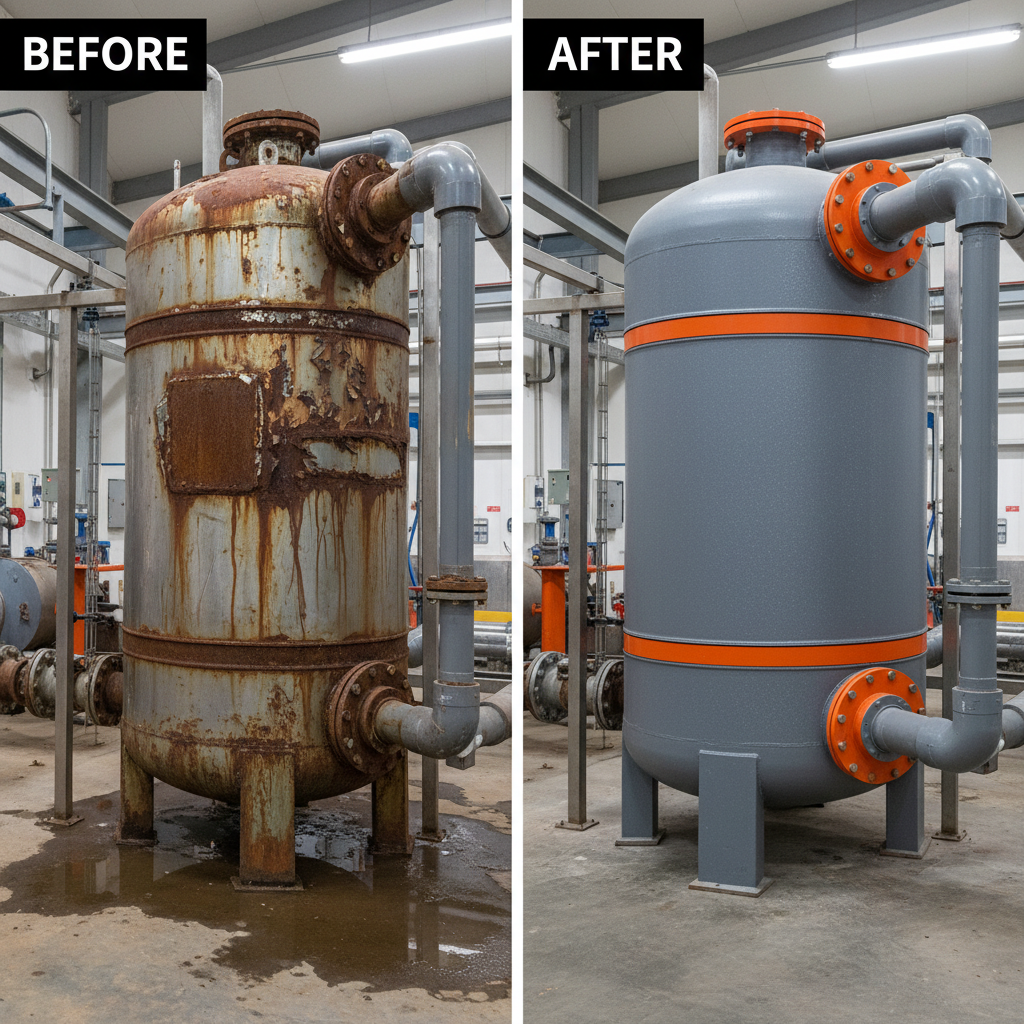
Durable FRP Vessel for Water Treatment and Industrial Filtration
Apr 16,2026
Durable FRP Vessel for Water Treatment and Industrial Filtration
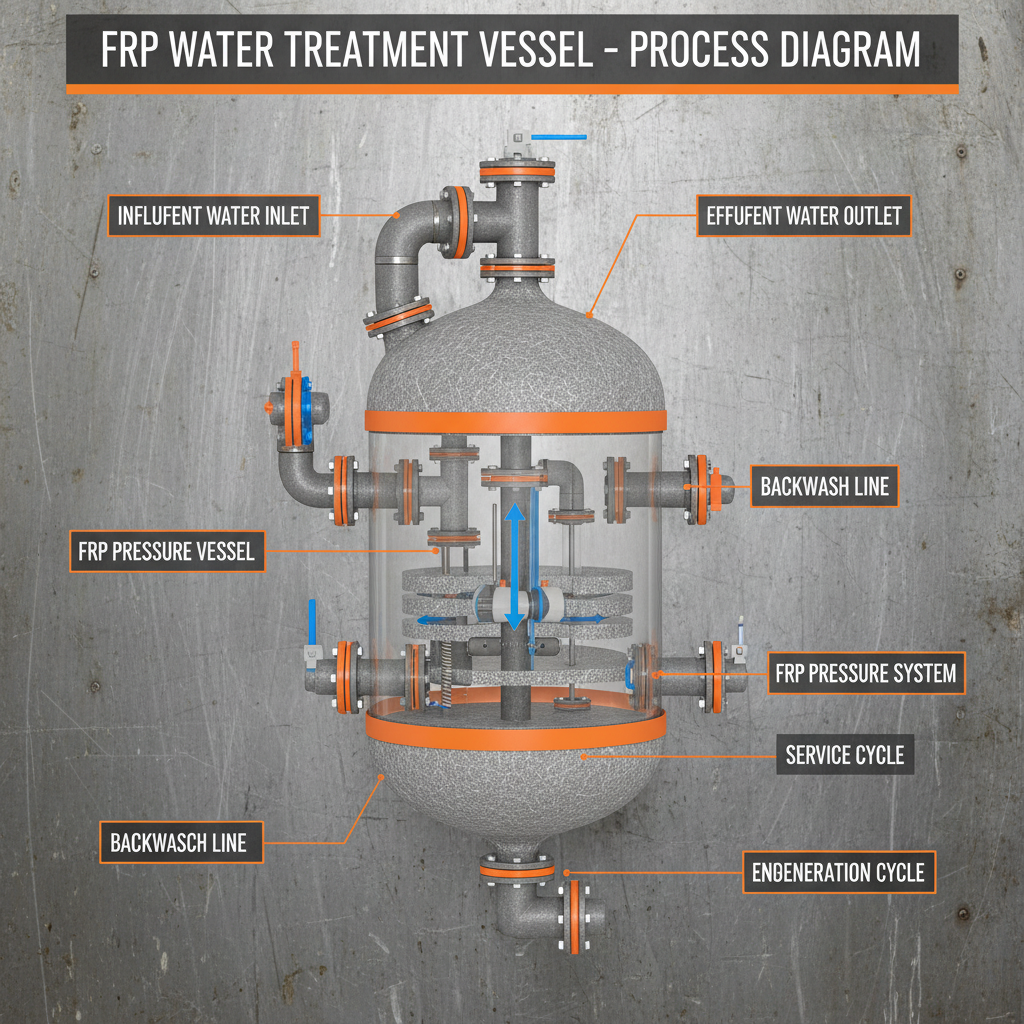
In the modern era of industrial and residential water purification, the choice of containment materials is critical for efficiency and longevity. An frp vessel for water treatment has emerged as the gold standard, replacing traditional steel tanks due to its superior corrosion resistance and lightweight properties. Whether you are dealing with desalination, softening, or filtration, using Fiber Reinforced Plastic (FRP) ensures that your system remains leak-proof and durable against aggressive chemicals. In this comprehensive guide, we will explore why FRP is the preferred choice for water treatment professionals worldwide and how to select the right vessel for your specific application.
Industrial Guide for Choosing the Right FRP Vertical Tank
Apr 09,2026
Industrial Guide for Choosing the Right FRP Vertical Tank
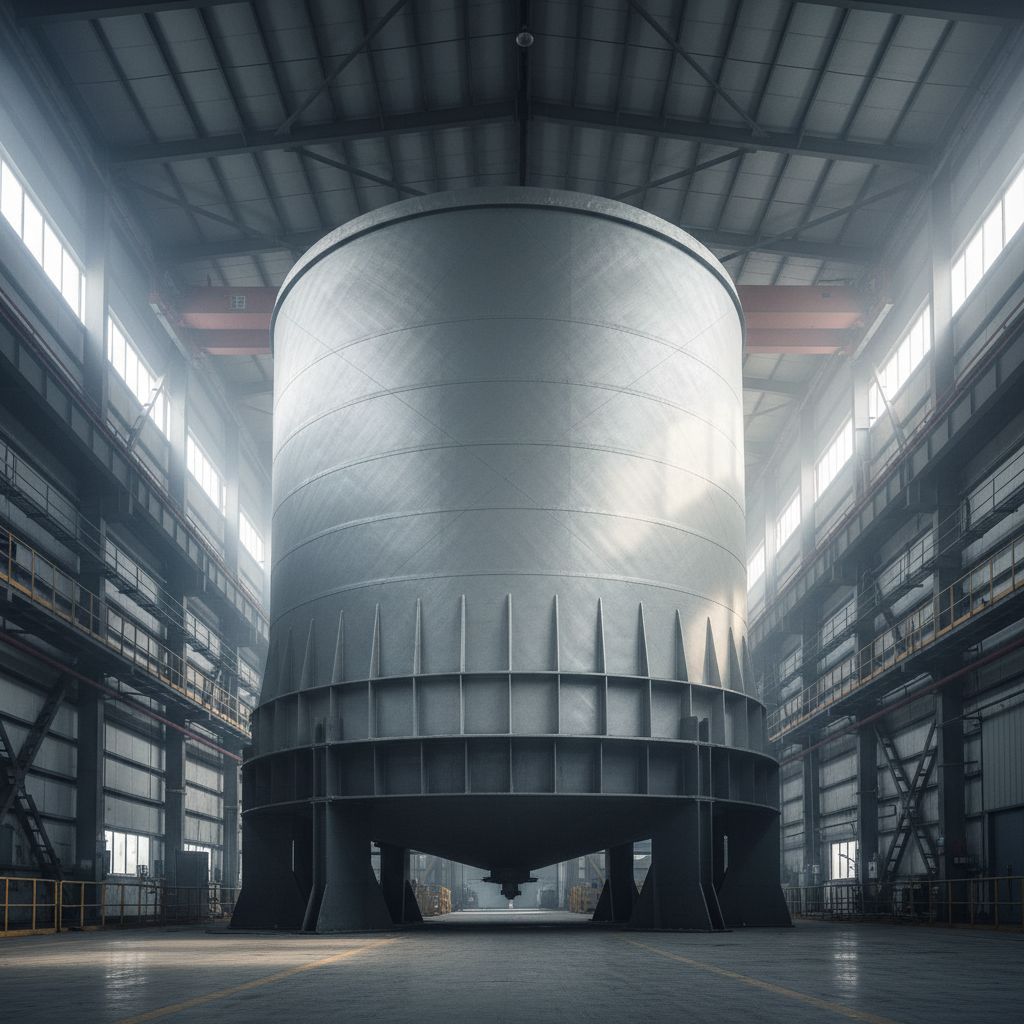
In today's industrial landscape, the storage of corrosive chemicals and aggressive liquids requires materials that can withstand extreme conditions without degrading. The frp vertical tank has emerged as a premier solution, offering an exceptional balance of strength, lightweight properties, and unmatched chemical resistance. Whether you are managing a water treatment plant or a chemical processing facility, understanding the nuances of Fiber Reinforced Plastic (FRP) is essential for ensuring operational safety and longevity. In this comprehensive guide, we will explore why vertical configurations are preferred and how these tanks outperform traditional metal alternatives.
Comprehensive Guide to FRP Underground Water Tank Solutions and Applications
Apr 07,2026
Comprehensive Guide to FRP Underground Water Tank Solutions and Applications
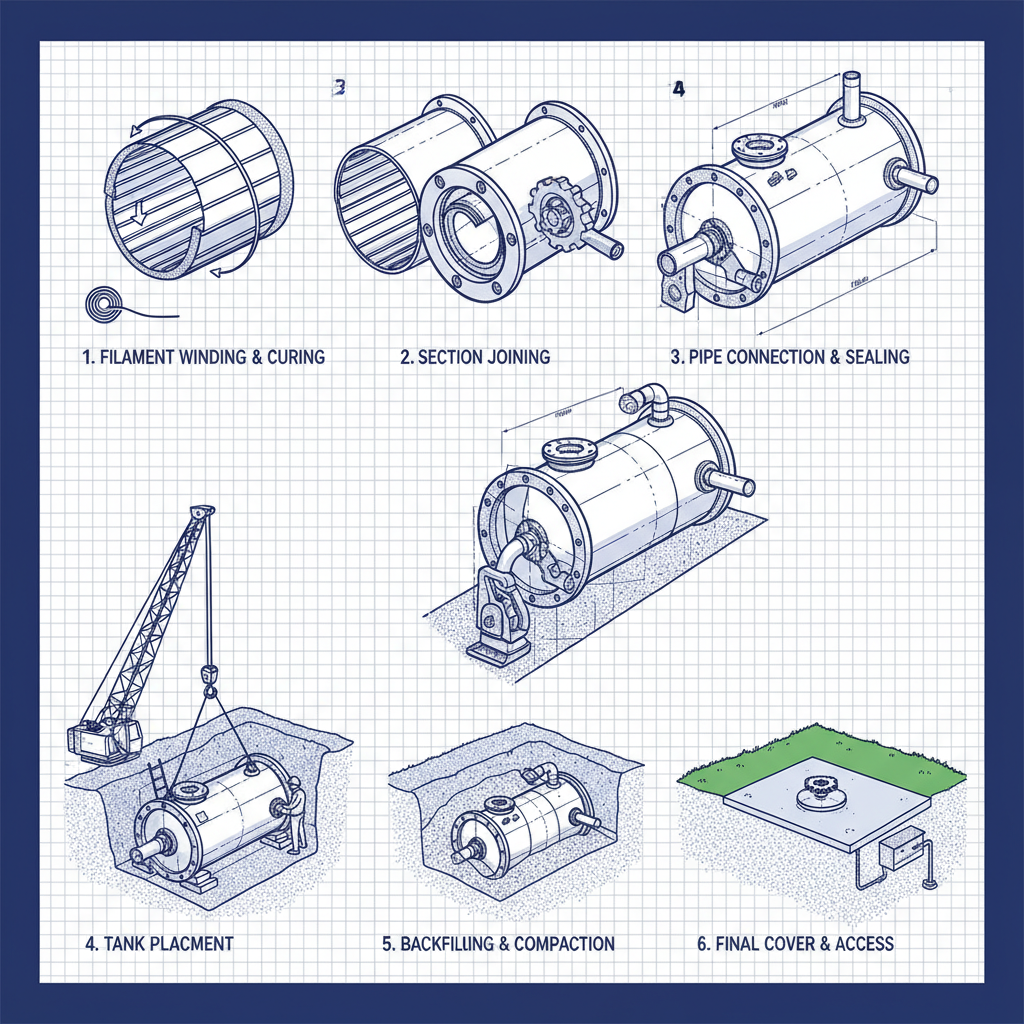
Fiberglass Reinforced Polymer (FRP) underground water tanks are becoming increasingly popular for a wide range of applications, from potable water storage to industrial wastewater containment. Their superior corrosion resistance, lightweight nature, and design flexibility make them an excellent alternative to traditional materials like concrete or steel. This article will delve into the benefits, applications, construction, and considerations for implementing FRP underground water tanks, providing a comprehensive overview for engineers, contractors, and project managers.
Comprehensive Guide to Frp Underground Water Storage Tanks and Their Applications
Apr 04,2026
Comprehensive Guide to Frp Underground Water Storage Tanks and Their Applications
When considering water storage solutions, particularly for industrial, agricultural, or municipal applications, frp underground water storage tanks stand out as a durable, cost-effective, and environmentally friendly option. These tanks are increasingly favored over traditional materials like concrete or steel due to their superior corrosion resistance, lighter weight, and ease of installation. This article delves into the benefits, applications, construction, and considerations when choosing an FRP tank, providing a detailed overview for potential buyers and project planners.
Sulfuric Acid Production Line - Hebei Aoliande|Efficient H2SO4 Plant Technology
Apr 01,2026
Sulfuric Acid Production Line - Hebei Aoliande|Efficient H2SO4 Plant Technology
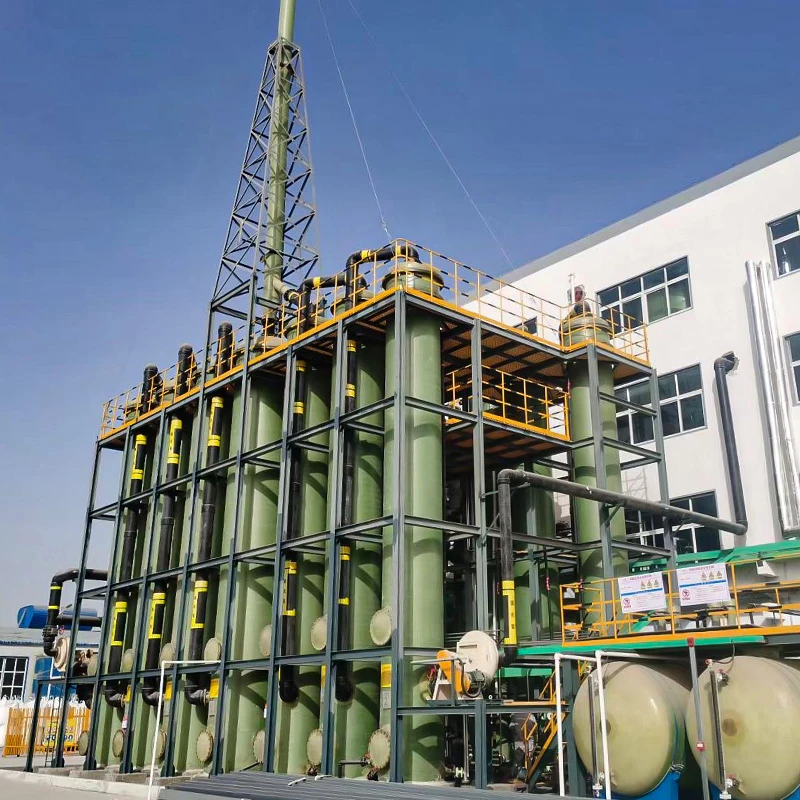
Discover efficient H2SO4 plant technology and advanced sulfuric acid production solutions. Hebei Aoliande combines energy-saving furnace design and eco-friendly HCl recovery systems for sustainable industrial applications. Explore now: https://www.frpgrpmachine.com/sulfuric-acid-production-line-for-h2so4-plant.html
Sulfuric Acid Production Line - Hebei Aoliande|Efficient H2SO4 Plant Technology
Apr 01,2026
Sulfuric Acid Production Line - Hebei Aoliande|Efficient H2SO4 Plant Technology
Discover efficient H2SO4 plant technology and advanced sulfuric acid production solutions. Hebei Aoliande combines energy-saving furnace design and eco-friendly HCl recovery systems for sustainable industrial applications. Explore now: https://www.frpgrpmachine.com/sulfuric-acid-production-line-for-h2so4-plant.html
Sulfuric Acid Production Line - Hebei Aoliande|Efficient H2SO4 Plant Technology
Apr 01,2026
Sulfuric Acid Production Line - Hebei Aoliande|Efficient H2SO4 Plant Technology
Discover efficient H2SO4 plant technology and advanced sulfuric acid production solutions. Hebei Aoliande combines energy-saving furnace design and eco-friendly HCl recovery systems for sustainable industrial applications. Explore now: https://www.frpgrpmachine.com/sulfuric-acid-production-line-for-h2so4-plant.html
Sulfuric Acid Production Line - Hebei Aoliande|Efficient H2SO4 Plant Technology
Apr 01,2026
Sulfuric Acid Production Line - Hebei Aoliande|Efficient H2SO4 Plant Technology
Discover efficient H2SO4 plant technology and advanced sulfuric acid production solutions. Hebei Aoliande combines energy-saving furnace design and eco-friendly HCl recovery systems for sustainable industrial applications. Explore now: https://www.frpgrpmachine.com/sulfuric-acid-production-line-for-h2so4-plant.html
Sulfuric Acid Production Line - Hebei Aoliande|Efficient H2SO4 Plant Technology
Apr 01,2026
Sulfuric Acid Production Line - Hebei Aoliande|Efficient H2SO4 Plant Technology
Discover efficient H2SO4 plant technology and advanced sulfuric acid production solutions. Hebei Aoliande combines energy-saving furnace design and eco-friendly HCl recovery systems for sustainable industrial applications. Explore now: https://www.frpgrpmachine.com/sulfuric-acid-production-line-for-h2so4-plant.html
Sulfuric Acid Production Line - Hebei Aoliande|Efficient H2SO4 Plant Technology
Apr 01,2026
Sulfuric Acid Production Line - Hebei Aoliande|Efficient H2SO4 Plant Technology
Discover efficient H2SO4 plant technology and advanced sulfuric acid production solutions. Hebei Aoliande combines energy-saving furnace design and eco-friendly HCl recovery systems for sustainable industrial applications. Explore now: https://www.frpgrpmachine.com/sulfuric-acid-production-line-for-h2so4-plant.html
Comprehensive Guide to Frp Underground Storage Tanks for Reliable Storage Solutions
Mar 31,2026
Comprehensive Guide to Frp Underground Storage Tanks for Reliable Storage Solutions
Fiberglass Reinforced Polymer (FRP) underground storage tanks are becoming increasingly popular for a wide range of applications, from fuel storage to wastewater management. Their corrosion resistance, lightweight nature, and durability offer significant advantages over traditional materials like steel. This article will provide an in-depth look at FRP underground storage tanks, covering their benefits, applications, installation, and maintenance. Understanding these aspects is crucial for making informed decisions about long-term storage solutions.
Comprehensive Guide to Selecting the Ideal FRP Tank for Water Storage Solutions
Mar 28,2026
Comprehensive Guide to Selecting the Ideal FRP Tank for Water Storage Solutions
When it comes to reliable and durable water storage, FRP tanks for water are increasingly becoming the preferred solution for a wide range of applications. These tanks, constructed from Fiber Reinforced Polymer (FRP) materials, offer significant advantages over traditional storage options like steel or concrete. This article delves into the benefits, applications, and considerations when selecting an FRP tank for your water storage needs, providing a detailed overview for businesses and individuals alike.
Comprehensive Guide to Frp Tank and Vessel Applications and Manufacturing
Mar 26,2026
Comprehensive Guide to Frp Tank and Vessel Applications and Manufacturing
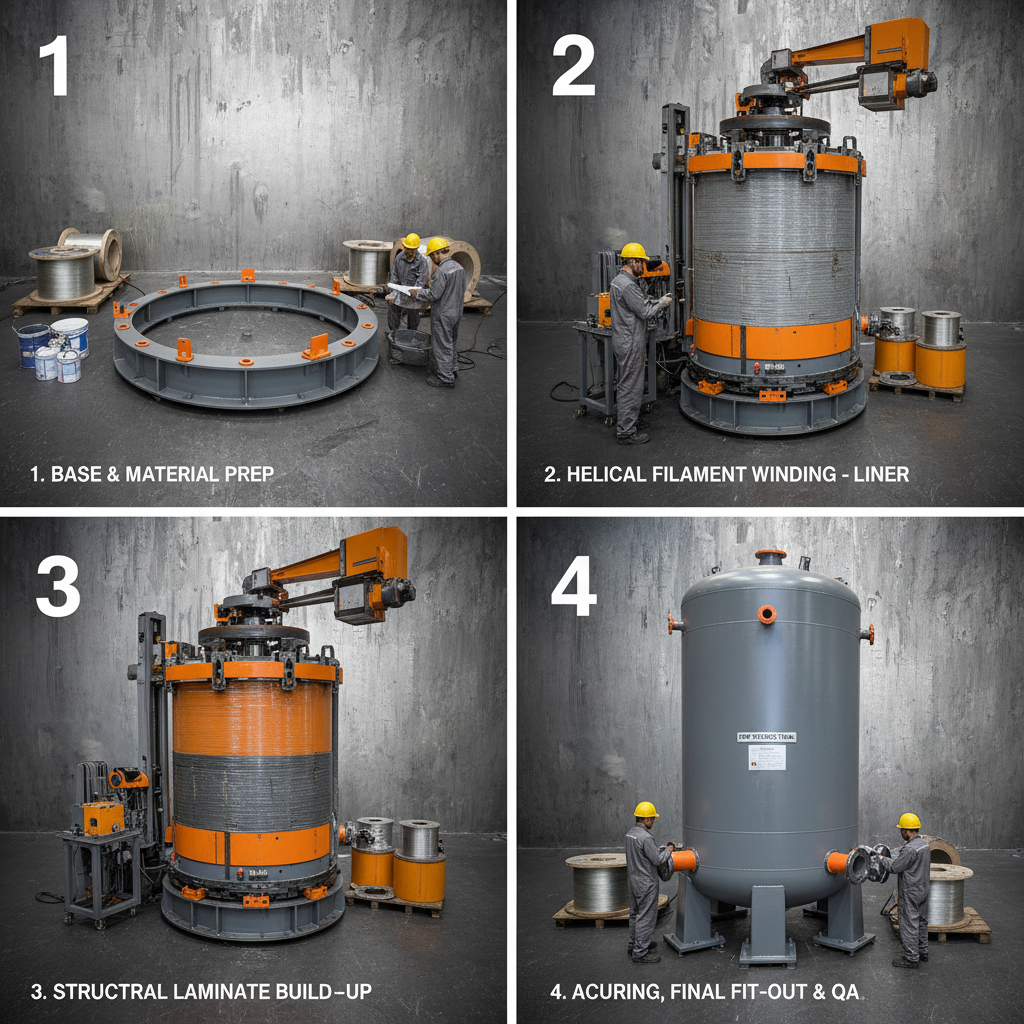
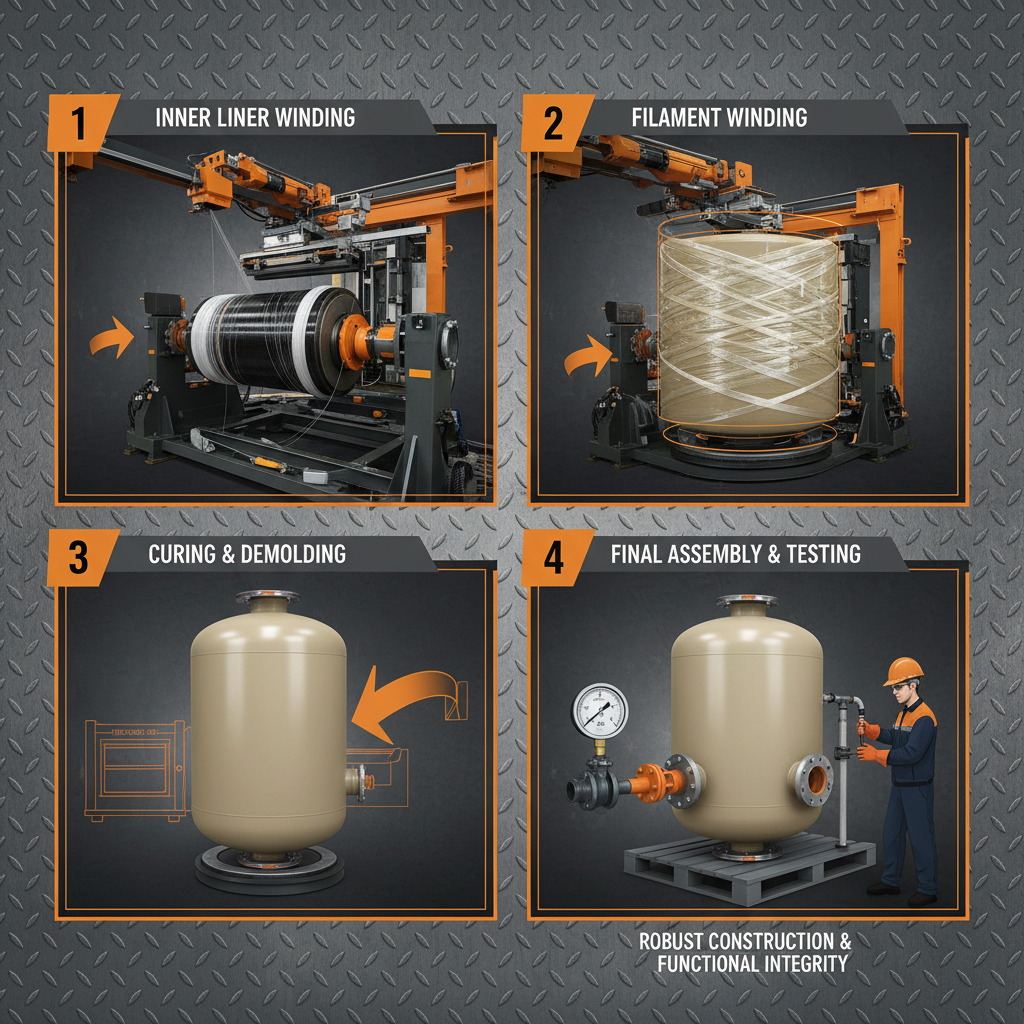
Fiber Reinforced Polymer (FRP) tanks and vessels are increasingly becoming the preferred choice for storage and processing across a multitude of industries. Their lightweight nature, corrosion resistance, and design flexibility offer significant advantages over traditional materials like steel. This article will delve into the intricacies of FRP tanks and vessels, exploring their applications, manufacturing processes, benefits, and considerations for selecting the right solution for your specific needs. We’ll also highlight why FRP tanks are a cost-effective and reliable long-term investment. FRP tanks and vessels are constructed from a combination of reinforcing fibers (such as fiberglass, carbon fiber, or aramid fiber) embedded in a polymer matrix (typically polyester, vinyl ester, or epoxy resin). This combination creates a composite material that boasts high strength-to-weight ratio, exceptional corrosion resistance, and the ability to be molded into complex shapes. They’re designed to safely contain a wide variety of liquids and gases, ranging from corrosive chemicals and water to food products and pharmaceuticals.
Optimizing Water Filtration with Durable FRP Sand Filter Vessels
Mar 24,2026
Optimizing Water Filtration with Durable FRP Sand Filter Vessels
In water treatment and filtration systems, the choice of filter vessel material is paramount. Fiber Reinforced Plastic (FRP), also known as Glass Reinforced Polymer (GRP), sand filter vessels are increasingly popular due to their superior corrosion resistance, lightweight nature, and cost-effectiveness. This article delves into the benefits, applications, design considerations, and factors to consider when selecting an FRP sand filter vessel. Whether you are involved in municipal water treatment, industrial wastewater management, or recreational water filtration, understanding FRP technology is essential for optimizing your filtration process. An FRP sand filter vessel is a containment unit designed to house filtration media, typically sand, gravel, and anthracite. These vessels are integral components in sand filtration systems used for removing suspended solids, turbidity, and other particulate matter from water. FRP construction involves layering glass fibers within a resin matrix (typically polyester or vinyl ester) to create a strong, durable, and chemically resistant shell. The strength and rigidity of the vessel are crucial for withstanding the pressure from the filtration media and the water flow.
Comprehensive Guide to FRP Round Tanks Applications and Benefits
Mar 21,2026
Comprehensive Guide to FRP Round Tanks Applications and Benefits
Fiber Reinforced Polymer (FRP) round tanks are increasingly becoming the preferred choice for storage solutions across a variety of industries. Their lightweight nature, corrosion resistance, and design flexibility offer significant advantages over traditional materials like steel. This article provides an in-depth look at FRP round tanks, exploring their applications, benefits, manufacturing processes, and key considerations when choosing the right tank for your needs. Whether you're in chemical processing, water treatment, or agriculture, understanding FRP round tanks is crucial for optimizing your storage infrastructure. FRP round tanks are constructed from a combination of reinforcing fibers (typically fiberglass, carbon fiber, or a blend) embedded in a polymer matrix (often polyester, vinyl ester, or epoxy resin). The round shape inherently provides excellent structural strength, distributing pressure evenly across the tank’s surface.
Comprehensive Guide to FRP Pressure Tanks Benefits and Applications
Mar 19,2026
Comprehensive Guide to FRP Pressure Tanks Benefits and Applications
Fiber Reinforced Polymer (FRP) pressure tanks are becoming increasingly popular in a wide range of industrial applications, offering a compelling alternative to traditional steel tanks. Known for their lightweight nature, corrosion resistance, and high strength-to-weight ratio, FRP tanks provide efficient and durable solutions for storing liquids and gases under pressure. This article will delve into the benefits, applications, construction, and key considerations when selecting an FRP pressure tank, helping you make an informed decision for your specific needs. Understanding the advantages of FRP technology can lead to significant cost savings and improved operational efficiency. Compared to steel, FRP pressure tanks offer several key advantages. The most significant is their superior corrosion resistance. Unlike steel, which is susceptible to rust and corrosion when exposed to various chemicals, FRP materials are inherently resistant to a wide range of corrosive substances. This translates to a longer lifespan, reduced maintenance costs, and increased safety. Furthermore, FRP is significantly lighter than steel, making installation easier and reducing transportation costs.
For More Details Pls Contact Us
Thank you for your interest in our gloves! We offer high-quality, durable, and comfortable gloves with fast delivery and competitive prices. For any questions or customization, feel free to contact us. We look forward to working with you!

If you are interested in our products, you can choose to leave your information here, and we will be in touch with you shortly.