In the modern landscape of industrial water treatment and chemical storage, the demand for high-performance containment solutions has led to the widespread adoption of the frp tank winding machine. This advanced technology allows for the creation of Fiber Reinforced Plastic (FRP) tanks that combine the strength of glass fibers with the corrosion resistance of polymers, ensuring safety and longevity in the most aggressive environments.
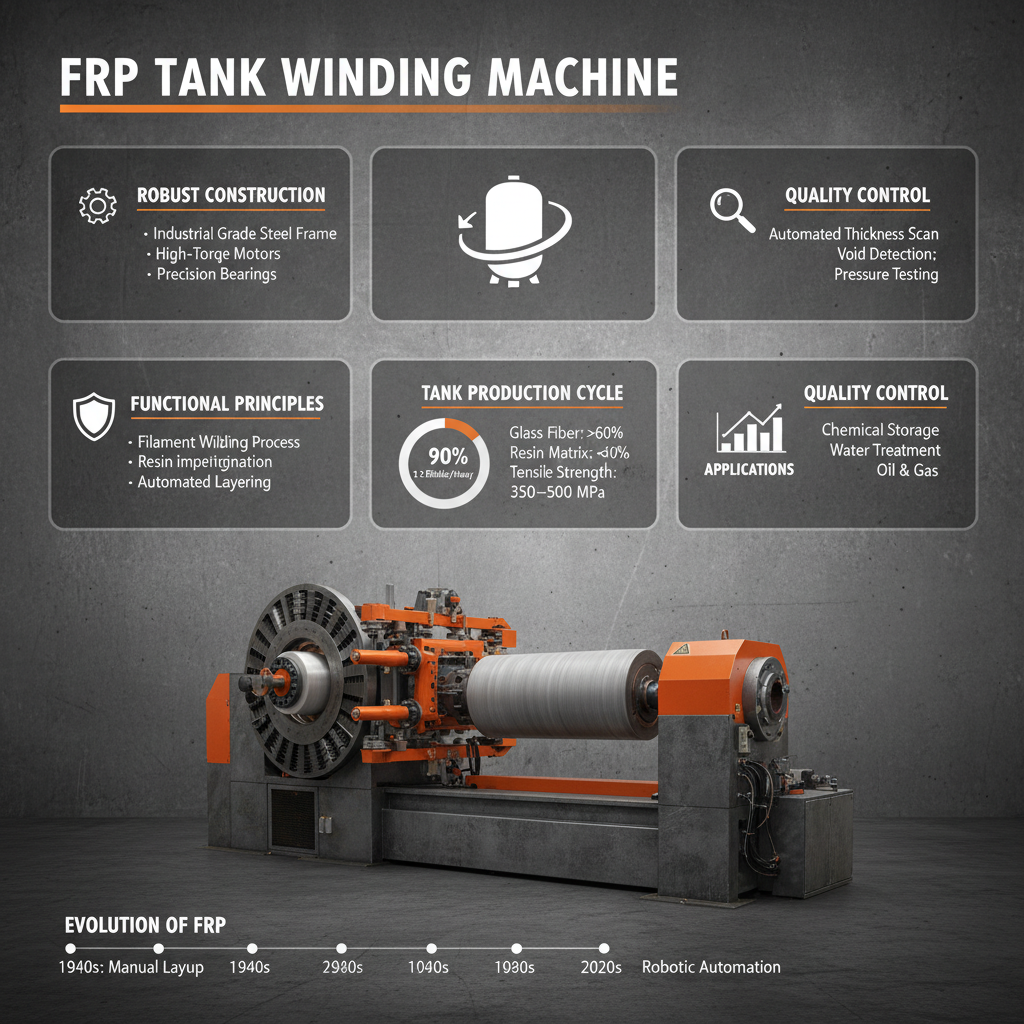
Understanding the operational mechanics of an frp tank winding machine is crucial for manufacturers aiming to optimize material usage and structural integrity. By precisely controlling the winding angle and fiber tension, these machines produce vessels capable of withstanding extreme pressures and temperatures, which are essential for wastewater treatment plants and chemical processing facilities globally.
As global environmental regulations tighten, the transition from traditional steel tanks to FRP alternatives has accelerated. The efficiency of a high-quality frp tank winding machine not only reduces production costs but also significantly lowers the carbon footprint of industrial infrastructure by extending the lifecycle of water pollution prevention equipment.
Global Industrial Relevance of FRP Winding Technology
On a global scale, the reliance on an frp tank winding machine has grown exponentially as industries strive to meet ISO standards for environmental safety and material durability. In regions with high salinity or extreme humidity, such as Southeast Asia and the Gulf Coast, traditional metallic tanks suffer from rapid oxidation, whereas FRP tanks produced via precision winding remain inert and structural.
The integration of these machines into the manufacturing workflow addresses the critical challenge of "containment failure," which the World Bank identifies as a significant risk in industrial chemical zones. By automating the application of reinforced glass fibers, the frp tank winding machine ensures that every vessel meets stringent safety coefficients, reducing the risk of catastrophic leaks in water pollution prevention systems.
Defining the FRP Tank Winding Machine and Its Purpose
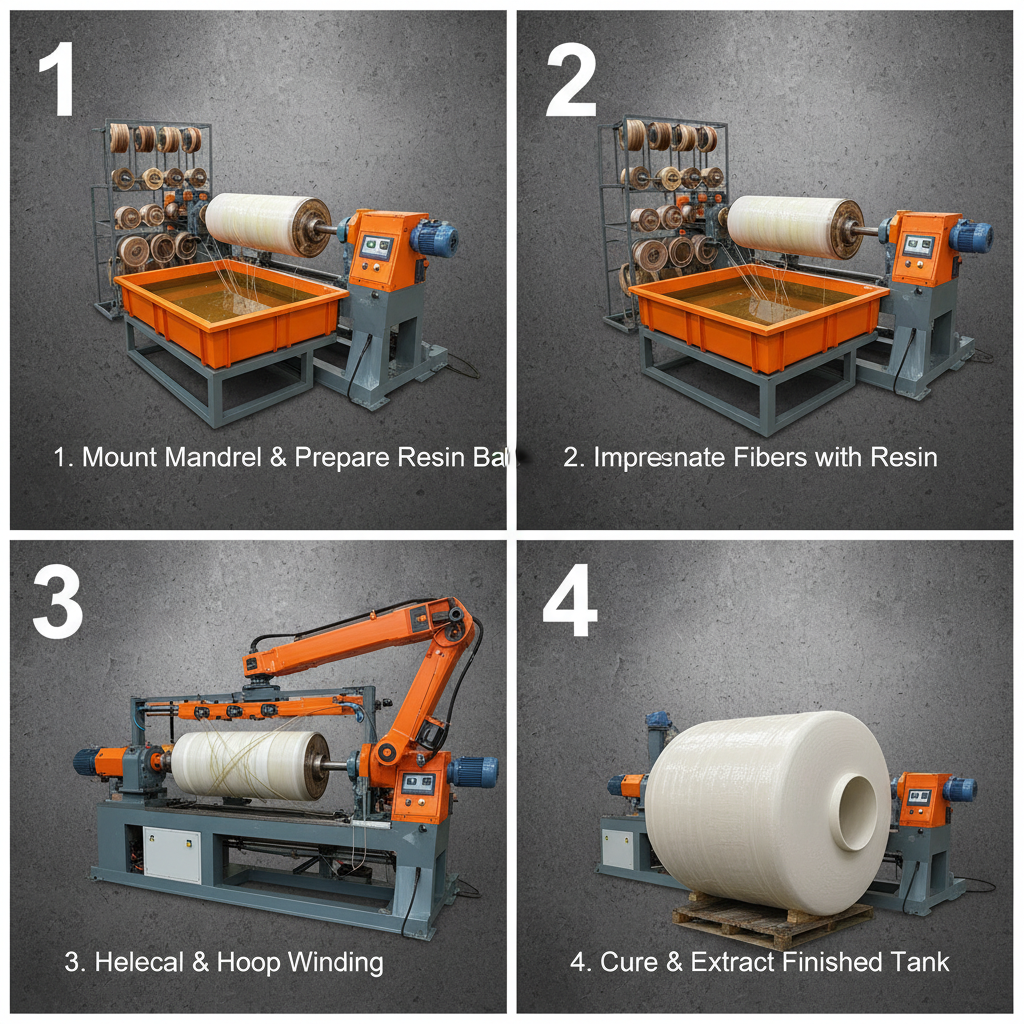
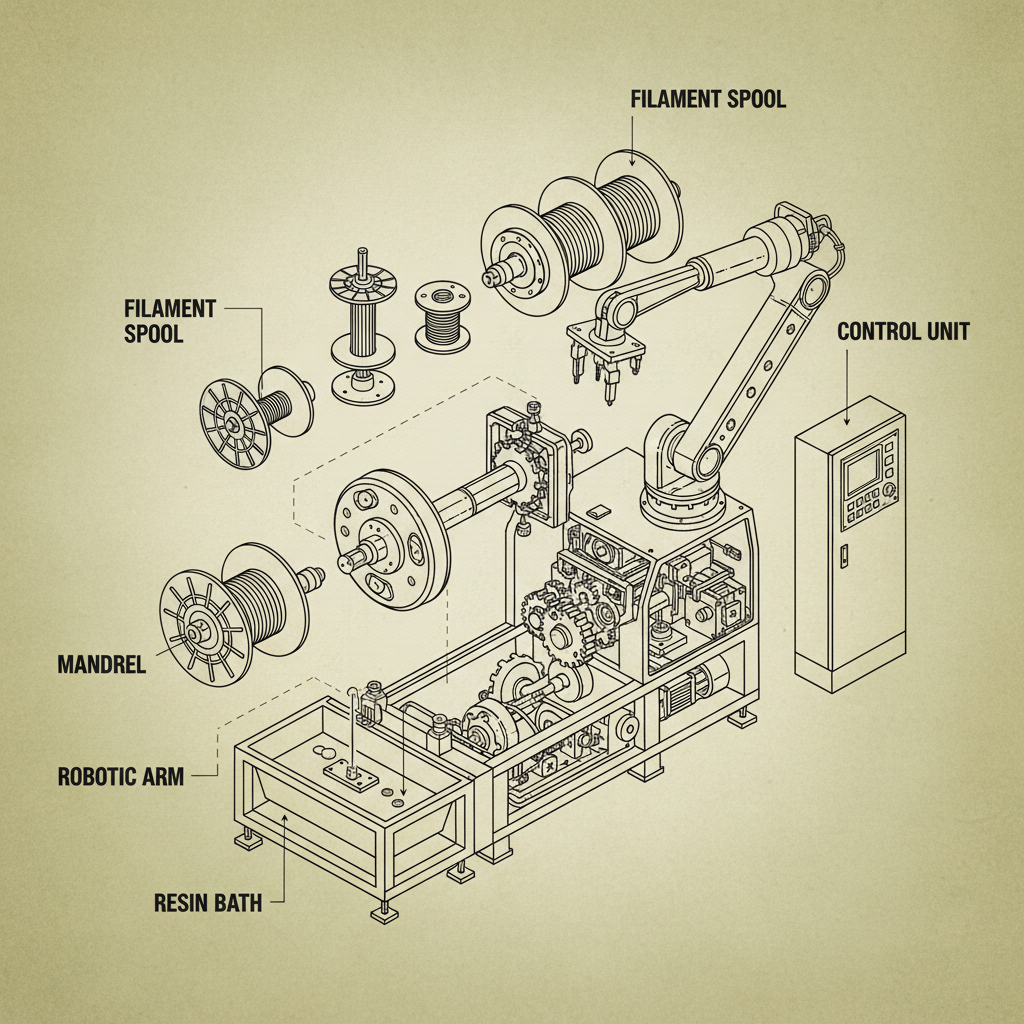
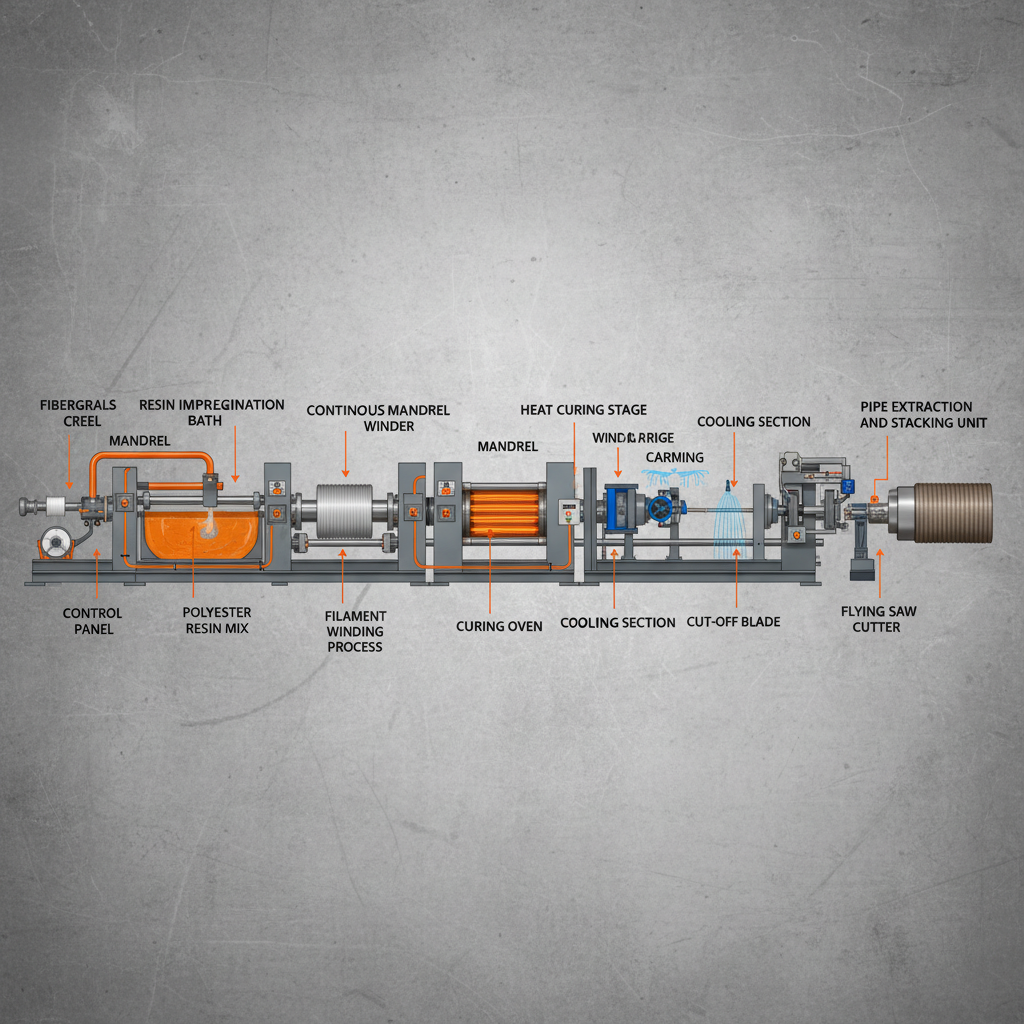
An frp tank winding machine is a specialized piece of industrial equipment designed to wrap continuous strands of reinforced fibers—typically glass or carbon—around a rotating mandrel. During this process, the fibers are saturated with a thermosetting resin, which, upon curing, creates a lightweight yet incredibly strong composite structure. This method is fundamentally different from hand-layup processes, as it provides superior fiber orientation and consistent wall thickness.
The primary purpose of this machinery is to engineer vessels that can handle high internal pressures and corrosive chemical loads without the need for heavy internal liners. By utilizing a frp tank winding machine, manufacturers can tailor the structural properties of the tank—increasing the winding angle for hoop strength or decreasing it for axial strength—depending on the specific hydraulic requirements of the water treatment application.
Beyond industrial utility, this technology serves humanitarian needs by facilitating the rapid production of clean water storage tanks in developing regions. The ability of an frp tank winding machine to produce durable, non-leaching containers ensures that potable water remains uncontaminated, supporting global health initiatives and sustainable infrastructure development.
Core Components Driving Precision in Winding
The heart of a professional frp tank winding machine is the CNC control system, which governs the synchronization between the rotating mandrel and the fiber delivery carriage. This precision ensures that the fiber placement is mathematically accurate, eliminating gaps or overlaps that could lead to structural weaknesses in the finished tank.
Another critical element is the resin bath and tensioning system. A high-performance frp tank winding machine must maintain constant fiber tension to ensure that the reinforcement is tightly bound to the mandrel; any fluctuation in tension can result in resin-rich areas or voids, compromising the tank's burst pressure rating.
Finally, the mandrel design—often featuring modular or collapsible segments—allows the frp tank winding machine to produce tanks of varying diameters and lengths. The thermal control system within the machine further optimizes the curing process, ensuring that the polymer matrix bonds perfectly with the glass fibers for maximum longevity.
Performance Metrics and Operational Efficiency
When evaluating the effectiveness of an frp tank winding machine, manufacturers focus on throughput and material waste. Automated winding significantly reduces the scrap rate compared to manual methods, as the software optimizes the fiber path to use the minimum amount of resin and glass necessary to achieve the required safety factor.
Furthermore, the operational efficiency is measured by the consistency of the wall thickness across large-scale vessels. A precision-engineered frp tank winding machine can maintain a tolerance of less than 1mm over several meters, which is critical for tanks used in high-pressure water filtration systems.
Efficiency Comparison of FRP Winding Methods
Real-World Applications in Water Pollution Control
In the sector of water quality pollution prevention, the frp tank winding machine is indispensable for creating chemical dosing tanks and wastewater aeration basins. These vessels must withstand constant exposure to sulfuric acid, chlorine, and other aggressive agents used in water purification. Unlike concrete or steel, FRP tanks wound by machine do not leach chemicals into the water, maintaining the purity of the treated output.
Beyond municipal plants, these machines are used to build specialized storage units for the oil and gas industry, specifically for produced water management in remote industrial zones. The portability and high strength-to-weight ratio of tanks produced by an frp tank winding machine allow them to be transported to off-grid locations and installed quickly, providing an immediate solution for hazardous waste containment.
Long-Term Economic and Sustainable Value
Investing in a high-quality frp tank winding machine offers significant long-term economic advantages. While the initial capital expenditure may be higher than manual equipment, the reduction in labor costs and the elimination of expensive anti-corrosion coatings on the finished product result in a lower total cost of ownership. The precision of the machine ensures that tanks have a service life often exceeding 30 years.
From a sustainability perspective, the use of an frp tank winding machine aligns with the "Green Manufacturing" movement. By optimizing the resin-to-glass ratio, the process minimizes chemical waste. Furthermore, the durability of FRP prevents frequent replacements, reducing the amount of industrial debris entering landfills and lowering the energy consumption associated with manufacturing new steel vessels.
Ultimately, the value lies in the peace of mind and trust that comes with structural reliability. In high-risk environments, the consistency provided by a frp tank winding machine ensures that safety protocols are met, protecting both the workforce and the surrounding ecosystem from the dangers of containment failure.
Future Trends in Automated Filament Winding
The future of the frp tank winding machine is moving toward "Industry 4.0" integration. We are seeing the emergence of AI-driven winding patterns that can analyze structural stress simulations in real-time and adjust the winding angle on the fly to optimize the tank's strength. This digital transformation will allow for the creation of "smart tanks" with embedded sensors during the winding process.
Material innovation is also playing a huge role. The next generation of frp tank winding machine setups are being designed to handle bio-resins and recycled carbon fibers, further pushing the boundaries of eco-friendly manufacturing. These sustainable materials, combined with automated precision, will make FRP tanks the gold standard for carbon-neutral water treatment infrastructure.
Additionally, we expect to see more modular, compact winding machines that can be deployed closer to the installation site, reducing the logistics costs and carbon emissions associated with transporting oversized tanks. The evolution of the frp tank winding machine will continue to drive innovation in water pollution prevention, making high-performance containment accessible and sustainable.
Comparative Analysis of FRP Winding Machine Technical Specifications
| Machine Model |
Control Precision |
Max Tank Diameter |
Efficiency Rating |
| Standard Series A |
± 2.0 mm |
2,000 mm |
7/10 |
| Precision Series P |
± 0.5 mm |
3,500 mm |
9/10 |
| Heavy Duty HD |
± 1.0 mm |
6,000 mm |
8/10 |
| Eco-Smart Winder |
± 0.3 mm |
3,000 mm |
10/10 |
| Industrial XL |
± 1.5 mm |
10,000 mm |
8/10 |
| Custom Prototype |
± 0.1 mm |
1,500 mm |
6/10 |
FAQS
A CNC frp tank winding machine provides unmatched precision in fiber placement and consistent tension, which are impossible to achieve by hand. This results in tanks with higher burst pressure ratings, uniform wall thickness, and a significant reduction in material waste, leading to lower long-term production costs and higher safety standards.
Tanks manufactured using a professional frp tank winding machine typically have a service life of 20 to 50 years, depending on the resin used and the chemicals stored. Their inherent resistance to corrosion and oxidation means they do not require the frequent painting or lining that steel tanks need, greatly extending their operational lifespan.
Yes, most modern winding machines are versatile. While E-glass is the most common, these machines can be configured to use carbon fiber for ultra-high strength applications or aramid fibers for impact resistance. The key is adjusting the tensioning system and the resin bath to match the specific properties of the chosen fiber.
Compared to traditional metal fabrication, the process is highly efficient. Using an frp tank winding machine reduces material scrap and eliminates the need for toxic anti-corrosion primers. Furthermore, the move toward bio-resins in the winding process is significantly reducing the environmental impact of composite manufacturing.
The most common challenge is maintaining consistent resin impregnation and fiber tension. If the resin viscosity changes due to temperature, it can lead to "dry spots" in the tank wall. Expert operators use temperature-controlled resin baths and precision tension sensors to overcome these issues and ensure structural integrity.
Focus on the maximum mandrel size and the CNC precision. For water treatment, where tanks can be very large, you need a machine with a high-capacity rotating bed and a carriage that can handle long-distance travel without losing alignment. Check for energy-efficient motors and easy-to-use software for rapid design changes.
Conclusion
The frp tank winding machine represents a critical intersection of materials science and mechanical engineering, providing the foundation for modern, corrosion-resistant industrial containment. By automating the complex process of filament winding, these machines ensure that water pollution prevention equipment is not only durable and safe but also economically viable for large-scale global deployment.
Looking forward, the integration of AI and sustainable bio-composites will further elevate the role of the frp tank winding machine in the circular economy. For manufacturers and environmental engineers, embracing this technology is a strategic step toward creating a cleaner, safer, and more resilient industrial infrastructure. Visit our website for more professional solutions: www.frpgrpmachine.com