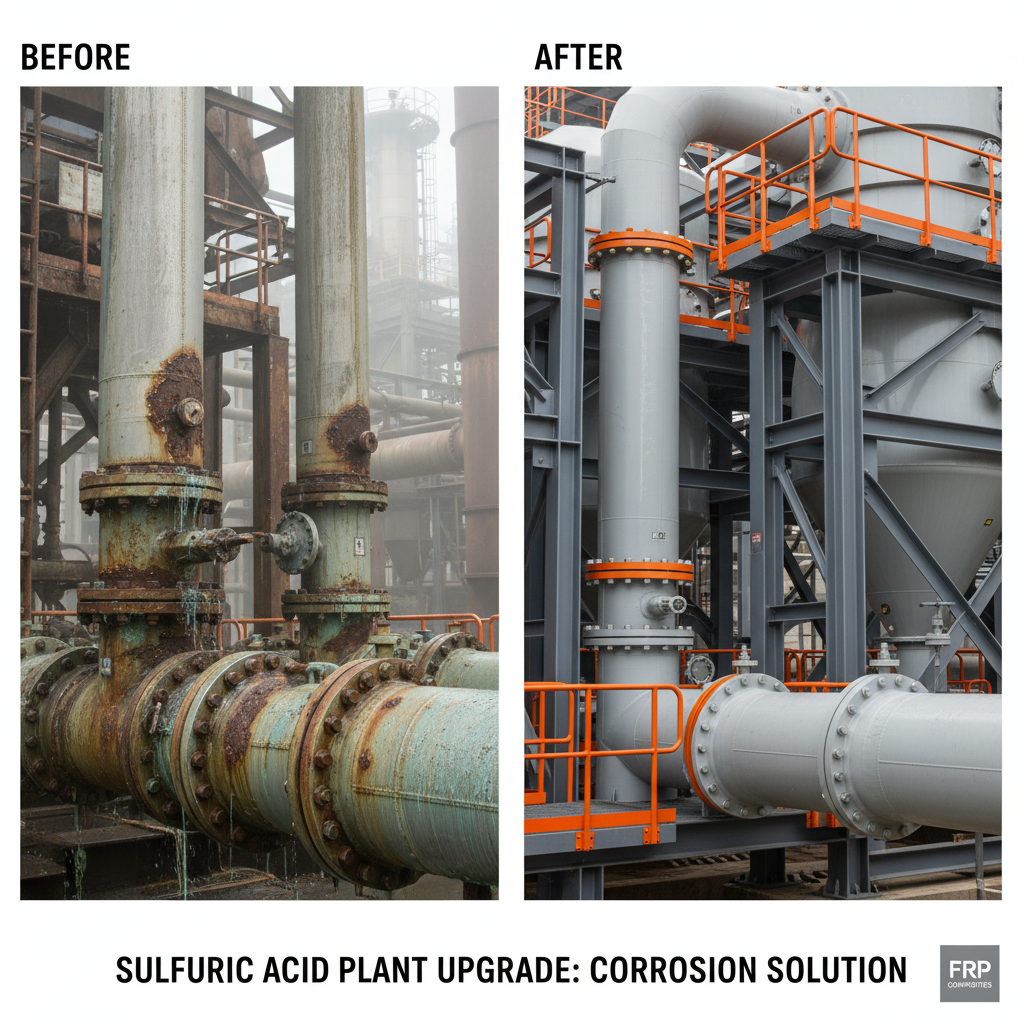
The industrial demand for high-performance materials has led to a significant shift toward advanced composite structures, particularly where extreme corrosion resistance and structural integrity are non-negotiable. In sectors like wastewater treatment and non-ferrous metal production, the adoption of specialized fiberglass products has replaced traditional metals and simple concrete to mitigate the costly effects of chemical erosion.
The primary engineering challenge lies in balancing chemical impermeability with mechanical strength. For tankhouse operators, the failure of a containment system can lead to catastrophic environmental leaks and unplanned production halts. Consequently, the industry is moving away from assembled components toward monolithic casting techniques that eliminate seams—the most common points of failure in chemical storage and processing.
This technical analysis explores the evolution of monolithic FRP structures, examining how three-layer composite systems provide long-term stability in aggressive environments. By evaluating material specifications and installation efficiencies, we provide a framework for selecting the right fiberglass products to maximize plant availability and safety.


Modern industrial containment relies on a synergistic three-layer system to ensure longevity. The internal layer consists of multiple layers of fiber-reinforced vinyl ester resin, acting as the primary chemical barrier. This layer is engineered to comply with international norms for impermeability, preventing hazardous electrolytes from penetrating the structural core.
Supporting this is the intermediate structural core made from polymer concrete. This material is specifically formulated to maintain a low coefficient of thermal expansion, which minimizes thermally-induced stresses during temperature fluctuations. Finally, an external FRP seal protects the core from accidental splashes and external environmental degradation.
When evaluating fiberglass products for electrolytic cells, the choice of resin is the most critical parameter. Vinyl ester resins are preferred over standard polyesters due to their superior resistance to strong acids and alkalis, which is essential for the production of high-purity metals like copper, zinc, and nickel.
Dimension tolerances also play a vital role in plant efficiency. Tight tolerances in monolithic casting simplify the alignment and leveling process, which is particularly important in facilities utilizing automated overhead crane systems. Reducing erection time by 25% or more is often achievable when moving from conventional polymer concrete to integrated monolithic FRP systems.
Furthermore, the internal geometry—including rounded shapes and optional sloped floors—significantly impacts maintenance. Smooth, non-stick surfaces reduce the adhesion of contaminants and heavy sludge, which in turn minimizes water consumption during cleaning cycles and accelerates the return to full operational service.
Engineers must balance the thickness of the chemical barrier against the overall weight and cost of the unit. While increasing the number of vinyl ester layers improves the safety margin for impermeability, it can introduce complexities in the curing process of the monolithic cast.
For extreme environments, optional multi-layered oriented fiber reinforcements can be added to the external seal. This provides an additional layer of seismic and impact protection, ensuring that the structural integrity of the cell is maintained even during catastrophic events.
The transition from traditional materials to advanced fiberglass products reflects a shift toward life-cycle value rather than initial capital expenditure. The reduction in maintenance costs and the extension of warranty periods (often exceeding 20 years) justify the adoption of monolithic composite systems.
The following assessment evaluates different material configurations based on normalized engineering ratings across five key performance indicators: Corrosion Resistance, Installation Speed, Structural Stability, Maintenance Ease, and Long-term Durability.
In a typical electrowinning plant, monolithic FRP cells are deployed in grids where lateral wall collaboration is essential. By designing cells that share structural support, operators can reduce the individual stress levels of each unit, which is critical when dealing with the immense weight of electrolyte and metal deposits. This systemic approach ensures that the facility can handle high-purity metal production without risking structural deformation.
Integration also involves coordinating the FRP cells with complementary equipment, such as acid mist control devices and thermal insulation. Because monolithic fiberglass products offer precise dimensional stability, they integrate seamlessly with overhead crane systems, reducing the risk of mechanical collision and ensuring consistent electrolyte agitation.
The industry is currently exploring the integration of smart sensing technologies directly into the FRP layers. By embedding fiber-optic sensors within the monolithic cast, operators could potentially monitor real-time structural stress and permeability, shifting from scheduled maintenance to condition-based maintenance.
Another emerging trend is the development of bio-based resins that maintain the high chemical resistance of vinyl esters while reducing the environmental footprint of production. As regulatory pressures on chemical manufacturing increase, the move toward sustainable composite materials will likely become a primary procurement criterion.
Furthermore, we anticipate an increase in the use of 3D-printed reinforcement patterns. By optimizing the orientation of fibers based on finite element analysis (FEA) of specific cell loads, manufacturers can reduce material waste while increasing the safety factor of the structural core.
Selecting the appropriate configuration for fiberglass products depends on the specific chemical aggression and mechanical loads of the application. A basic configuration may suffice for mild acidic storage, but high-purity metal production requires a reinforced monolithic system.
The following matrix provides a comparison of common configuration profiles. It is important to note that these are evaluation profiles based on industry standards and should be verified against specific project requirements and manufacturer technical data.
Decision-makers should prioritize the "Chemical Barrier Integrity" and "Structural Core Stability" metrics when operating in extreme electrolytic environments, as these factors directly influence the plant's operational availability.
| Configuration Type | Barrier Material | Structural Core | Recommended Use Case |
|---|---|---|---|
| Basic Profile | Standard Polyester | Lightweight FRP | Mild Aqueous Storage |
| Industrial Standard | Vinyl Ester Resin | FRP Laminate | General Chemical Tanks |
| High-Duty Monolithic | Multi-layer Vinyl Ester | Polymer Concrete | Electrolytic Cells |
| Precision Profile | Premium Vinyl Ester | Reinforced Concrete | High-Purity Metal Plants |
| Extreme Environment | Enhanced Barrier Layer | Seismic Reinforced Core | Aggressive Acid Processing |
| Industry Baseline | Mixed Resin | Standard GRP | Water Treatment/Sewer |
Monolithic casting eliminates seams, joints, and mechanical fasteners, which are the most frequent points of leakage and chemical attack in traditional tanks. By creating a single, continuous chemical barrier that is chemically bonded to the structural core, the system achieves significantly higher impermeability and structural stability, reducing the risk of catastrophic failure and extending the service life of the equipment.
The polymer concrete core provides the necessary mechanical strength to support heavy loads while maintaining a low coefficient of thermal expansion. This prevents the cell from warping or cracking during temperature shifts common in electrolytic processes. Its density and formulation ensure that the cells maintain tight dimensional tolerances, which is essential for the operation of automated crane systems in tankhouses.
Depending on the chemical concentration, temperature, and operating conditions, high-grade monolithic vinyl ester systems are often designed for a service life exceeding 20 years. The longevity is achieved through the use of multiple barrier layers that prevent the migration of corrosive agents into the structural core, provided the system is operated within its specified technical limits.
Yes, they are specifically designed for efficient installation. Features such as tight dimensional tolerances and integrated alignment markers can reduce erection time by 25% compared to conventional polymer concrete cells. However, site preparation must ensure a level foundation to maintain the lateral wall collaboration that reduces structural stress by approximately 40%.
The internal surface is cast with a smooth, flat finish and rounded corners to eliminate "dead zones" where sludge can accumulate. This non-stick surface minimizes the adhesion of contaminants, allowing for faster water sweeping and drainage. This architectural choice significantly reduces the volume of water required for cleaning and minimizes the time the cell is out of production.
Structural safety is enhanced through the use of internal bidirectional, pultruded FRP bar mesh reinforcement. This mesh maintains the integrity of the cell even in the event of a catastrophic failure of the primary wall. Additionally, external seismic reinforcement blocks are often used to confine floor supports, ensuring stability during seismic events or heavy impact.
The transition toward monolithic composite architectures represents a fundamental shift in how the industry handles chemical containment. By integrating a vinyl ester chemical barrier with a low-expansion polymer concrete core, operators can effectively eliminate the most common failure modes associated with seams and thermal stress. This technical approach not only extends the operational lifespan of the facility but also significantly reduces the total cost of ownership through decreased maintenance and higher availability.
For engineers and procurement managers, the key to success lies in verifying the chemical compatibility of the resin and the structural suitability of the core for their specific load profiles. Investing in high-specification fiberglass products ensures that the infrastructure can support the increasing demands of high-purity metal production while maintaining absolute safety for personnel and the environment.