Nov 25,2025

Fiberglass Sewer Tanks: Durable, Lightweight Solutions for Modern Sanitation

The Growing Importance of Fiberglass Sewer Tanks in Modern Infrastructure

If you stop for a moment and think about the sheer volume of wastewater produced daily across cities and rural areas worldwide, it’s staggering. Managing that safely and sustainably is one of those behind-the-scenes miracles that keep our communities healthy. Enter fiberglass sewer tanks: lightweight, durable, and corrosion-resistant vessels designed to store and manage sewage efficiently. Their role is quietly becoming critical, especially in regions lacking traditional wastewater infrastructure.

Understanding these tanks isn’t just a niche industrial curiosity; it impacts global sanitation goals, environmental protection, and public health. As urbanization accelerates and climate change pressures grow, exploring why fiberglass sewer tanks matter is both timely and practical.

Why Fiberglass Sewer Tanks Matter Globally

Globally, according to the United Nations’ Sustainable Development Goals, about 2 billion people still lack safely managed sanitation services. Traditional concrete or steel tanks often fall short due to installation challenges, corrosion, or weight issues, especially in remote or disaster-affected locations.

Fiberglass sewer tanks address many of these challenges bluntly — their lightness allows faster deployment; their resistance to chemicals and corrosion means lower maintenance; their durable structure reduces leaks and contamination risks.

But there’s more: as regulations tighten and funding for green infrastructure increases, fiberglass tanks are gaining traction as a modern solution that bridges industrial needs and humanitarian efforts alike.

What Exactly Are Fiberglass Sewer Tanks?

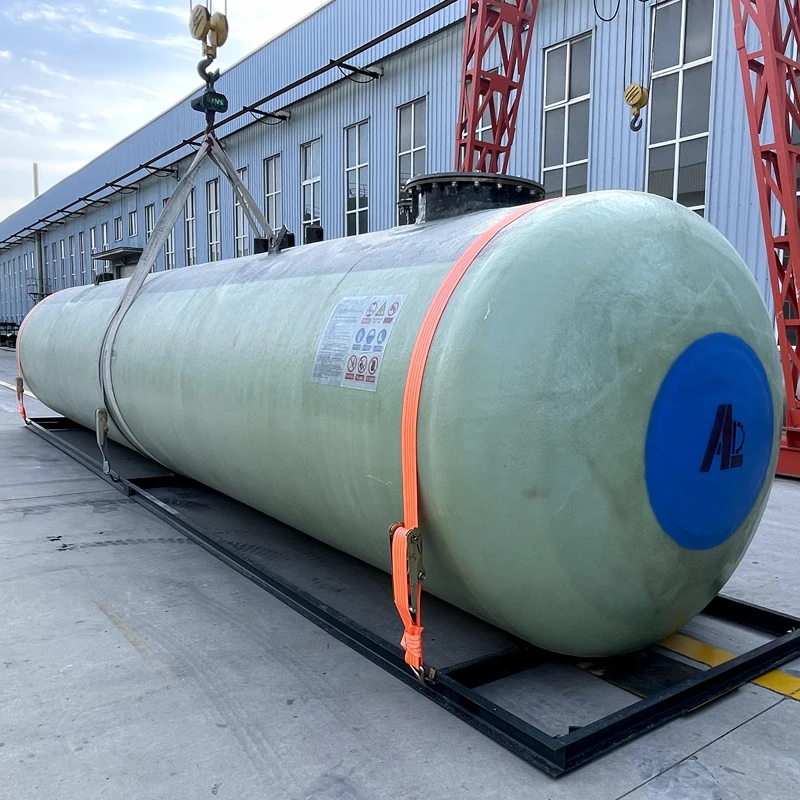
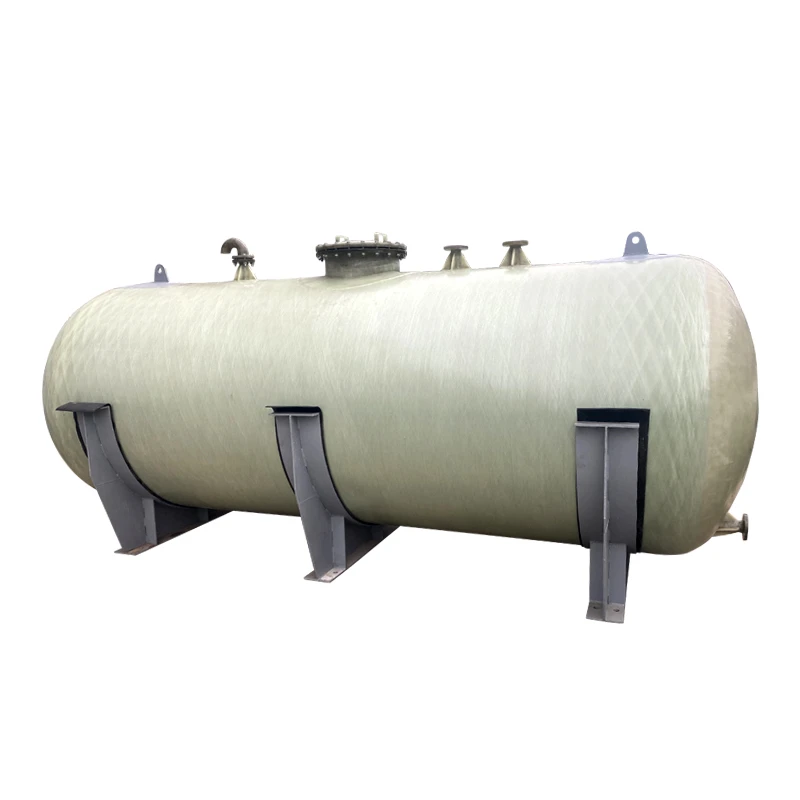
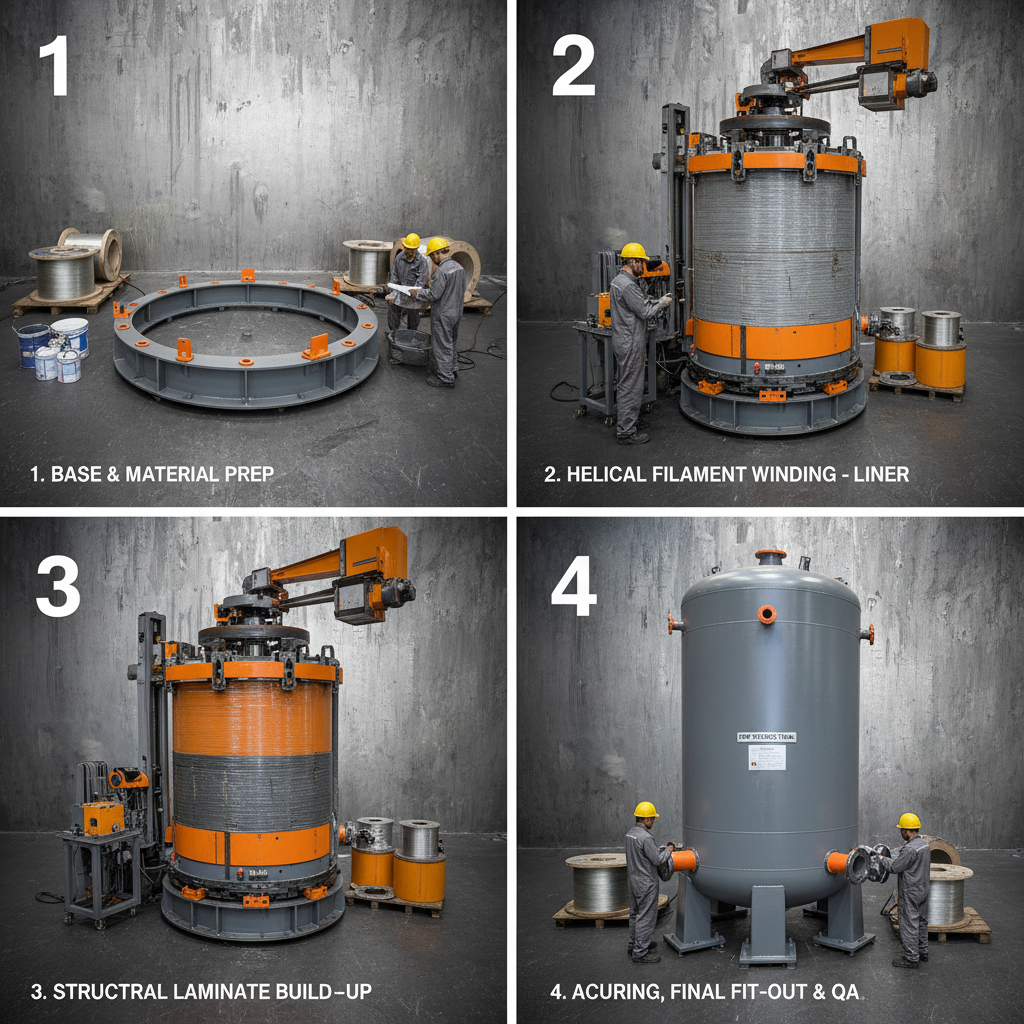
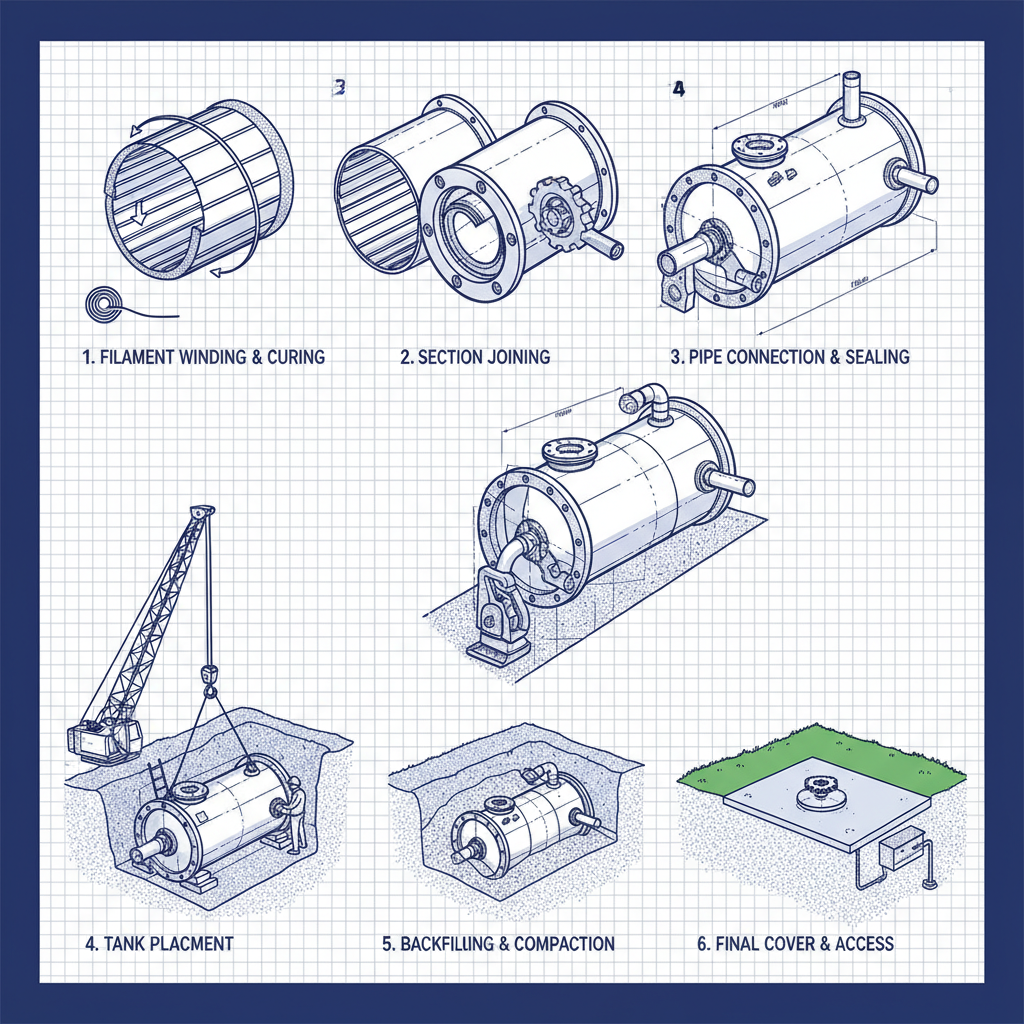
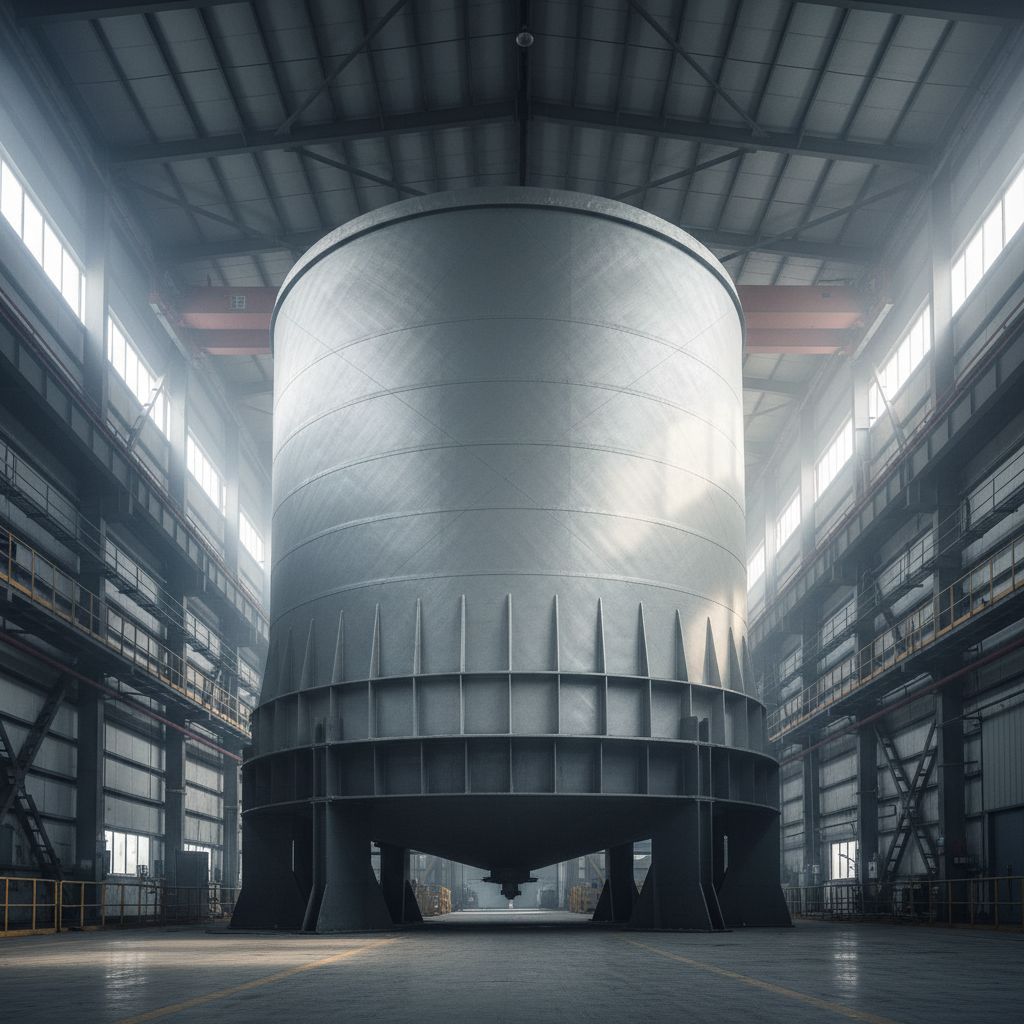
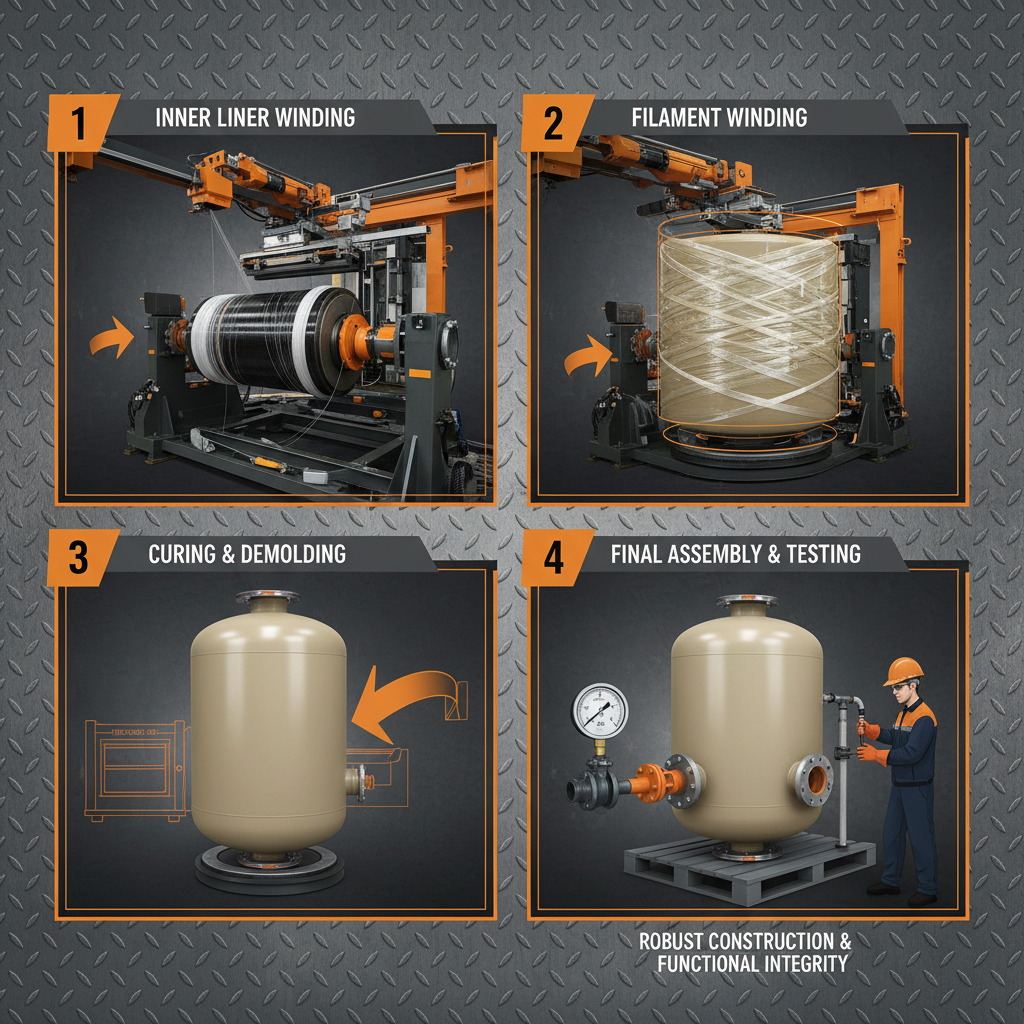
Simply put, they are underground or aboveground containers made from fiberglass-reinforced plastic (FRP) designed specifically for the collection and storage of sewage and wastewater. Unlike traditional tanks, fiberglass versions are molded as a solid monolithic piece or layered with resin and glass fibers, making them lightweight yet incredibly strong.

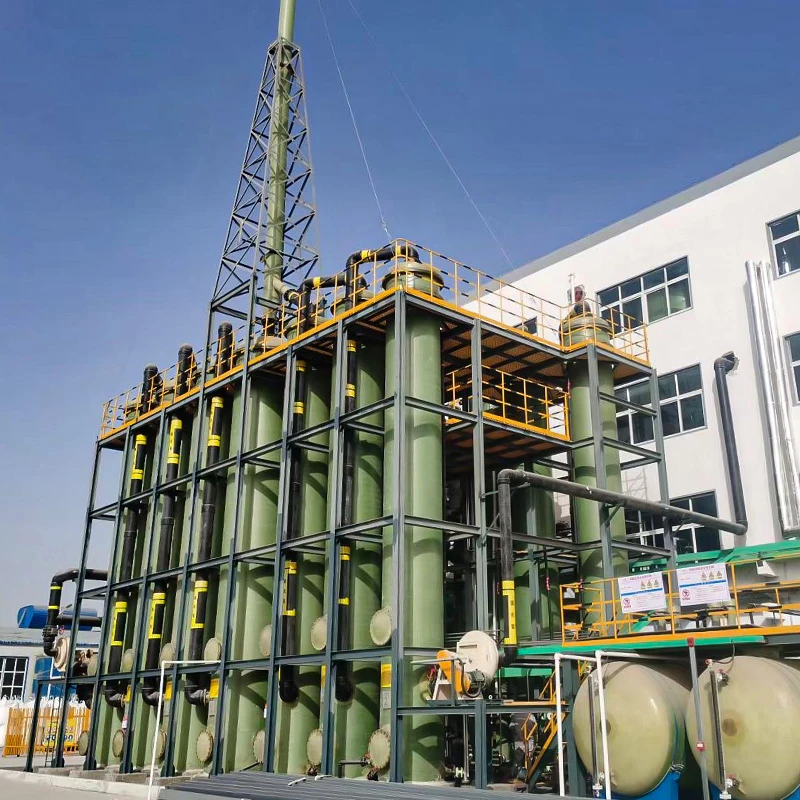
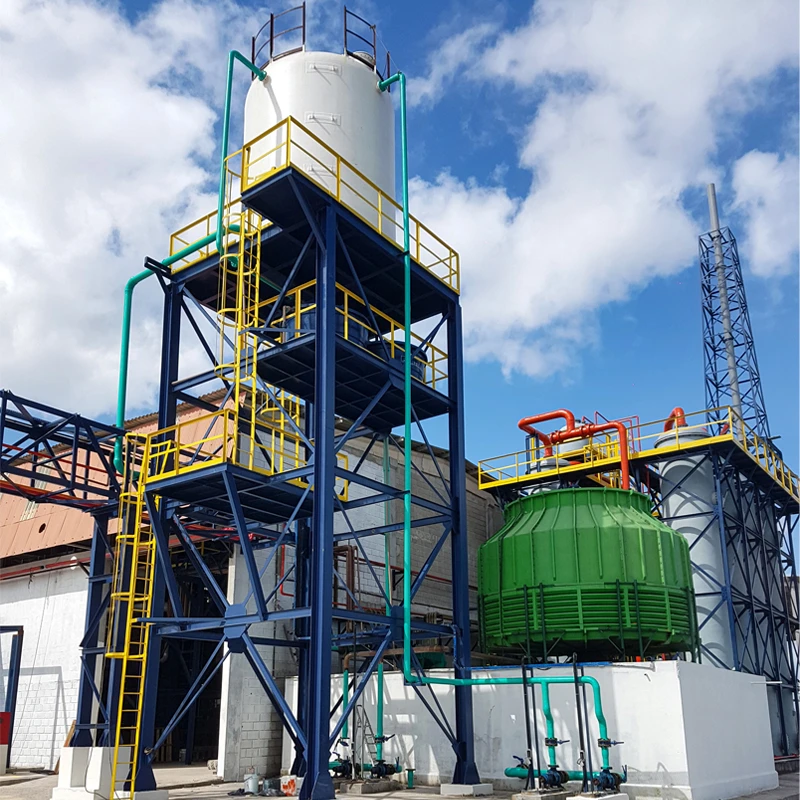
This blend of durability and portability means they’re adaptable for diverse settings such as municipal sewage treatment plants, industrial parks, remote construction sites, or emergency sanitation in disaster zones.

Core Components of Fiberglass Sewer Tanks

Durability and Corrosion Resistance

The key material, FRP, resists harsh chemicals common in sewage and doesn’t rust or corrode like steel. This means fewer repairs and longer service life — often 30+ years, if maintained properly.

Lightweight & Easy Installation

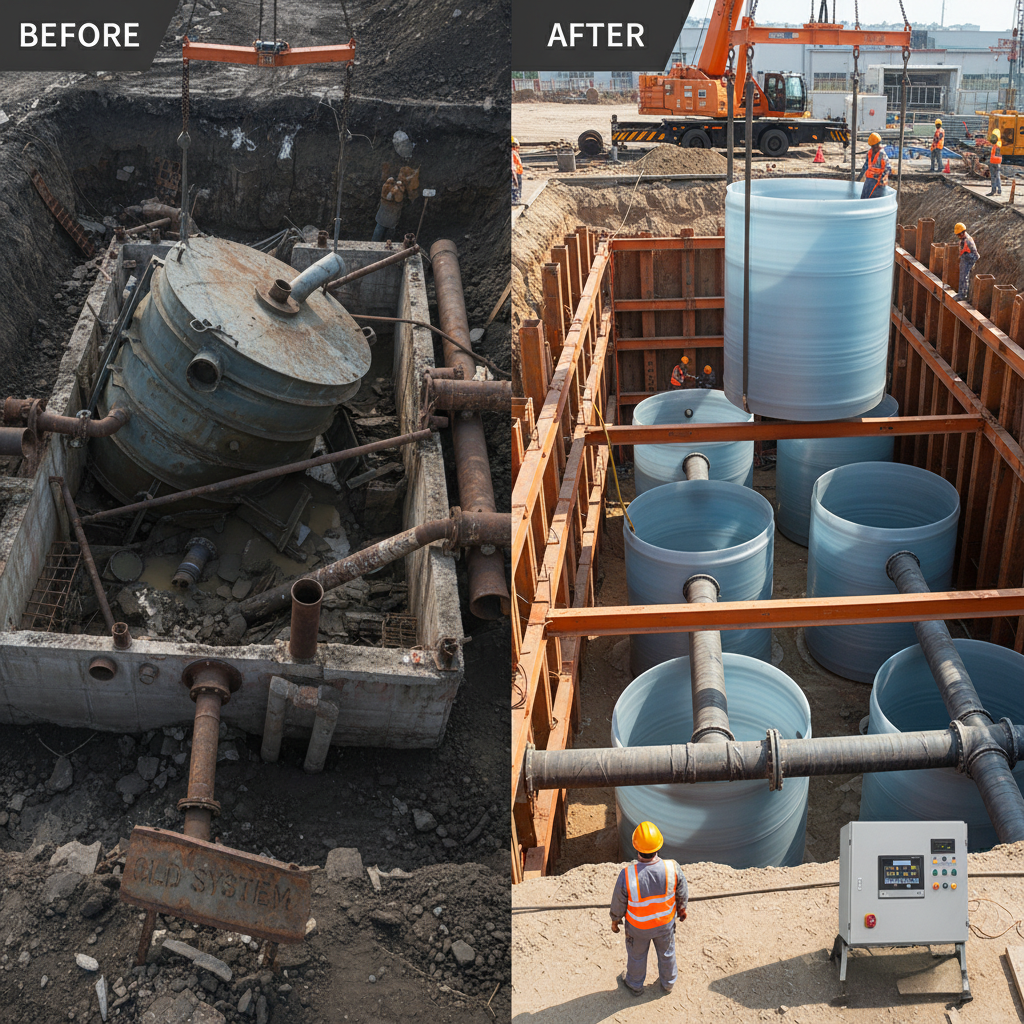
A single fiberglass sewer tank can be a fraction of the weight of a comparable concrete tank, easing transportation and reducing the need for heavy machinery in tough locations.

Leak-Proof Construction

The manufacturing process can produce fully sealed units, eliminating risk of leaks that might contaminate groundwater — a critical advantage for environmental compliance.

Customization & Scalability

Fiberglass tanks can be engineered in various sizes and shapes to suit specific projects, whether it’s a tiny septic system for a cabin or a modular tank network for a large industrial complex.

Mini takeaway:

At their core, fiberglass sewer tanks blend practical material science with flexible design, solving problems that older materials struggle with — durability, weight, and environmental safety.

Real-World Applications of Fiberglass Sewer Tanks

The versatility and reliability of these tanks mean they’ve been embraced across several sectors:

  • Disaster Relief Operations: In the aftermath of events like hurricanes or earthquakes, rapid sanitation solutions prevent disease outbreaks.
  • Remote Industrial Sites: Mining or oil extraction sites often lack sewer infrastructure, requiring portable and robust tanks that can be relocated.
  • Rural and Peri-Urban Communities: Where public sewer lines aren’t feasible, fiberglass tanks enable safer sewage containment.
  • Municipal Sewage Systems: As modular components in treatment plants, they allow phased upgrades without prolonged shutdowns.

Oddly enough, in places like parts of Southeast Asia, fiberglass tanks are quietly reshaping wastewater handling, providing sustainable options in populous yet infrastructure-challenged areas.

Advantages That Keep Driving Adoption

What keeps engineers and planners coming back to fiberglass sewer tanks? Several tangible benefits stand out:

  • Cost Efficiency: Lower transport and installation costs reduce upfront investment.
  • Environmental Impact: Leak-proof design protects groundwater; long life cuts waste.
  • Social Value: Safer sanitation improves community health, restoring dignity especially in underserved regions.
  • Reliability: Less downtime and maintenance translate into trust with users.

Even the simplest rural sanitation project feels decidedly more modern and sustainable with fiberglass tanks in place.

Specifications at a Glance: Typical Fiberglass Sewer Tank

Feature Specification
Material Fiberglass Reinforced Plastic (FRP)
Capacity Range 500 to 50,000 gallons
Weight ~150 to 2,500 lbs (depending on size)
Installation Aboveground or underground, modular assembly possible
Lifespan 30+ years
Resistance Corrosion, chemicals, UV radiation

Comparing Leading Vendors of Fiberglass Sewer Tanks

Vendor Product Range Standard Certifications Lead Time Custom Options
AquaFibers Inc. 500-20,000 gal ISO 9001, NSF 61 3–6 weeks Shape, capacity, fittings
ClearWater FRP 1,000-50,000 gal ISO 14001, ASTM standards 4–8 weeks Color, UV resistance options
EnviroTanks Ltd. 750-15,000 gal NSF 61, UL listed 2-5 weeks Modular kits, fittings

Emerging Trends & Innovations

Fiberglass sewer tanks aren’t standing still. Industry insiders are seeing a push toward:

  • Green Certification: Tanks made using recycled glass fibers and bio-based resins to reduce environmental footprint.
  • Smart Monitoring: Integration of IoT sensors to track tank levels, leakage, or structural health remotely, improving maintenance.
  • Modular & Expandable Systems: Allowing communities and industries to scale sewage capacity without costly overhauls.
  • Regulatory Alignment: Design innovations to meet stricter water quality and pollution control policies worldwide.

Challenges in Adoption and How They’re Being Overcome

Common sticking points include higher upfront material costs compared to concrete and sometimes unfamiliarity among local installers. However, training programs and international partnerships are addressing these hurdles. For example, NGOs working in sanitation often collaborate with manufacturers to provide turnkey solutions that combine supply, installation, and local capacity-building — turning skeptical communities into believers.

FAQ: Your Top Questions on Fiberglass Sewer Tanks

1. How long do fiberglass sewer tanks typically last?

With proper installation and maintenance, fiberglass sewer tanks can last over 30 years without significant degradation, mainly thanks to their corrosion-resistant materials.

2. Can fiberglass tanks be installed in areas with high groundwater levels?

Yes, their lightweight nature makes fiberglass tanks easier to install even in problematic soils. However, proper anchoring is required to prevent flotation when groundwater rises.

3. Are fiberglass sewer tanks environmentally friendly?

Fiberglass tanks help prevent leaks and contamination. Moreover, advancements in eco-friendly resin and recycling processes are making them more sustainable over time.

4. How customizable are fiberglass sewer tanks?

Manufacturers can tailor tanks’ shape, size, fittings, and even color to meet specific project requirements — from small rural septic systems to industrial-scale processing.

5. What kind of maintenance do these tanks require?

Regular inspection for cracks or biofilms and pump-outs according to sewage volume are standard. The FRP material itself requires less corrosion-related work than traditional tanks.

Wrapping Up: The Quiet Revolution Beneath Our Feet

Fiberglass sewer tanks might not grab headlines on TV or social media, but their impact is profound. Providing a smart, adaptable, and sustainable solution to a stubborn global problem, they represent a small but mighty step forward for sanitation infrastructure.

If you’re considering modern sanitation options or upgrading existing systems, exploring the possibilities with these tanks is well worth it — simple, durable, and trusted by more industries every year.

Want to learn more? Visit our site for detailed info on fiberglass sewer tanks and how they can transform your project.
References

  1. United Nations Sustainable Development Goal 6: Clean Water and Sanitation
  2. Wikipedia - Sewage Treatment
  3. ISO Standards for Water Quality and Treatment
Upsell Products
Upsell News
Guide to Fiber Water Tank Price and FRP Storage Costs
Jul 01,2026
Guide to Fiber Water Tank Price and FRP Storage Costs
Understanding Fiber Water Tank Price: A Comprehensive Investment Guide When searching for a reliable liquid storage solution, understanding the factors that influence fiber water tank price is essential for optimizing your operational budget. Fiber-Reinforced Plastic FRP tanks have become the industry standard for water and chemical storage due to their exceptional corrosion resistance and structural integrity. Whether you are managing a municipal water project or an industrial chemical plant, selecting the right tank requires a balance between initial cost and long-term durability. In this guide, we will explore the variables that drive pricing and why FRP remains the most cost-effective choice
Guide to Fibreglass Water Tank Prices and FRP Investment
Jun 29,2026
Guide to Fibreglass Water Tank Prices and FRP Investment
Understanding Fibreglass Water Tank Prices: A Comprehensive Investment Guide When planning water storage for industrial or commercial applications, understanding the factors that influence fibreglass water tank prices is essential for optimizing your budget. Fibreglass Reinforced Plastic FRP tanks offer a superior alternative to steel or concrete due to their corrosion resistance and lightweight nature. Whether you are in the petroleum, chemical, or drainage industry, selecting a tank that balances cost with long-term durability is key. In this guide, we will explore the pricing drivers, technical advantages, and specifications of high-quality FRP storage solutions to help you make an informed purchasing decision.
Industrial Fiberglass Water Tank Price and Buyers Guide
Jun 27,2026
Industrial Fiberglass Water Tank Price and Buyers Guide
Analyzing Fiberglass Water Tank Price: A Comprehensive Buyers Guide When investing in industrial water storage, understanding the fiberglass water tank price is essential for effective budget planning and operational efficiency. Fiberglass Reinforced Plastic FRP tanks have become the gold standard in water quality pollution prevention and chemical storage due to their exceptional corrosion resistance and durability. Whether you are managing a municipal water system or a specialized manufacturing plant, choosing the right tank involves balancing initial costs with long-term lifecycle value. In this guide, we will break down the factors that influence pricing and why FRP is often the most cost-effective choice
Comprehensive Guide to GRP Sectional Water Tanks Prices and Quality
Jun 26,2026
Comprehensive Guide to GRP Sectional Water Tanks Prices and Quality
Selecting the right water storage solution is critical for industrial, commercial, and residential infrastructure. When evaluating grp sectional water tanks prices, it is essential to look beyond the initial sticker price and consider the total cost of ownership, including durability, installation ease, and maintenance. Glass Reinforced Plastic GRP tanks offer a superior alternative to traditional steel or concrete, providing exceptional corrosion resistance and modular flexibility. In this guide, we will explore the factors that influence pricing and why GRP remains the gold standard for modern water management.
Guide to Understanding FRP Tank Cost and Investment Value
Jun 25,2026
Guide to Understanding FRP Tank Cost and Investment Value
Understanding FRP Tank Cost: A Comprehensive Guide to Investment and Value When investing in industrial storage solutions, understanding the frp tank cost is essential for accurate budgeting and long-term operational planning. Fiber Reinforced Plastic FRP tanks offer an exceptional balance of corrosion resistance, structural strength, and longevity, making them the preferred choice for chemical, petroleum, and water treatment industries. While initial pricing can vary based on specifications, the total cost of ownership is often significantly lower than traditional steel tanks due to reduced maintenance. In this guide, we will explore the factors influencing pricing and the advanced machinery used to produce these high-performance vessels.
Best Industrial 500 gallon chemical tank for Storage and Safety
Jun 23,2026
Best Industrial 500 gallon chemical tank for Storage and Safety
Choosing the Best 500 Gallon Chemical Tank for Industrial Storage When managing hazardous materials or industrial fluids, the integrity of your storage system is non-negotiable. A high-quality 500 gallon chemical tank provides the perfect balance between capacity and footprint, making it an ideal choice for mid-sized operations, water treatment facilities, and chemical processing plants. Selecting the right material and design ensures not only the safety of your personnel but also the longevity of your assets. In this guide, we will explore the critical factors you need to consider to optimize your chemical storage efficiency and compliance.
Safe and Efficient Industrial Chemical Storage Tanks Guide
Jun 21,2026
Safe and Efficient Industrial Chemical Storage Tanks Guide
Maximizing Safety and Efficiency with Industrial Chemical Storage Tanks In the modern industrial landscape, the secure management of hazardous materials is not just a regulatory requirement but a critical safety priority. Selecting the right industrial chemical storage tanks is essential for preventing leaks, reducing environmental impact, and ensuring the longevity of your infrastructure. Whether you are dealing with highly corrosive acids or volatile solvents, the material composition and design of your storage system determine your operational risk. This guide explores the technical nuances of chemical storage to help you make an informed investment for your facility.
Best Guide to Choosing a Durable 200 Gallon Chemical Tank
Jun 20,2026
Best Guide to Choosing a Durable 200 Gallon Chemical Tank
The Ultimate Guide to Choosing a 200 Gallon Chemical Tank Finding the right storage solution for hazardous or corrosive substances is critical for industrial safety and operational efficiency. A 200 gallon chemical tank offers a versatile mid-size capacity, ideal for businesses that need a balance between space-saving design and sufficient volume for chemical processing. Whether you are dealing with acids, bases, or specialty solvents, the material composition of your tank determines its lifespan and your facilitys safety. In this guide, we will explore the technical specifications, material options, and best practices for maintaining these essential industrial assets.
Industrial Fiberglass Water Storage Tanks Guide for Efficiency
Jun 18,2026
Industrial Fiberglass Water Storage Tanks Guide for Efficiency
The Ultimate Guide to Fiberglass Water Storage Tanks for Industrial Use Selecting the right containment system is critical for maintaining water purity and operational efficiency. fiberglass water storage tanks have emerged as a superior alternative to traditional steel or concrete reservoirs. Combining high strength-to-weight ratios with exceptional corrosion resistance, these tanks are designed to withstand the harshest environmental conditions while ensuring the longevity of your infrastructure. Whether you are managing a municipal water system or an industrial chemical process, understanding the advantages of FRP Fiber Reinforced Plastic technology is the first step toward a sustainable storage solution.
Industrial Storage Guide for Modular Sectional Water Tanks
Jun 13,2026
Industrial Storage Guide for Modular Sectional Water Tanks
When managing large-scale water storage, efficiency and scalability are non-negotiable. Sectional water tanks offer a versatile and robust solution for industries requiring customized capacities and easy installation in restricted spaces. Unlike monolithic tanks, these systems are engineered from modular panels, allowing for precise sizing and seamless transport to remote sites. Whether it is for fire protection, potable water, or industrial processing, choosing the right tank configuration can significantly impact the longevity and reliability of your water infrastructure. In this guide, we explore why these modular systems are the preferred choice for modern engineering projects worldwide.
Industrial Safety Guide for Double Wall Chemical Tanks
Jun 11,2026
Industrial Safety Guide for Double Wall Chemical Tanks
In the world of industrial chemical storage, containment is not just a preferenceit is a critical safety requirement. double wall chemical tanks provide a sophisticated layer of security, ensuring that hazardous materials are contained even if the primary vessel fails. By utilizing a tank-within-a-tank design, these systems prevent catastrophic leaks, protect the surrounding environment, and ensure compliance with strict regulatory standards. Whether you are managing a water treatment plant or a chemical manufacturing facility, understanding the nuances of secondary containment is essential for operational longevity and risk mitigation.
High Efficiency and Durability of Fiberglass Storage Tanks
Jun 09,2026
High Efficiency and Durability of Fiberglass Storage Tanks
In the world of industrial liquid containment, choosing the right material is critical for safety, longevity, and cost-effectiveness. fiberglass storage tanks , also known as FRP Fiber Reinforced Plastic tanks, have emerged as the gold standard for storing corrosive chemicals, water, and hazardous materials. Unlike traditional metal tanks, fiberglass offers an unparalleled combination of strength and chemical inertness. Whether you are managing a municipal water system or a complex chemical processing plant, understanding the advantages of these advanced composite structures is essential for optimizing your infrastructure and reducing long-term maintenance costs.
Durable FRP Vessel for Water Treatment and Industrial Filtration
Apr 16,2026
Durable FRP Vessel for Water Treatment and Industrial Filtration
In the modern era of industrial and residential water purification, the choice of containment materials is critical for efficiency and longevity. An frp vessel for water treatment has emerged as the gold standard, replacing traditional steel tanks due to its superior corrosion resistance and lightweight properties. Whether you are dealing with desalination, softening, or filtration, using Fiber Reinforced Plastic (FRP) ensures that your system remains leak-proof and durable against aggressive chemicals. In this comprehensive guide, we will explore why FRP is the preferred choice for water treatment professionals worldwide and how to select the right vessel for your specific application.
Industrial Guide for Choosing the Right FRP Vertical Tank
Apr 09,2026
Industrial Guide for Choosing the Right FRP Vertical Tank
In today's industrial landscape, the storage of corrosive chemicals and aggressive liquids requires materials that can withstand extreme conditions without degrading. The frp vertical tank has emerged as a premier solution, offering an exceptional balance of strength, lightweight properties, and unmatched chemical resistance. Whether you are managing a water treatment plant or a chemical processing facility, understanding the nuances of Fiber Reinforced Plastic (FRP) is essential for ensuring operational safety and longevity. In this comprehensive guide, we will explore why vertical configurations are preferred and how these tanks outperform traditional metal alternatives.
Comprehensive Guide to FRP Underground Water Tank Solutions and Applications
Apr 07,2026
Comprehensive Guide to FRP Underground Water Tank Solutions and Applications
Fiberglass Reinforced Polymer (FRP) underground water tanks are becoming increasingly popular for a wide range of applications, from potable water storage to industrial wastewater containment. Their superior corrosion resistance, lightweight nature, and design flexibility make them an excellent alternative to traditional materials like concrete or steel. This article will delve into the benefits, applications, construction, and considerations for implementing FRP underground water tanks, providing a comprehensive overview for engineers, contractors, and project managers.
Comprehensive Guide to Frp Underground Water Storage Tanks and Their Applications
Apr 04,2026
Comprehensive Guide to Frp Underground Water Storage Tanks and Their Applications
When considering water storage solutions, particularly for industrial, agricultural, or municipal applications, frp underground water storage tanks stand out as a durable, cost-effective, and environmentally friendly option. These tanks are increasingly favored over traditional materials like concrete or steel due to their superior corrosion resistance, lighter weight, and ease of installation. This article delves into the benefits, applications, construction, and considerations when choosing an FRP tank, providing a detailed overview for potential buyers and project planners.
For More Details Pls Contact Us
Thank you for your interest in our gloves! We offer high-quality, durable, and comfortable gloves with fast delivery and competitive prices. For any questions or customization, feel free to contact us. We look forward to working with you!

If you are interested in our products, you can choose to leave your information here, and we will be in touch with you shortly.