Dec 03,2025

FRP Manhole Covers: Durable, Lightweight Solutions for Infrastructure Safety

Understanding FRP Manhole Covers: Durable Solutions for Modern Infrastructure

When you think about the infrastructure beneath our feet, manhole covers may seem like purely functional elements—just heavy lids keeping things closed. But FRP manhole covers have revolutionized this basic piece of city planning. These lightweight, durable, corrosion-resistant covers stand out worldwide, especially as urban areas and industrial sites demand safer, more sustainable materials. Oddly enough, understanding what makes FRP manhole covers so valuable offers insights not only into engineering but also into broader concerns like sustainability, worker safety, and cost efficiency.

Global Relevance of FRP Manhole Covers

Globally, infrastructure safety is a big deal. The United Nations reports that modern urbanization requires resilient materials that reduce risks of accidents and environmental damage (1). Traditional cast iron or concrete covers weigh a fortune and corrode over time, posing health hazards and hefty maintenance costs. Enter FRP—or fiberglass reinforced polymer—manhole covers, which have gained popularity across continents, from the dense cities of Asia to the industrial hubs of Europe and America.

These covers address key challenges: reducing worker injuries from heavy lifting, resisting corrosion in harsh environments, and helping cities meet ISO sustainability guidelines related to material lifespan and recyclability (2). Yet, despite their growth, not everyone fully appreciates why FRP covers might just be the “unsung heroes” of modern infrastructure.

What is an FRP Manhole Cover?

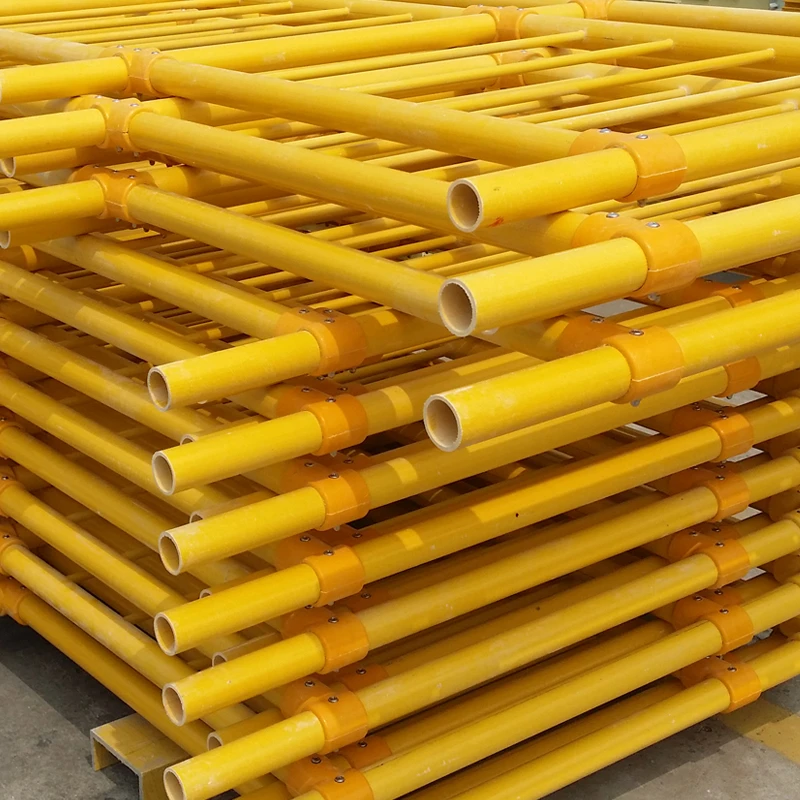
Simply put, an FRP manhole cover is a lid made from fiberglass reinforced polymer—a composite material combining plastic resin with glass fibers. This yields a product that is tough, lightweight, and resistant to chemical and environmental damage. Unlike traditional metal or concrete lids, FRP covers don’t rust, aren’t bulky, and often come with anti-slip surfaces for safety.

The innovation here bridges the gap between engineering durability and practical needs in urban and industrial settings. It has even humanitarian relevance: in disaster zones where speedy repairs and replacements matter, FRP covers are easier to handle and deploy.

Key Features of FRP Manhole Covers

1. Durability and Corrosion Resistance

Traditional metal covers corrode, especially in wastewater or coastal areas. FRP's polymer matrix naturally resists acids, alkalis, and moisture, extending the cover’s lifespan significantly.

2. Lightweight Design

FRP covers typically weigh just 20-40% of metal equivalents, improving worker safety by reducing injury risk during installation or maintenance.

3. High Load-Bearing Capacity

Despite their lightness, many FRP covers can handle traffic loads up to 40 tons or more, meeting stringent road safety standards.

4. Non-Conductive and Non-Magnetic

Because FRP doesn’t conduct electricity or generate magnetic fields, it’s preferable in sensitive environments such as telecom or electrical substations.

5. Customizability

From colors and sizes to surface textures, FRP covers can be tailored to specific site needs or branding requirements.

Spec Typical Range Benefit
Weight (kg) 7–15 Easier handling and installation
Load Capacity (tons) 10–40+ Supports pedestrian & vehicular traffic
Corrosion Resistance High (chemical & moisture) Long-lasting even in harsh environments
Electrical Conductivity Negligible Safe around electrical infrastructure

Global Applications & Use Cases

Across Europe, especially in countries like Germany and the Netherlands, FRP covers are common in water treatment plants and urban sanitation networks. Asian megacities including Tokyo and Mumbai rely on FRP lids to reduce maintenance downtime caused by corrosion. In North America, more industrial sites are choosing FRP covers because they do not spark, which is vital in petrochemical plants.

In disaster relief scenarios—such as after flooding or earthquakes—FRP covers are favored due to their light weight and rapid deployability, helping restore vital utilities quickly. NGOs and municipalities alike have adopted these covers to safeguard worker health and community infrastructure, often referencing their compliance with ISO 9001 quality standards (3).

Vendor Comparison: Choosing the Right FRP Manhole Cover Supplier

Supplier Lead Time Customization Certifications Price Range
FRPPro Global 3-4 weeks Full range ISO 9001, ISO 14001 $$$
Fiberglass Solutions 2 weeks Standard sizes only ISO 9001 $$
UrbanCover Inc. 4-6 weeks Custom colors & logos ISO 9001, ASTM certified $$$$

Advantages & Long-Term Value

FRP manhole covers save money over time. Their durability means fewer replacements and less downtime. The lightweight nature lowers injury risk and speeds up installation, which is huge on job sites. There’s also an environmental angle: lower weight reduces transportation emissions, and many FRP products are recyclable or made using environmentally friendly resins.

Beyond practical benefits, there’s peace of mind in knowing infrastructure is safer for workers and the public. Many city planners comment on how FRP covers feel “modern” and “forward-thinking,” symbolizing innovation and trustworthiness in local government infrastructure efforts.

Emerging Trends & Innovations

The future of FRP manhole covers involves integrating digital elements like embedded sensors to monitor load and detect tampering. Sustainable manufacturing methods are advancing too, with bio-based resins gradually replacing petroleum-based ones, making covers greener. Automation during production is increasing quality and lowering costs. Plus, policies from environmental agencies encourage materials that extend service life and reduce waste, keeping FRP in favor.

Common Challenges & Solutions

One challenge is the upfront cost, which some smaller municipalities find daunting. But when calculated by lifespan and reduced labor costs, it pays off. Also, quality varies between manufacturers, so verifying certifications is key. Some engineers worry about UV degradation; modern FRP formulations include UV inhibitors and coatings to tackle that.

Retention clips and safety locking mechanisms are evolving to address security concerns, especially in sensitive urban areas prone to theft or vandalism.

FAQ: Practical Questions on FRP Manhole Covers

  • How long do FRP manhole covers typically last?
    Most high-quality FRP manhole covers last 15–25 years, depending on exposure and loading conditions.
  • Are FRP covers safe for heavy vehicular traffic?
    Yes, many FRP covers are rated for loads over 40 tons, suitable even for highways and industrial sites.
  • Can FRP manhole covers be recycled?
    Some FRP covers are recyclable, but it depends on the resin type. Always check with your supplier for materials info.
  • Is installation more complicated than metal covers?
    No, installation is often faster and safer due to lighter weight and integrated safety designs.
  • Where can I buy reliable FRP manhole covers?
    Suppliers like those at frp manhole cover offer certified products with customization and global shipping options.

Conclusion

FRP manhole covers represent a smart step forward—combining durability, safety, and sustainability in infrastructure that quietly serves millions daily. Whether in bustling cities or isolated factories, they balance cost-efficiency with long-term value. If you’re looking to upgrade or specify materials for your next project, these covers deserve a close look. Visit frp manhole cover for products and detailed information that can meet your precise needs.

Mini takeaway: FRP manhole covers aren’t just a practical upgrade—they’re a meaningful investment in infrastructure longevity and safety.


References:

  1. United Nations Human Settlements Programme (UN-Habitat) – Urban Infrastructure Reports
  2. International Organization for Standardization (ISO) – ISO 9001 Quality Management
  3. ASTM International – Standards for Composite Materials
Upsell Products
Upsell News
Durable FRP Vessel for Water Treatment and Industrial Filtration
Apr 16,2026
Durable FRP Vessel for Water Treatment and Industrial Filtration
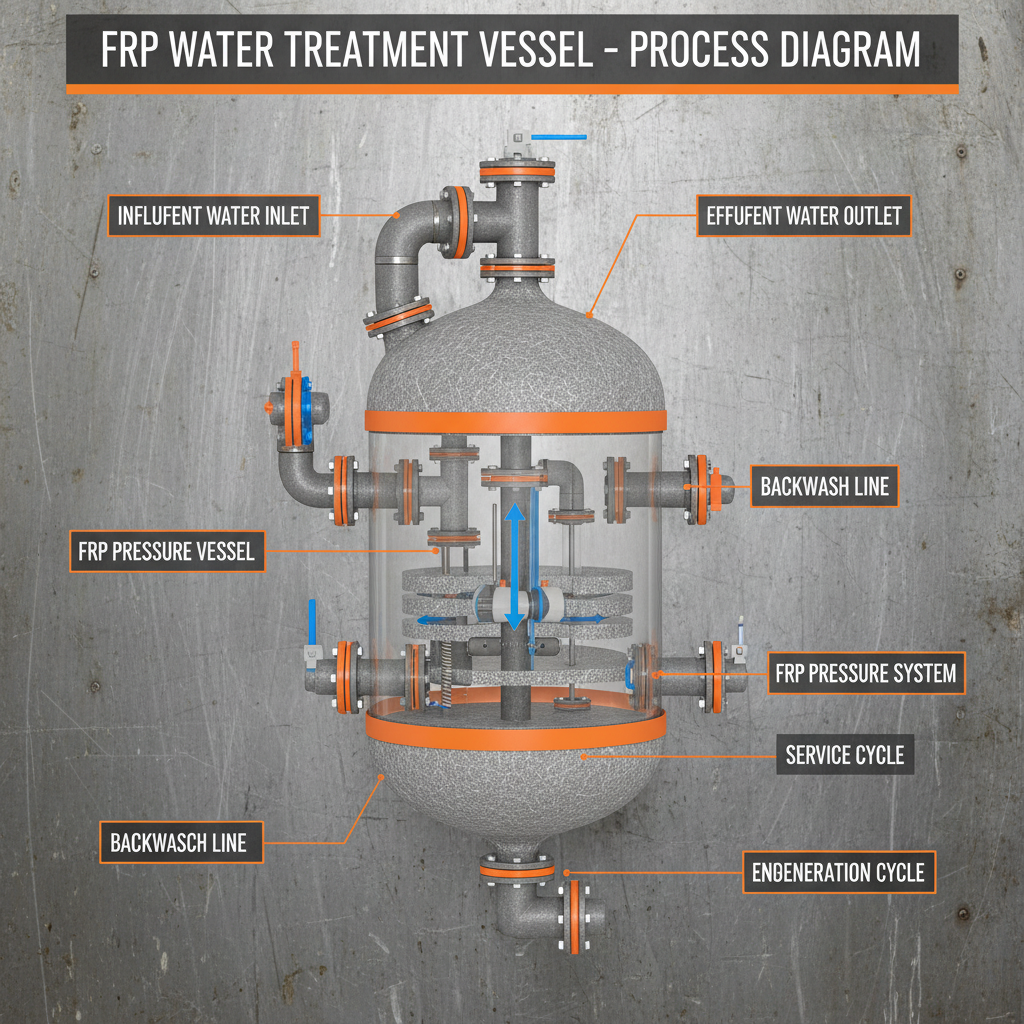
In the modern era of industrial and residential water purification, the choice of containment materials is critical for efficiency and longevity. An frp vessel for water treatment has emerged as the gold standard, replacing traditional steel tanks due to its superior corrosion resistance and lightweight properties. Whether you are dealing with desalination, softening, or filtration, using Fiber Reinforced Plastic (FRP) ensures that your system remains leak-proof and durable against aggressive chemicals. In this comprehensive guide, we will explore why FRP is the preferred choice for water treatment professionals worldwide and how to select the right vessel for your specific application.
Industrial Guide for Choosing the Right FRP Vertical Tank
Apr 09,2026
Industrial Guide for Choosing the Right FRP Vertical Tank
In today's industrial landscape, the storage of corrosive chemicals and aggressive liquids requires materials that can withstand extreme conditions without degrading. The frp vertical tank has emerged as a premier solution, offering an exceptional balance of strength, lightweight properties, and unmatched chemical resistance. Whether you are managing a water treatment plant or a chemical processing facility, understanding the nuances of Fiber Reinforced Plastic (FRP) is essential for ensuring operational safety and longevity. In this comprehensive guide, we will explore why vertical configurations are preferred and how these tanks outperform traditional metal alternatives.
Comprehensive Guide to FRP Underground Water Tank Solutions and Applications
Apr 07,2026
Comprehensive Guide to FRP Underground Water Tank Solutions and Applications
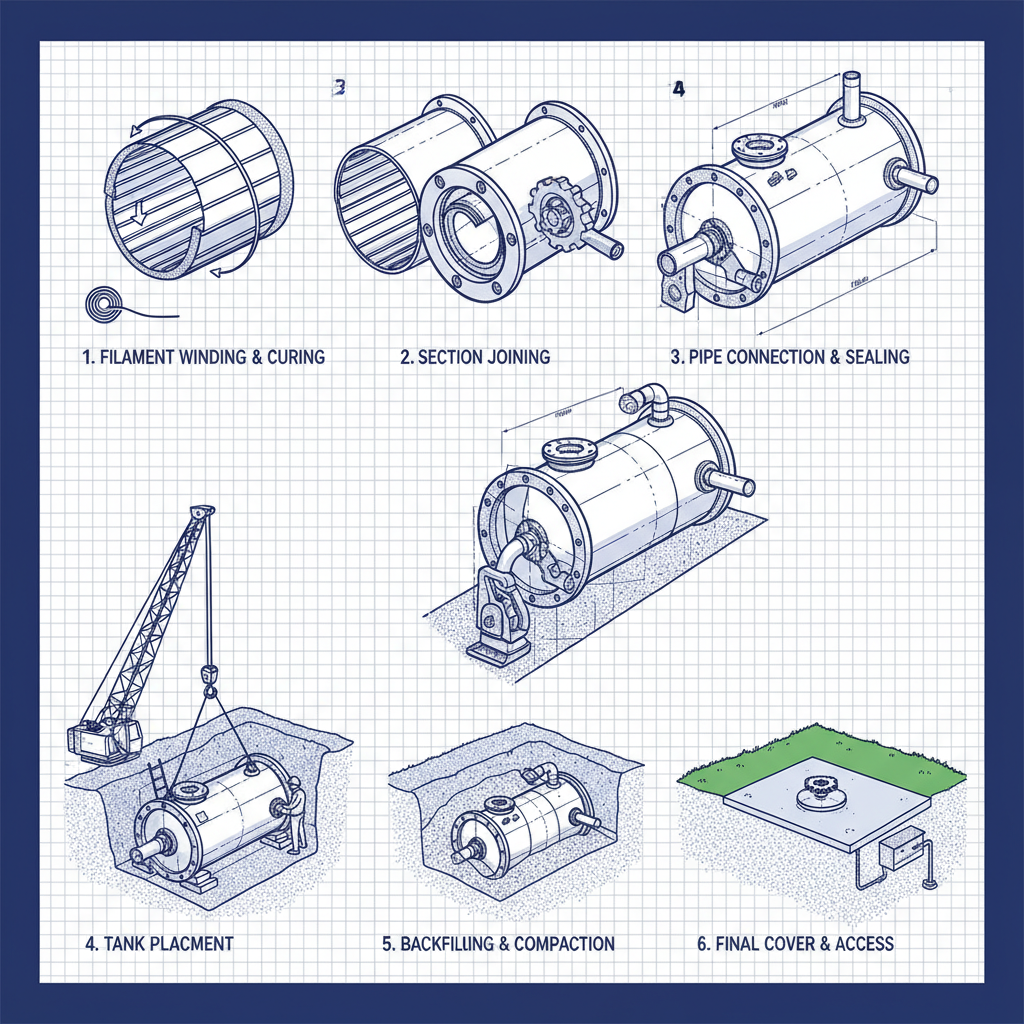
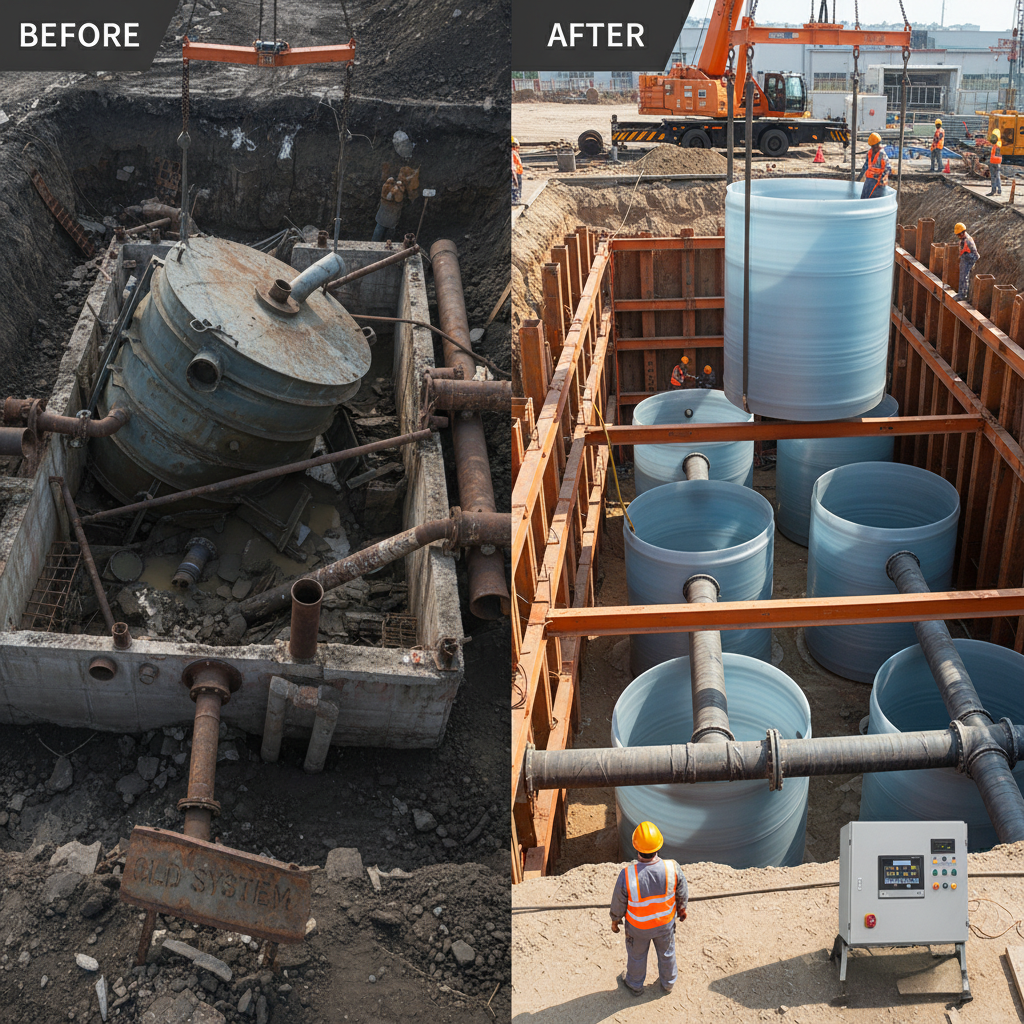
Fiberglass Reinforced Polymer (FRP) underground water tanks are becoming increasingly popular for a wide range of applications, from potable water storage to industrial wastewater containment. Their superior corrosion resistance, lightweight nature, and design flexibility make them an excellent alternative to traditional materials like concrete or steel. This article will delve into the benefits, applications, construction, and considerations for implementing FRP underground water tanks, providing a comprehensive overview for engineers, contractors, and project managers.
Comprehensive Guide to Frp Underground Water Storage Tanks and Their Applications
Apr 04,2026
Comprehensive Guide to Frp Underground Water Storage Tanks and Their Applications
When considering water storage solutions, particularly for industrial, agricultural, or municipal applications, frp underground water storage tanks stand out as a durable, cost-effective, and environmentally friendly option. These tanks are increasingly favored over traditional materials like concrete or steel due to their superior corrosion resistance, lighter weight, and ease of installation. This article delves into the benefits, applications, construction, and considerations when choosing an FRP tank, providing a detailed overview for potential buyers and project planners.
Sulfuric Acid Production Line - Hebei Aoliande|Efficient H2SO4 Plant Technology
Apr 01,2026
Sulfuric Acid Production Line - Hebei Aoliande|Efficient H2SO4 Plant Technology
Discover efficient H2SO4 plant technology and advanced sulfuric acid production solutions. Hebei Aoliande combines energy-saving furnace design and eco-friendly HCl recovery systems for sustainable industrial applications. Explore now: https://www.frpgrpmachine.com/sulfuric-acid-production-line-for-h2so4-plant.html
Sulfuric Acid Production Line - Hebei Aoliande|Efficient H2SO4 Plant Technology
Apr 01,2026
Sulfuric Acid Production Line - Hebei Aoliande|Efficient H2SO4 Plant Technology
Discover efficient H2SO4 plant technology and advanced sulfuric acid production solutions. Hebei Aoliande combines energy-saving furnace design and eco-friendly HCl recovery systems for sustainable industrial applications. Explore now: https://www.frpgrpmachine.com/sulfuric-acid-production-line-for-h2so4-plant.html
Sulfuric Acid Production Line - Hebei Aoliande|Efficient H2SO4 Plant Technology
Apr 01,2026
Sulfuric Acid Production Line - Hebei Aoliande|Efficient H2SO4 Plant Technology
Discover efficient H2SO4 plant technology and advanced sulfuric acid production solutions. Hebei Aoliande combines energy-saving furnace design and eco-friendly HCl recovery systems for sustainable industrial applications. Explore now: https://www.frpgrpmachine.com/sulfuric-acid-production-line-for-h2so4-plant.html
Sulfuric Acid Production Line - Hebei Aoliande|Efficient H2SO4 Plant Technology
Apr 01,2026
Sulfuric Acid Production Line - Hebei Aoliande|Efficient H2SO4 Plant Technology
Discover efficient H2SO4 plant technology and advanced sulfuric acid production solutions. Hebei Aoliande combines energy-saving furnace design and eco-friendly HCl recovery systems for sustainable industrial applications. Explore now: https://www.frpgrpmachine.com/sulfuric-acid-production-line-for-h2so4-plant.html
Sulfuric Acid Production Line - Hebei Aoliande|Efficient H2SO4 Plant Technology
Apr 01,2026
Sulfuric Acid Production Line - Hebei Aoliande|Efficient H2SO4 Plant Technology
Discover efficient H2SO4 plant technology and advanced sulfuric acid production solutions. Hebei Aoliande combines energy-saving furnace design and eco-friendly HCl recovery systems for sustainable industrial applications. Explore now: https://www.frpgrpmachine.com/sulfuric-acid-production-line-for-h2so4-plant.html
Sulfuric Acid Production Line - Hebei Aoliande|Efficient H2SO4 Plant Technology
Apr 01,2026
Sulfuric Acid Production Line - Hebei Aoliande|Efficient H2SO4 Plant Technology
Discover efficient H2SO4 plant technology and advanced sulfuric acid production solutions. Hebei Aoliande combines energy-saving furnace design and eco-friendly HCl recovery systems for sustainable industrial applications. Explore now: https://www.frpgrpmachine.com/sulfuric-acid-production-line-for-h2so4-plant.html
Comprehensive Guide to Frp Underground Storage Tanks for Reliable Storage Solutions
Mar 31,2026
Comprehensive Guide to Frp Underground Storage Tanks for Reliable Storage Solutions
Fiberglass Reinforced Polymer (FRP) underground storage tanks are becoming increasingly popular for a wide range of applications, from fuel storage to wastewater management. Their corrosion resistance, lightweight nature, and durability offer significant advantages over traditional materials like steel. This article will provide an in-depth look at FRP underground storage tanks, covering their benefits, applications, installation, and maintenance. Understanding these aspects is crucial for making informed decisions about long-term storage solutions.
Comprehensive Guide to Selecting the Ideal FRP Tank for Water Storage Solutions
Mar 28,2026
Comprehensive Guide to Selecting the Ideal FRP Tank for Water Storage Solutions
When it comes to reliable and durable water storage, FRP tanks for water are increasingly becoming the preferred solution for a wide range of applications. These tanks, constructed from Fiber Reinforced Polymer (FRP) materials, offer significant advantages over traditional storage options like steel or concrete. This article delves into the benefits, applications, and considerations when selecting an FRP tank for your water storage needs, providing a detailed overview for businesses and individuals alike.
Comprehensive Guide to Frp Tank and Vessel Applications and Manufacturing
Mar 26,2026
Comprehensive Guide to Frp Tank and Vessel Applications and Manufacturing
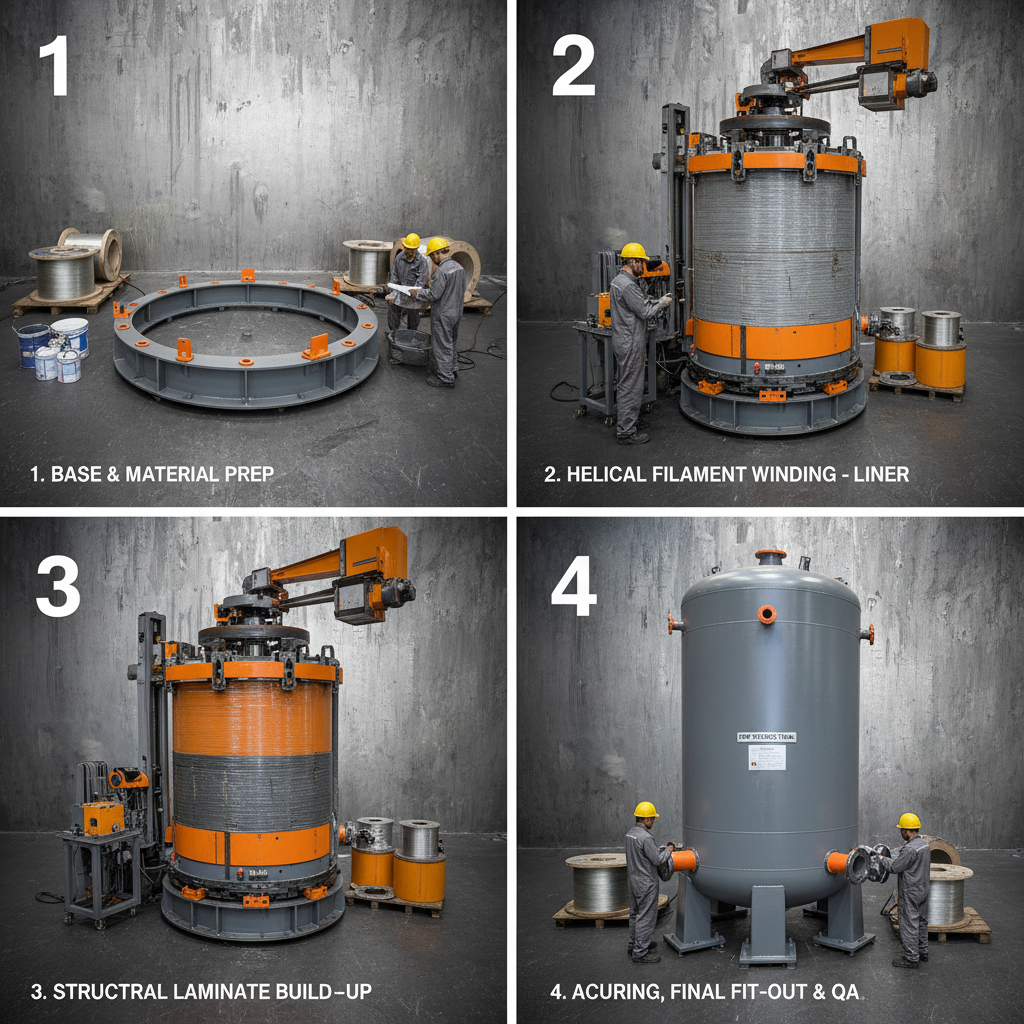
Fiber Reinforced Polymer (FRP) tanks and vessels are increasingly becoming the preferred choice for storage and processing across a multitude of industries. Their lightweight nature, corrosion resistance, and design flexibility offer significant advantages over traditional materials like steel. This article will delve into the intricacies of FRP tanks and vessels, exploring their applications, manufacturing processes, benefits, and considerations for selecting the right solution for your specific needs. We’ll also highlight why FRP tanks are a cost-effective and reliable long-term investment. FRP tanks and vessels are constructed from a combination of reinforcing fibers (such as fiberglass, carbon fiber, or aramid fiber) embedded in a polymer matrix (typically polyester, vinyl ester, or epoxy resin). This combination creates a composite material that boasts high strength-to-weight ratio, exceptional corrosion resistance, and the ability to be molded into complex shapes. They’re designed to safely contain a wide variety of liquids and gases, ranging from corrosive chemicals and water to food products and pharmaceuticals.
Optimizing Water Filtration with Durable FRP Sand Filter Vessels
Mar 24,2026
Optimizing Water Filtration with Durable FRP Sand Filter Vessels
In water treatment and filtration systems, the choice of filter vessel material is paramount. Fiber Reinforced Plastic (FRP), also known as Glass Reinforced Polymer (GRP), sand filter vessels are increasingly popular due to their superior corrosion resistance, lightweight nature, and cost-effectiveness. This article delves into the benefits, applications, design considerations, and factors to consider when selecting an FRP sand filter vessel. Whether you are involved in municipal water treatment, industrial wastewater management, or recreational water filtration, understanding FRP technology is essential for optimizing your filtration process. An FRP sand filter vessel is a containment unit designed to house filtration media, typically sand, gravel, and anthracite. These vessels are integral components in sand filtration systems used for removing suspended solids, turbidity, and other particulate matter from water. FRP construction involves layering glass fibers within a resin matrix (typically polyester or vinyl ester) to create a strong, durable, and chemically resistant shell. The strength and rigidity of the vessel are crucial for withstanding the pressure from the filtration media and the water flow.
Comprehensive Guide to FRP Round Tanks Applications and Benefits
Mar 21,2026
Comprehensive Guide to FRP Round Tanks Applications and Benefits
Fiber Reinforced Polymer (FRP) round tanks are increasingly becoming the preferred choice for storage solutions across a variety of industries. Their lightweight nature, corrosion resistance, and design flexibility offer significant advantages over traditional materials like steel. This article provides an in-depth look at FRP round tanks, exploring their applications, benefits, manufacturing processes, and key considerations when choosing the right tank for your needs. Whether you're in chemical processing, water treatment, or agriculture, understanding FRP round tanks is crucial for optimizing your storage infrastructure. FRP round tanks are constructed from a combination of reinforcing fibers (typically fiberglass, carbon fiber, or a blend) embedded in a polymer matrix (often polyester, vinyl ester, or epoxy resin). The round shape inherently provides excellent structural strength, distributing pressure evenly across the tank’s surface.
Comprehensive Guide to FRP Pressure Tanks Benefits and Applications
Mar 19,2026
Comprehensive Guide to FRP Pressure Tanks Benefits and Applications
Fiber Reinforced Polymer (FRP) pressure tanks are becoming increasingly popular in a wide range of industrial applications, offering a compelling alternative to traditional steel tanks. Known for their lightweight nature, corrosion resistance, and high strength-to-weight ratio, FRP tanks provide efficient and durable solutions for storing liquids and gases under pressure. This article will delve into the benefits, applications, construction, and key considerations when selecting an FRP pressure tank, helping you make an informed decision for your specific needs. Understanding the advantages of FRP technology can lead to significant cost savings and improved operational efficiency. Compared to steel, FRP pressure tanks offer several key advantages. The most significant is their superior corrosion resistance. Unlike steel, which is susceptible to rust and corrosion when exposed to various chemicals, FRP materials are inherently resistant to a wide range of corrosive substances. This translates to a longer lifespan, reduced maintenance costs, and increased safety. Furthermore, FRP is significantly lighter than steel, making installation easier and reducing transportation costs.
For More Details Pls Contact Us
Thank you for your interest in our gloves! We offer high-quality, durable, and comfortable gloves with fast delivery and competitive prices. For any questions or customization, feel free to contact us. We look forward to working with you!

If you are interested in our products, you can choose to leave your information here, and we will be in touch with you shortly.