When engineers evaluate piping systems for aggressive chemical environments, the search for reliable gre pipe suppliers often begins with a need to balance hydraulic efficiency with extreme corrosion resistance. In the context of water pollution prevention and industrial wastewater treatment, traditional metallic piping frequently fails due to oxidation and chemical erosion, leading to costly downtime and environmental risks. The shift toward Glass Reinforced Epoxy (GRE) and similar composite solutions represents a strategic move toward sustainable infrastructure that minimizes leakage and maintenance.
The criticality of selecting the right procurement partner extends beyond the pipe itself to the machinery that ensures structural integrity. For instance, the precision of FRP Filament Winding Equipment directly dictates the pressure resistance and longitudinal strength of the finished pipe. In sectors like the manufacture of specialized environmental equipment, a slight deviation in winding tension or resin impregnation can lead to catastrophic failure under high-pressure industrial loads, making the synergy between equipment quality and material supply paramount.
Navigating the complexities of composite piping requires a deep understanding of both the material specifications and the production capabilities of the manufacturer. This guide analyzes the technical benchmarks for assessing gre pipe suppliers and explores how advanced pultrusion and winding technologies optimize the performance of GRP/FRP products in hazardous environments.


Glass Reinforced Epoxy (GRE) piping is a composite material consisting of high-strength glass fibers embedded in a thermosetting epoxy resin matrix. Unlike traditional PVC or steel, these systems are engineered to withstand extreme chemical aggression and high internal pressures. The core structural integrity depends on the orientation of the fibers, which is typically managed through precise winding or pultrusion processes to ensure that the pipe can handle both axial tension and radial compression.
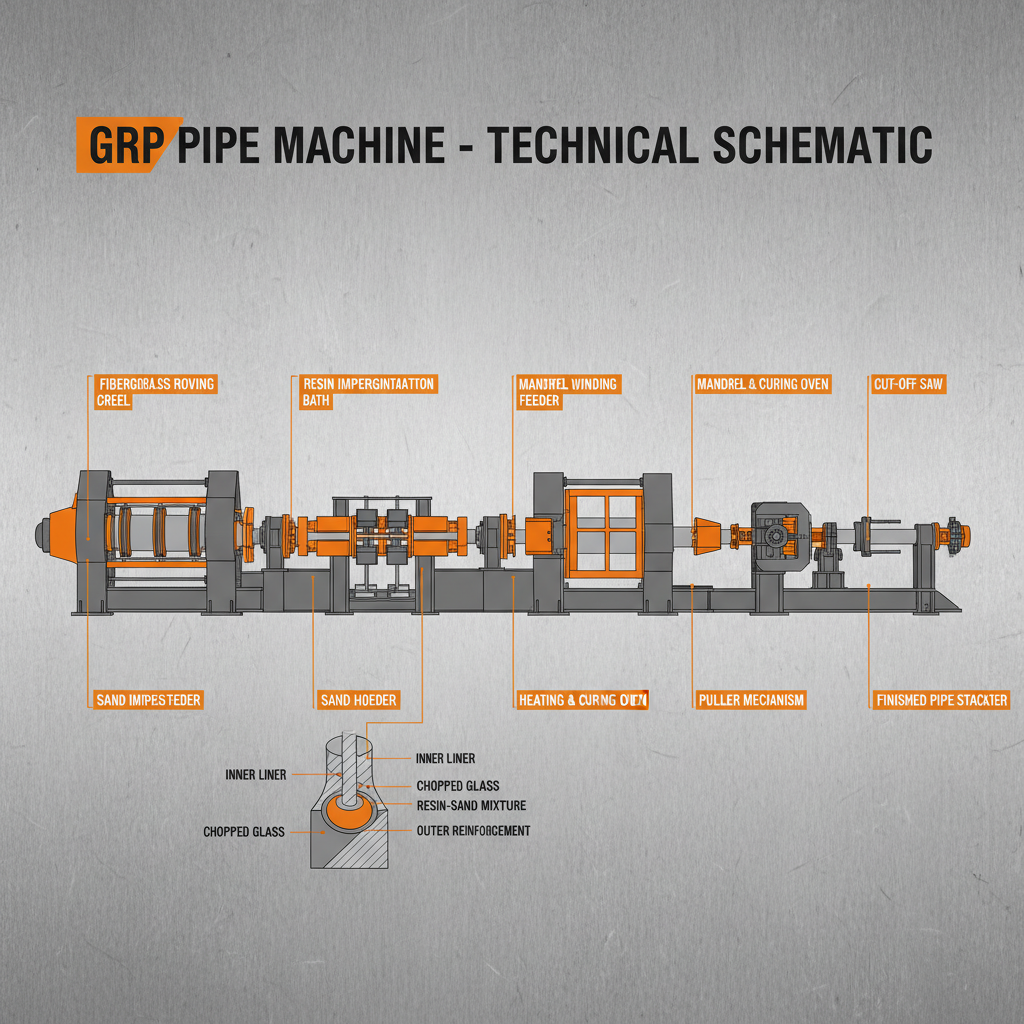
From a manufacturing perspective, the quality of these pipes is inseparable from the equipment used. For example, FRP Profile Machines and specialized Filament Winding equipment are used to create the seamless walls required for high-pressure applications. By integrating PLC-controlled hydraulic traction and precise heating, manufacturers can ensure uniform wall thickness and resin distribution, which are critical for preventing localized stress concentrations that lead to premature failure.
When auditing the quality of composite piping, the first priority is the resin-to-glass ratio. An excessive amount of resin makes the pipe brittle, while too little leads to voids and poor corrosion resistance. High-precision dual-display temperature control instruments during the curing phase are essential to ensure that the resin fully polymerizes, eliminating "soft spots" that could compromise the pipe's pressure rating in volatile chemical environments.
The structural superiority of GRP pipes is primarily determined by the precision of the filament winding process; uniform winding of reinforcing materials like fiberglass cloth and mat significantly boosts transverse strength and overall pressure resistance compared to standard extrusion.
Beyond materials, the mechanical tolerances of the production line—such as the traction speed (typically ranging from 0.1 to 1.5 m/min) and the clamping force—determine the dimensional stability of the profile. For buyers, verifying that the supplier uses low-noise, energy-saving variable pumps and imported hydraulic seals ensures that the production process is stable, reducing the likelihood of structural defects in the final delivered product.
In water pollution prevention equipment, the primary challenge is the presence of chlorides and acidic compounds that rapidly degrade carbon steel. Composite piping provides a non-reactive interface, meaning there is no leaching of metallic ions into the treated water and no internal corrosion that would otherwise restrict flow over time. This results in a consistent hydraulic profile throughout the lifecycle of the installation.
Furthermore, the lightweight nature of FRP products simplifies the logistics of installation in remote or restricted areas. Compared to steel, GRP piping reduces the requirement for heavy lifting machinery and specialized welding teams, as joining methods are typically based on adhesive bonding or mechanical coupling. This reduction in installation complexity translates directly into lower initial capital expenditure and faster project commissioning.
The industry primarily utilizes two distinct methods: pultrusion and filament winding. Pultrusion is ideal for constant-profile shapes like I-beams, square tubes, and photovoltaic frames, utilizing a reciprocating traction system to pull reinforced fibers through a heated mold. This method is highly efficient for producing long, straight sections with high longitudinal strength, but it is limited in terms of radial pressure resistance.
Filament winding, conversely, is the gold standard for pipes and tanks. By winding fibers at specific angles around a rotating mandrel, manufacturers can optimize the pipe for internal pressure. The integration of pultrusion and winding processes in hybrid lines enhances both longitudinal and transverse strength, providing a versatile solution for complex chemical transport systems where multi-directional stress is expected.
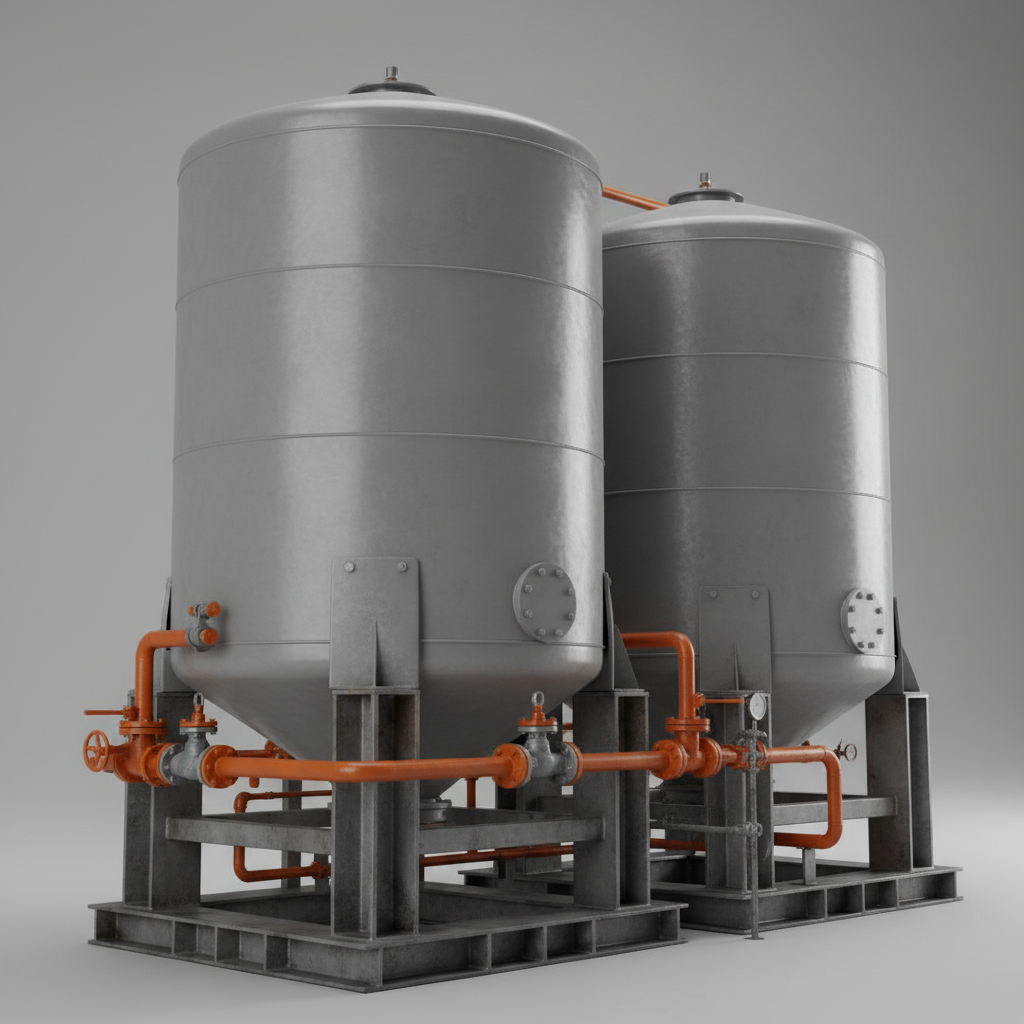
In the realm of wastewater management, FRP sewer tanks and piping are deployed in environments where soil acidity would otherwise destroy concrete structures. These materials are particularly effective in desalination plants, where the high salinity of the brine makes any metallic component susceptible to rapid pitting and stress corrosion cracking. The inert nature of GRP ensures a service life that often exceeds 50 years with minimal intervention.
Another critical application is in chemical storage and transport, such as Mannheim Chemical Equipment setups. Here, the ability to customize the resin chemistry allows the piping to be tailored to specific acids or bases. Whether it is transporting sulfuric acid in a mining operation or managing potable water in a humanitarian project, the versatility of composite profiles ensures that the system remains leak-proof and structurally sound under varying thermal cycles.
The industry is moving toward "smart composites," where fiber-optic sensors are embedded directly into the pipe wall during the winding process. This allows for real-time monitoring of structural integrity and leak detection, transforming the piping from a passive component into an active part of the facility's diagnostic system. Such innovations are expected to significantly reduce the risk of catastrophic environmental spills.
Additionally, there is a growing emphasis on the integration of recycled fibers and bio-based resins to reduce the carbon footprint of FRP production. While maintaining the rigorous standards of ISO9001 and ISO14001, manufacturers are exploring ways to make the pultrusion process more energy-efficient through advanced mold heating technologies and improved hydraulic systems that minimize power waste during the traction phase.
Finally, the adoption of automated cutting and tracking systems—using toothless saw blades and pneumatic pressing—is reducing human error in the final stages of production. This ensures that every segment of the pipe meets the exact specifications required for seamless assembly in the field, further optimizing the total cost of ownership for the end-user.
The primary challenge in deploying GRE systems is the specialized nature of the joints. Unlike steel, which can be welded on-site, composite pipes require precise adhesive application or mechanical coupling. Failure to follow the specific curing times and environmental conditions for these joints is the most common cause of leaks in otherwise high-quality systems.
Another consideration is the initial material cost, which can be higher than that of traditional materials. However, a comprehensive Life Cycle Cost (LCC) analysis usually reveals that the absence of painting, lining, and frequent corrosion-related repairs makes FRP the more economical choice over a 20-year horizon. Procurement teams must focus on the "total cost of ownership" rather than the "cost per meter."
To mitigate these risks, companies like Hebei Aoliande Chemical Equipment provide one-stop solutions from design to installation. By offering technical support and remote guidance for equipment performance optimization, manufacturers can ensure that the transition from a legacy metallic system to a modern composite system is seamless and risk-free.
| Feature | Carbon Steel | PVC / HDPE | GRE / GRP | Stainless Steel |
|---|---|---|---|---|
| Corrosion Resistance | Low | High | Extreme | Moderate |
| Pressure Capacity | Extreme | Low | High | High |
| Weight-to-Strength | Low | Moderate | Extreme | Low |
| Installation Speed | Slow | Fast | Moderate | Slow |
| Service Life | Short | Moderate | Extreme | Moderate |
| Maintenance Cost | High | Low | Extreme Low | Moderate |
The primary difference lies in the resin matrix used. GRE (Glass Reinforced Epoxy) uses epoxy resin, which generally offers superior chemical resistance and higher mechanical strength, making it ideal for high-pressure industrial applications. GRP (Glass Reinforced Plastic) is a broader term that can include polyester or vinylester resins, which are often used for larger diameter, lower-pressure applications like sewer tanks or water mains due to their cost-effectiveness.
Evaluation should focus on three pillars: production technology, certifications, and quality control. Check if the supplier utilizes PLC-controlled winding equipment with precise temperature monitoring. Verify ISO9001 and ISO14001 certifications. Finally, request data on the resin-to-glass ratio and wall thickness consistency, as these directly impact the pipe's burst pressure and long-term durability in corrosive environments.
Yes, but it depends entirely on the resin selection. Epoxy and vinylester resins can be formulated to withstand significant temperatures, but exceeding the glass transition temperature (Tg) of the resin will lead to a loss of structural stiffness. Always specify the maximum operating temperature to your supplier so they can select the appropriate resin and curing cycle for your specific thermal requirements.
In most wastewater and sewage applications, high-quality FRP piping has an expected service life of 50 years or more. Because the material is inherently resistant to H2S gas and acidic groundwater—the primary causes of concrete and steel failure—it requires significantly less maintenance and no internal lining or external protective coatings over its lifespan.
While steel has higher absolute strength, GRE pipes are engineered to handle the specific pressure requirements of most industrial applications. By utilizing filament winding and optimizing fiber angles, manufacturers can produce pipes that easily handle high internal pressures while remaining significantly lighter. However, for ultra-high pressure (above certain industrial limits), specialized thick-walled composites or steel may still be required.
The most common failure points are the joints and the support points. Improperly cured adhesive joints or poorly installed mechanical couplings are the leading cause of leaks. Additionally, if the piping is not supported at the correct intervals, the lack of longitudinal rigidity compared to steel can lead to sagging or stress fractures. Proper engineering of the support system is critical for long-term stability.
The transition to composite piping systems is no longer just an alternative but a necessity for modern water pollution prevention and chemical processing. By shifting the focus from initial purchase price to the total lifecycle value, operators can significantly reduce maintenance costs and eliminate the risks associated with metallic corrosion. The synergy between high-precision production equipment and advanced material science ensures that today's GRE and FRP solutions provide unmatched reliability in the harshest industrial environments.
For organizations seeking to upgrade their infrastructure or establish new production lines, partnering with a manufacturer that integrates design, production, and technical support is key. To explore customized solutions for chemical equipment or high-performance FRP production lines, you are invited to visit www.frpgrpequipment.com for detailed specifications and expert guidance.