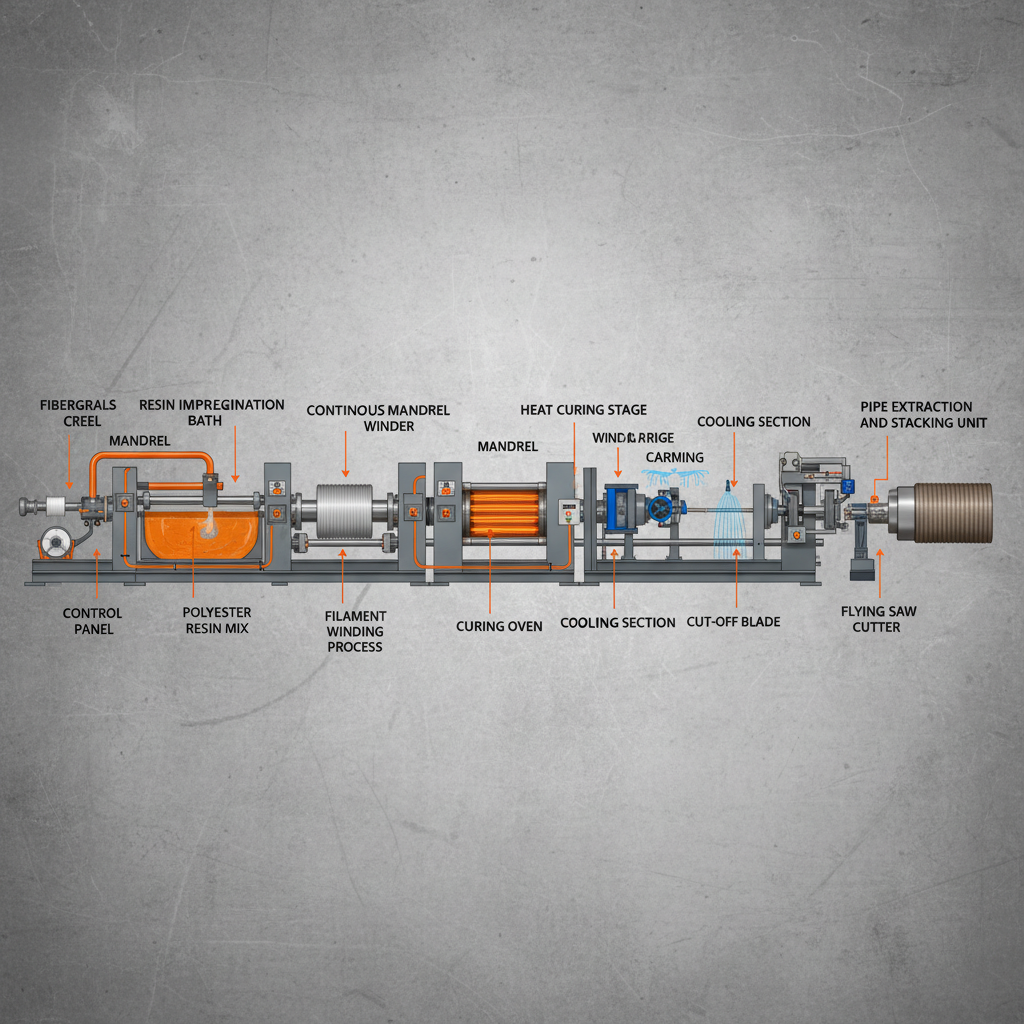
The global demand for high-performance industrial piping has led to the rapid evolution of the pipe winding machine, a cornerstone technology in the production of Fiber Reinforced Polymer (FRP) and Glass Reinforced Plastic (GRP) conduits. By precisely layering resin-impregnated fibers around a rotating mandrel, these machines create structures with an extraordinary strength-to-weight ratio, essential for transporting corrosive fluids or high-pressure gases in challenging environments.
In the context of water pollution prevention and environmental protection, the pipe winding machine enables the creation of corrosion-resistant drainage and sewage systems that far outlast traditional steel or concrete alternatives. As urban centers expand and industrial waste management becomes more stringent, the ability to manufacture durable, non-leaching pipes is no longer just a competitive advantage but a global necessity for sustainable infrastructure.
Understanding the technical nuances of a pipe winding machine allows engineers and plant managers to optimize production efficiency, reduce material waste, and ensure that the final product meets rigorous ISO and ASTM standards. This guide explores the critical components, global applications, and future innovations driving the winding technology sector forward.
The Fundamental Mechanism of Pipe Winding Machines
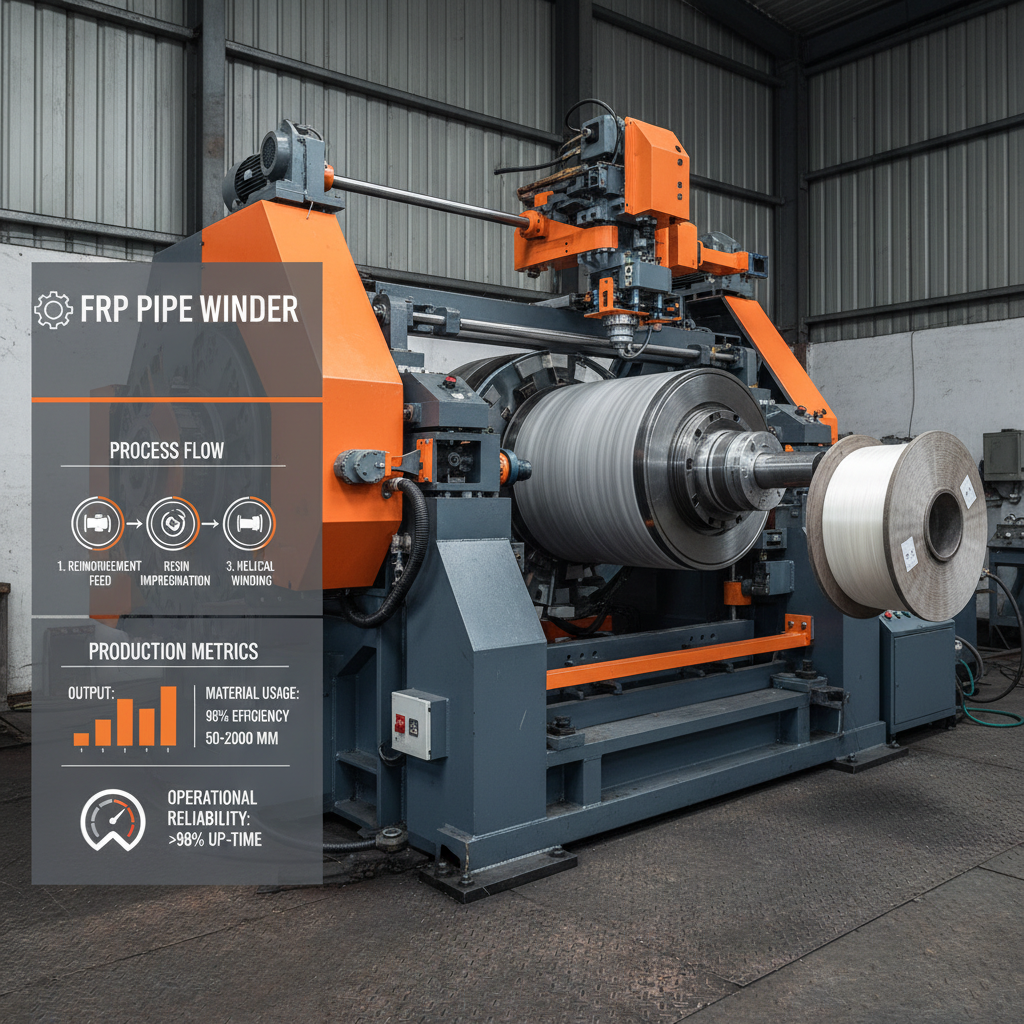
A pipe winding machine operates on the principle of continuous filament winding. The process begins with a rotating mandrel that serves as the internal mold for the pipe. As the mandrel spins, a carriage moves longitudinally, delivering resin-soaked glass or carbon fibers in a precise helical pattern. This intersection of rotation and linear movement ensures that the fibers are placed at optimal angles to resist both internal pressure and external loads.
The precision of this mechanism is what separates industrial-grade piping from standard molded products. By adjusting the winding angle, manufacturers can tailor the pipe's mechanical properties—increasing axial strength or hoop strength depending on the intended use. This versatility makes the pipe winding machine indispensable for creating everything from lightweight aerospace conduits to heavy-duty chemical transport lines.
Critical Design Factors for High-Performance Winding
Durability is the primary benchmark for any pipe winding machine. To achieve this, the machine must maintain absolute synchronization between the mandrel rotation and the carriage travel. Any micro-deviation in speed can lead to uneven fiber distribution, creating "weak spots" in the pipe wall that could fail under pressure. High-end systems utilize servo-motor control and real-time feedback loops to maintain sub-millimeter accuracy across the entire length of the pipe.
Scalability is another vital factor, especially for projects involving large-diameter water treatment pipes. Modern machinery is often designed with modular frames, allowing operators to swap mandrels of different lengths and diameters without requiring a complete system overhaul. This flexibility enables a single facility to pivot from producing small-bore chemical tubes to massive sewage mains, maximizing the return on investment for the equipment.
Cost efficiency in the winding process is largely driven by material utilization. Advanced pipe winding machine models integrate precision tensioning systems that prevent fiber breakage and minimize resin waste. By optimizing the resin-to-fiber ratio, manufacturers can reduce the overall weight of the pipe without sacrificing structural integrity, directly lowering shipping costs and material expenditures.
Core Components of a Modern Pipe Winding Machine
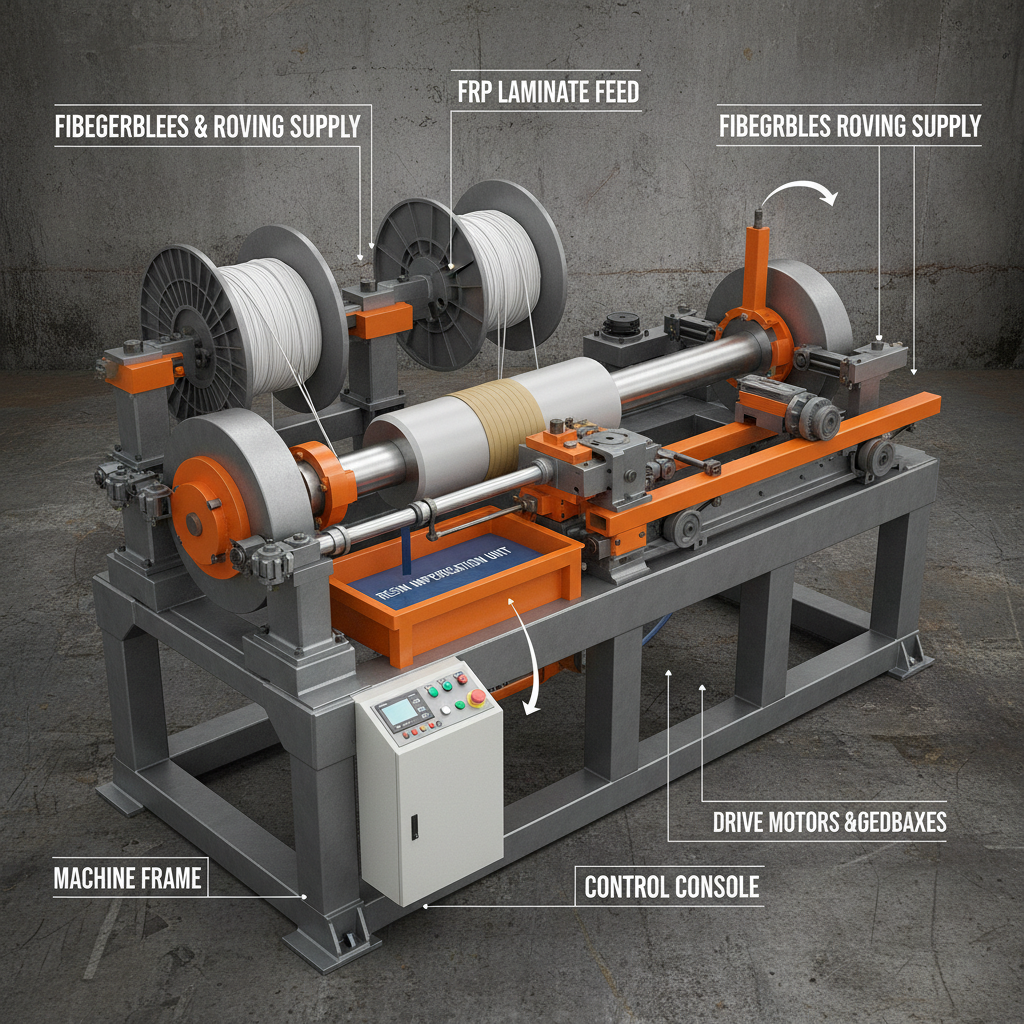
The heart of the pipe winding machine is the rotating mandrel. This component must be perfectly balanced to avoid vibration at high speeds, as any oscillation would compromise the thickness of the composite wall. Depending on the curing method, mandrels can be made of steel or collapsible materials that allow for easy extraction once the resin has hardened.
The fiber delivery system, or the carriage, is where the "magic" of the pipe winding machine happens. It consists of a creel for holding fiber spools, a resin bath for impregnation, and a delivery eye that guides the fiber onto the mandrel. Precise tension control within this system ensures that each layer is wound tightly, eliminating voids and air bubbles that could lead to structural failure.
Finally, the control system acts as the brain of the pipe winding machine. Modern PLC (Programmable Logic Controller) interfaces allow operators to input complex winding patterns, adjust speeds on the fly, and monitor production data in real-time. This digitalization ensures consistency across batches, meeting the strict quality control requirements of the environmental protection industry.
Comparative Efficiency of Winding Methods
Different applications require different winding strategies. For instance, polar winding is often used for closed-end vessels, while helical winding is the gold standard for continuous piping. The choice of method directly impacts the production speed and the ultimate pressure rating of the pipe produced by the pipe winding machine.
When comparing traditional manual layup to the automated pipe winding machine process, the gains in consistency and speed are exponential. Automation removes human error, ensuring that the fiber angle is maintained perfectly from the first meter to the last, which is critical for safety-critical water pollution prevention equipment.
Efficiency Rating by Pipe Winding Machine Method
Global Applications in Environmental Protection
In the realm of water quality pollution prevention, the pipe winding machine is used to produce corrosion-resistant pipelines for chemical plants and desalination facilities. In coastal regions of Southeast Asia and the Middle East, where saltwater corrosion destroys steel pipes in a matter of years, FRP pipes provide a lifetime of service with minimal maintenance, ensuring that treated water reaches populations safely.
Beyond urban centers, these machines support remote industrial zones by enabling the production of lightweight yet ultra-strong piping that can be easily transported to rugged terrains. Whether it is for transporting mining slurry or protecting groundwater from hazardous leaks in a landfill project, the output of a high-quality pipe winding machine ensures environmental containment and public safety.
Long-Term Value and Sustainability Benefits
The adoption of a pipe winding machine offers significant long-term economic value. While the initial investment in automated machinery is higher than traditional molding, the reduction in lifecycle costs is dramatic. FRP pipes do not rust, scale, or corrode, which means utilities spend significantly less on repairs and replacement over a 50-year span.
From a sustainability perspective, the precision of the winding process minimizes resin waste, which reduces the chemical footprint of the manufacturing plant. Furthermore, because FRP pipes are significantly lighter than concrete or ductile iron, the carbon emissions associated with their transport and installation are slashed, contributing to a greener industrial ecosystem.
Ultimately, the reliability of pipes produced by a pipe winding machine builds trust between industrial operators and the communities they serve. By preventing leaks of toxic waste into the soil and water table, this technology provides a silent but powerful layer of protection for global biodiversity and human health.
Future Innovations in Automated Winding Technology
The future of the pipe winding machine lies in the integration of Industry 4.0. We are seeing the emergence of "Smart Winding," where AI algorithms analyze fiber tension and resin viscosity in real-time to make micro-adjustments to the winding speed. This eliminates the need for manual sampling and ensures a 100% defect-free production run.
Material science is also evolving, with the introduction of bio-resins and recyclable thermoplastic composites. Future pipe winding machine models are being adapted to handle these new materials, which will allow for the creation of pipes that can be melted down and repurposed at the end of their life cycle, closing the loop on industrial waste.
Robotic integration is the final frontier. Instead of a single carriage on a rail, multi-axis robotic arms are being paired with rotating mandrels to create complex, non-linear pipe geometries. This will expand the use of pipe winding machine technology into custom environmental filtration systems and specialized chemical reactors.
Comparative Analysis of Pipe Winding Technology Generations
| Technology Era |
Control Method |
Material Efficiency |
Typical Application |
| Manual Era |
Hand-guided |
Low (High Waste) |
Small custom prototypes |
| Semi-Auto Era |
Mechanical Gear |
Medium |
Standard water pipes |
| CNC Era |
PLC Logic |
High |
High-pressure chemical lines |
| Smart Era |
AI & Sensors |
Ultra-High |
Aerospace & Desalination |
| Green Era |
Adaptive Closed-loop |
Optimal |
Eco-friendly infrastructure |
| Robotic Era |
Multi-axis Robot |
Maximum |
Complex Geo-structures |
FAQS
The primary advantage is the ability to orient fibers in the direction of the expected load. While molding provides a general strength, a pipe winding machine allows for precise helical or polar winding, resulting in a pipe with significantly higher burst pressure and axial strength while using less material.
FRP pipes manufactured with a professional pipe winding machine can last 50 years or more. Because the composite materials are naturally resistant to oxidation and chemical attack, they do not suffer from the corrosion that plagues steel or the degradation seen in concrete pipes.
Yes, most modern machines are versatile. By adjusting the tensioning system and the resin bath, a pipe winding machine can transition between glass fiber for cost-effective water projects and carbon fiber for high-performance industrial or aerospace applications.
Generally, yes. While the machine requires power for rotation and carriage movement, the process avoids the massive heat requirements of smelting steel or the energy-intensive curing of some large-scale concrete casting, making it a more sustainable choice.
Key maintenance involves the regular calibration of the tensioning sensors, lubrication of the linear rails and mandrel bearings, and ensuring the resin bath remains uncontaminated. Routine software updates for the PLC system are also recommended to maintain precision.
Consider the maximum pipe diameter and length you require, the desired production speed, and the complexity of the winding patterns. For high-volume industrial use, a multi-spindle automated pipe winding machine is best, whereas custom low-volume work may only require a basic CNC model.
Conclusion
The pipe winding machine stands as a pivotal technology in the intersection of advanced manufacturing and environmental stewardship. By enabling the production of high-strength, corrosion-resistant composite piping, these machines provide the essential infrastructure needed for modern water pollution prevention and chemical transport. From the precision of the fiber delivery system to the scalability of the mandrel design, every aspect of the winding process is engineered to ensure long-term reliability and structural integrity.
Looking forward, the integration of AI and sustainable bio-materials will further elevate the capabilities of winding technology, making industrial piping more eco-friendly and efficient. For companies seeking to upgrade their infrastructure or enter the FRP market, investing in a high-precision pipe winding machine is a strategic move toward sustainability and operational excellence. Visit our website for more information: www.frpgrpmachine.com