Jul 07,2025

FRP Underground Water Storage Tanks - Durable & Corrosion Resistant Fiberglass Tanks Manufacturer

  • Introduction to FRP underground water storage tanks and their growing importance
  • Key technical advantages of fiberglass underground water storage tanks
  • Market data and comparison of traditional vs. FRP tank solutions
  • Comprehensive manufacturer comparison: evaluating quality and value
  • Customized solutions for diverse environments and requirements
  • Real-world applications: industry case studies
  • Conclusion: the future of frp underground water storage tanks
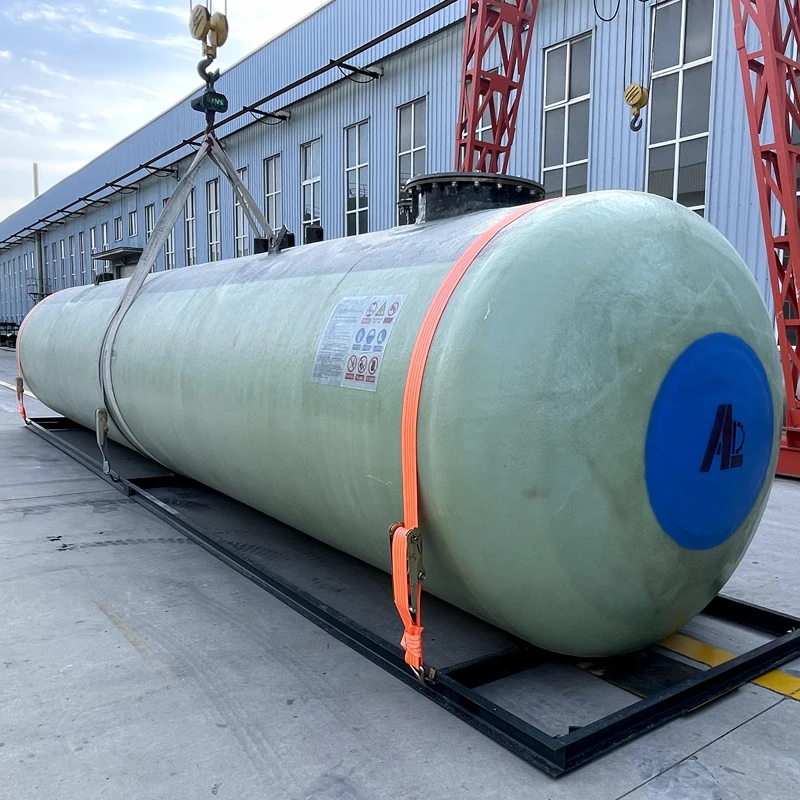
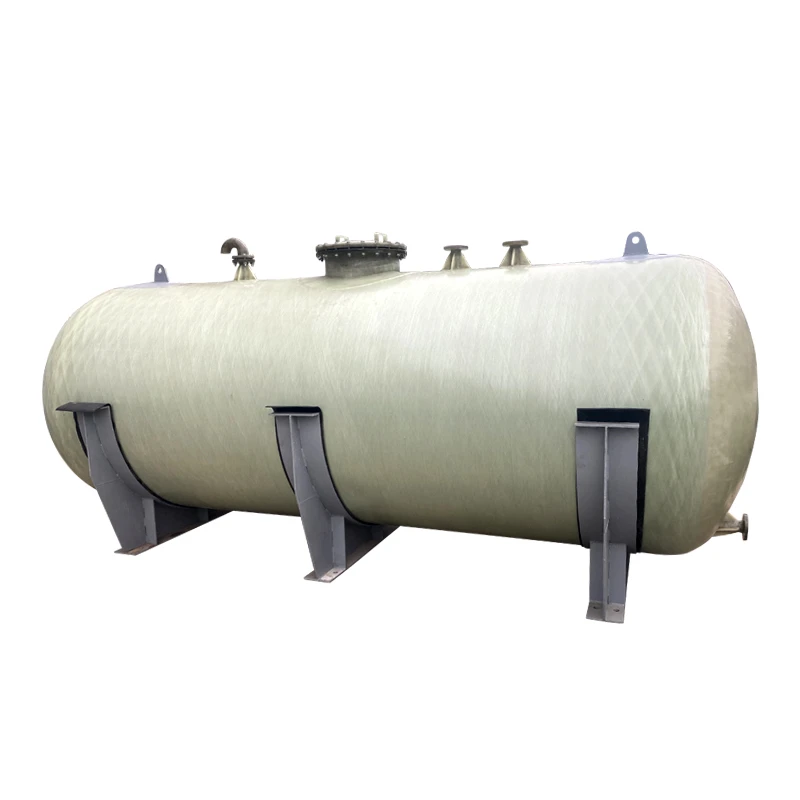
frp underground water storage tanks

(frp underground water storage tanks)


Introduction: The Rising Relevance of FRP Underground Water Storage Tanks

In the rapidly evolving world of water storage infrastructure, frp underground water storage tanks stand out as a prime solution for municipalities, commercial enterprises, and industrial applications. The mounting pressure due to climate change, population growth, and the corresponding demand for efficient water management has led to an impressive surge in the deployment of advanced storage systems. According to a recent industry report, the global market for underground water storage tanks is projected to exceed USD 2.7 billion by 2030, with fiberglass reinforced plastic (FRP) tanks accounting for a significant portion of this expansion. Their unique combination of durability, adaptability, and cost-efficiency positions FRP tanks as a front-runner among storage options.

Technical Advantages of Fiberglass Underground Water Storage Tanks

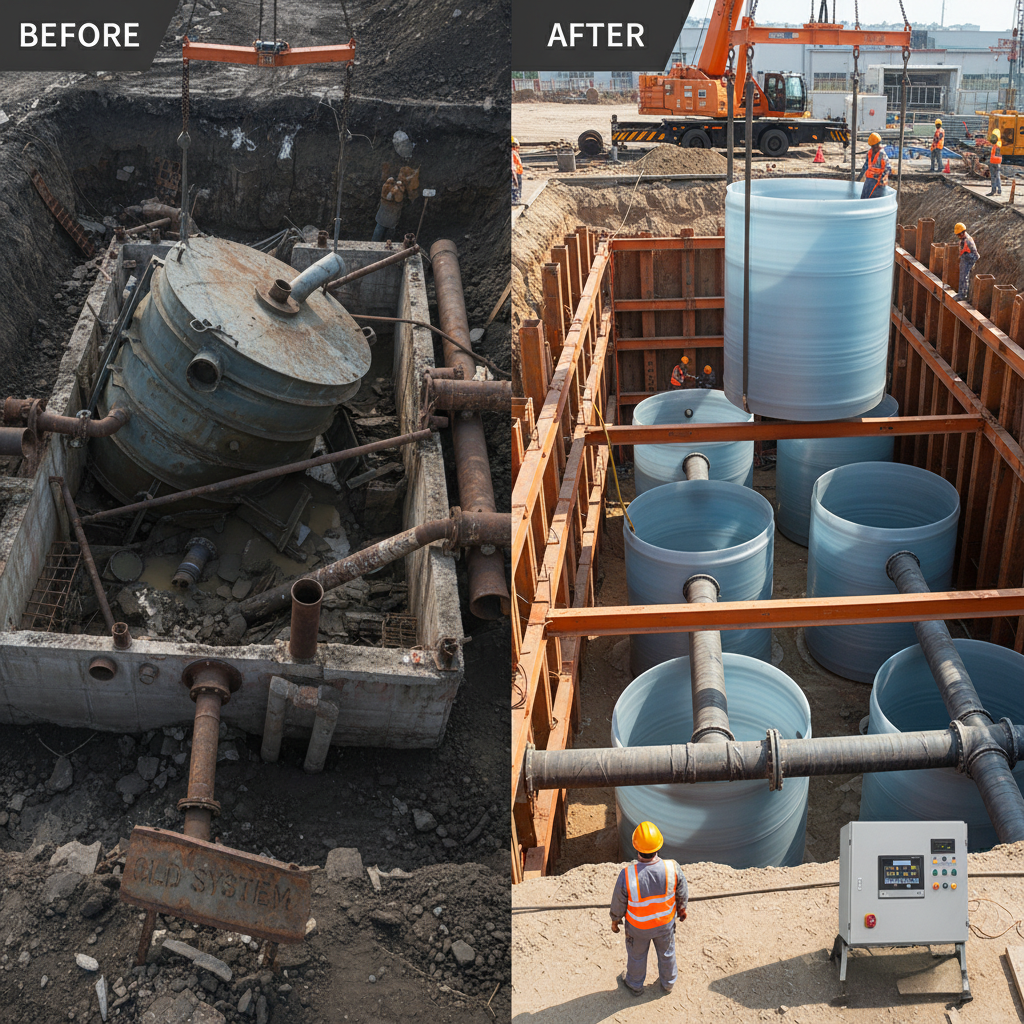
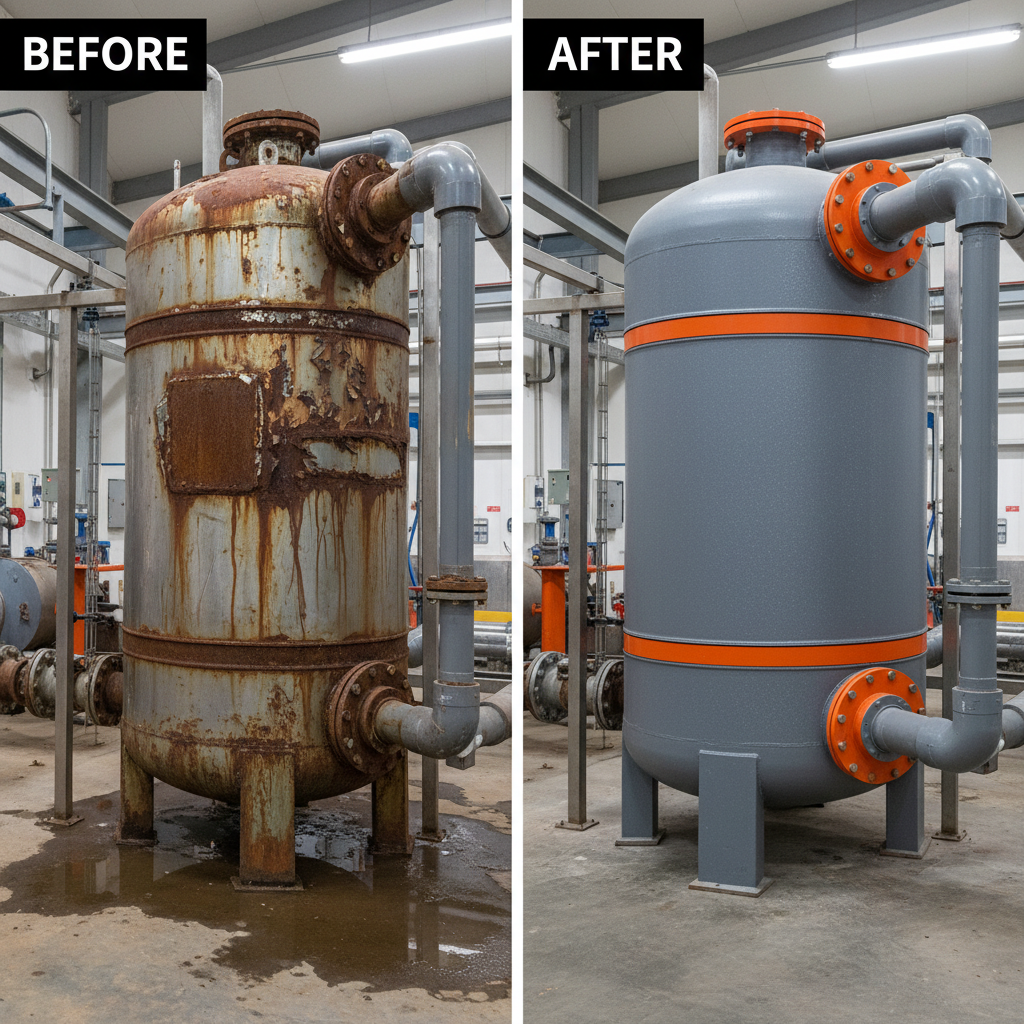
The transition from traditional concrete and steel to fiberglass underground water storage tanks is fueled by compelling technical benefits. FRP tanks exhibit exceptional corrosion resistance due to their composite construction, ensuring prolonged life cycles even in aggressive soil or high-moisture environments. Unlike steel, which is susceptible to rust, or concrete, which can crack and degrade under pressure, FRP maintains its structural integrity for decades—typically over 50 years under optimal conditions.

Furthermore, FRP tanks provide superior chemical resistance, a lightweight profile for simplified installation, and a smooth interior finish that actively discourages biological growth and sediment accumulation. These features collectively minimize maintenance requirements and lower total cost of ownership (TCO). The customizable volume and geometric adaptability also enable seamless integration into both new and retrofit projects, supporting a wide range of capacities from 1,000 to over 250,000 gallons.

Market Data & Comparative Analysis: FRP Tanks vs. Traditional Options

To appreciate the magnitude of value offered by FRP underground water storage tanks, it is useful to consider comprehensive data comparing them with conventional tank solutions. A detailed study analyzing installation, lifespan, and overall operational expenses reveals the following:

Feature FRP Tanks Concrete Tanks Steel Tanks
Average Service Life (years) 50+ 25-40 15-30
Corrosion Resistance Excellent Moderate Poor
Installation Time (days) 3-5 10-14 7-10
Maintenance Frequency Low High Medium
Estimated 20-Year Lifecycle Cost $40,000–$110,000 $60,000–$140,000 $55,000–$125,000

As the data illustrates, FRP tanks not only deliver superior lifespan and resistance to environmental exposures, but also boast faster installation and a reduced financial footprint over the product lifecycle.

Manufacturer Comparison: Quality, Value, and Reliability

Selecting the right partner is central to maximizing the potential of a fiberglass underground water storage tank project. Notable manufacturers include ZCL | Xerxes, Containment Solutions, and Belco Manufacturing, each bringing specialized expertise and proprietary technologies to the market. The below comparative table summarizes their core offerings, innovation highlights, and market reach.

Manufacturer Capacity Range (gal) Standout Features Geographic Reach Average FRP Underground Water Storage Tanks Price (USD)
ZCL | Xerxes 600 - 100,000+ Advanced resin technology, multi-compartment designs, NSF certification Global $1.20 - $2.00/Gal
Containment Solutions 1,000 - 50,000 Flexible configuration, customization, UL listed North America $1.10 - $1.80/Gal
Belco Manufacturing 500 - 80,000 Custom linings, rapid lead times, high-pressure models U.S. $1.15 - $1.95/Gal

While core quality and standards compliance remain consistent, significant differences can be found in the scope of customization, average tank pricing, and global delivery capabilities.

Customization: Tailored FRP Solutions for Any Challenge

The adaptability of FRP construction technology is a pivotal asset in tackling complex project requirements. Whether it is dimensional constraints beneath urban developments, highly acidic soil profiles, or specialized potable water certifications, manufacturers can engineer solutions tailored to precise operational needs. For example, multi-section FRP tanks allow modular installation in restricted spaces, while dual-wall containment designs are ideal for critical safety standards in chemical storage.

Sensors, manways, and baffles can be precisely integrated, enabling robust monitoring and process optimization. The availability of multiple resin and reinforcement systems—ranging from isophthalic polyester for general use, to vinyl ester for high-resistance applications—expands the versatility of these systems. This level of customization directly translates into improved environmental safety and performance reliability, regardless of project scale or complexity.

Application Case Studies: FRP Underground Water Storage Tanks in Action

Across infrastructure, industrial, and commercial landscapes, fiberglass underground water storage tanks are proving their mettle.

Municipal Stormwater Harvesting: In 2023, Los Angeles, CA, installed four 40,000-gallon FRP tanks to mitigate urban flooding and store treated water for irrigation. The tanks’ rapid on-site assembly helped keep the $750,000 project on a tight 12-week schedule.

Industrial Fire Suppression: An automotive manufacturing plant in Michigan implemented a 100,000-gallon fiberglass system to ensure reliable water availability for fire suppression. The tanks’ corrosion-proof characteristics delivered estimated lifecycle savings of $60,000 compared to a steel alternative.

Rainwater Reuse for Sustainable Buildings: A 25,000-gallon FRP tank at a LEED-certified university campus now captures rooftop runoff, reducing potable water usage by 45% and contributing to a projected 15-year return on investment.

Each scenario underscores the customizability, strength, and environmental stewardship offered by these advanced storage solutions.

The Future of FRP Underground Water Storage Tanks

As regulatory requirements tighten and sustainability objectives become standard across the built environment, frp underground water storage tanks are uniquely positioned to set the benchmark for future water infrastructure projects. Their unmatched blend of durability, adaptability, and low centralized maintenance fosters greater resource efficiency and resilience.

The convergence of advanced resin chemistries, automated production, and intelligent monitoring solutions will only enhance the utility and performance of fiberglass tanks in the years ahead. Investors, engineers, and facility managers seeking long-term value and environmental stewardship will increasingly turn to scalable, customizable FRP systems as a cornerstone of sustainable water management.
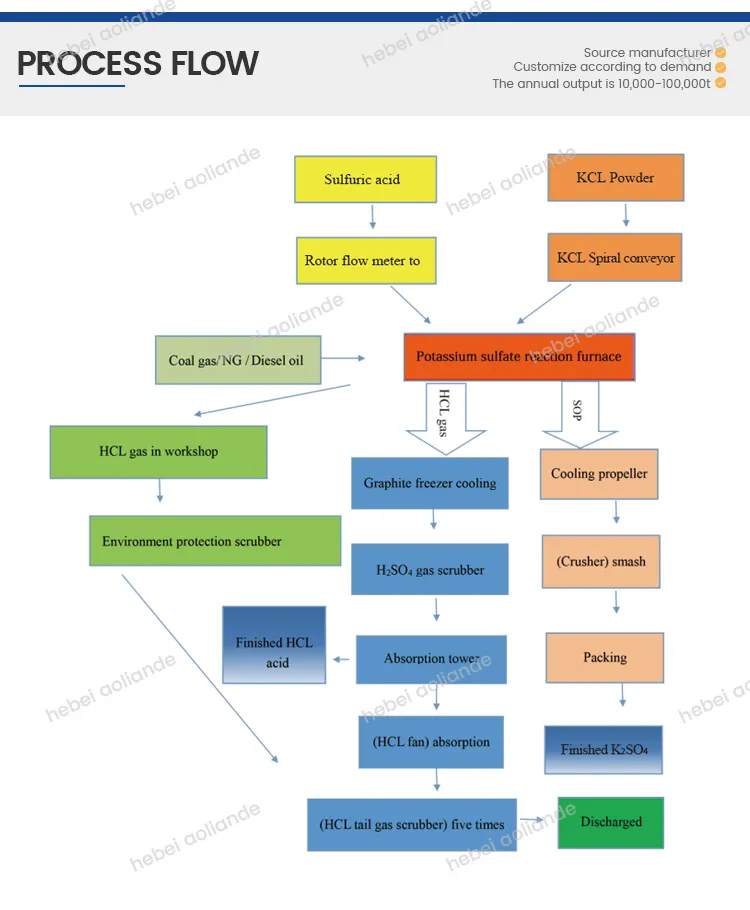

frp underground water storage tanks

(frp underground water storage tanks)
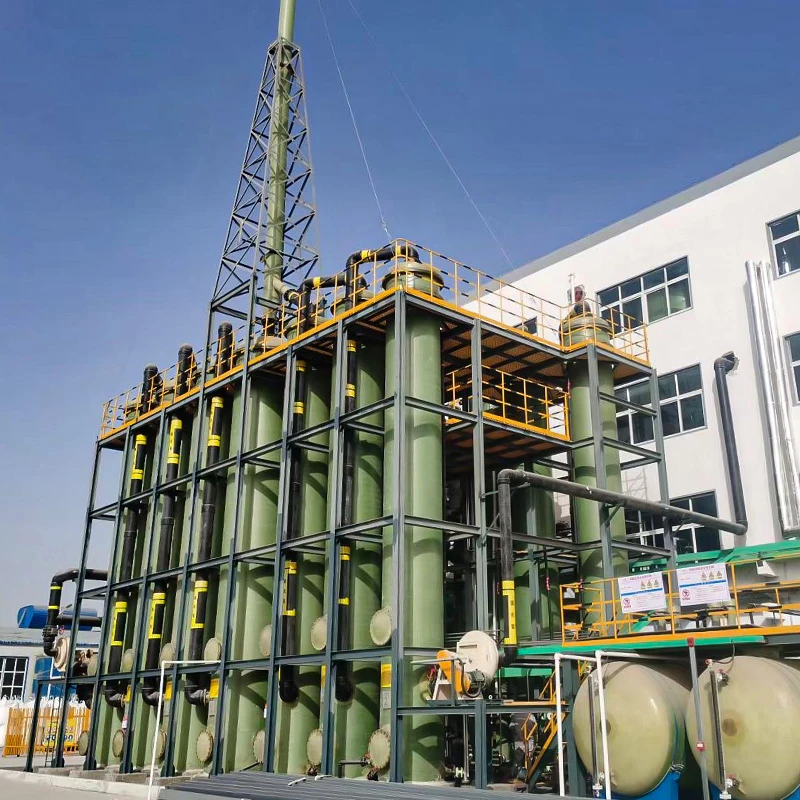

FAQS on frp underground water storage tanks

Q: What are FRP underground water storage tanks?

A: FRP underground water storage tanks are tanks made from Fiber Reinforced Plastic (FRP) designed to store water below ground. They offer excellent corrosion resistance and long-term durability. These tanks are suitable for potable and non-potable water storage.

Q: What is the typical price range for FRP underground water storage tanks?

A: The price of FRP underground water storage tanks varies depending on size, capacity, and specifications. Generally, prices range from $500 to over $10,000. Consulting with suppliers can provide a specific quote for your requirements.

Q: Are fiberglass underground water storage tanks safe for drinking water?

A: Yes, fiberglass underground water storage tanks can be used for potable water if manufactured with food-grade resins. Always confirm with the supplier that the tank meets relevant health and safety standards. Proper maintenance will ensure continued water quality.

Q: What are the advantages of using FRP underground water storage tanks over concrete tanks?

A: FRP underground tanks are lighter, more corrosion-resistant, and easier to install compared to concrete tanks. They also require less maintenance and have a longer lifespan. Additionally, they are less likely to crack or leak.

Q: How do I choose the right size FRP underground water storage tank?

A: Determine your water storage needs based on usage and available space. Consult with manufacturers to recommend the suitable capacity and dimensions. Customized solutions are often available to meet specific site requirements.
Upsell Products
Upsell News
Durable FRP Vessel for Water Treatment and Industrial Filtration
Apr 16,2026
Durable FRP Vessel for Water Treatment and Industrial Filtration
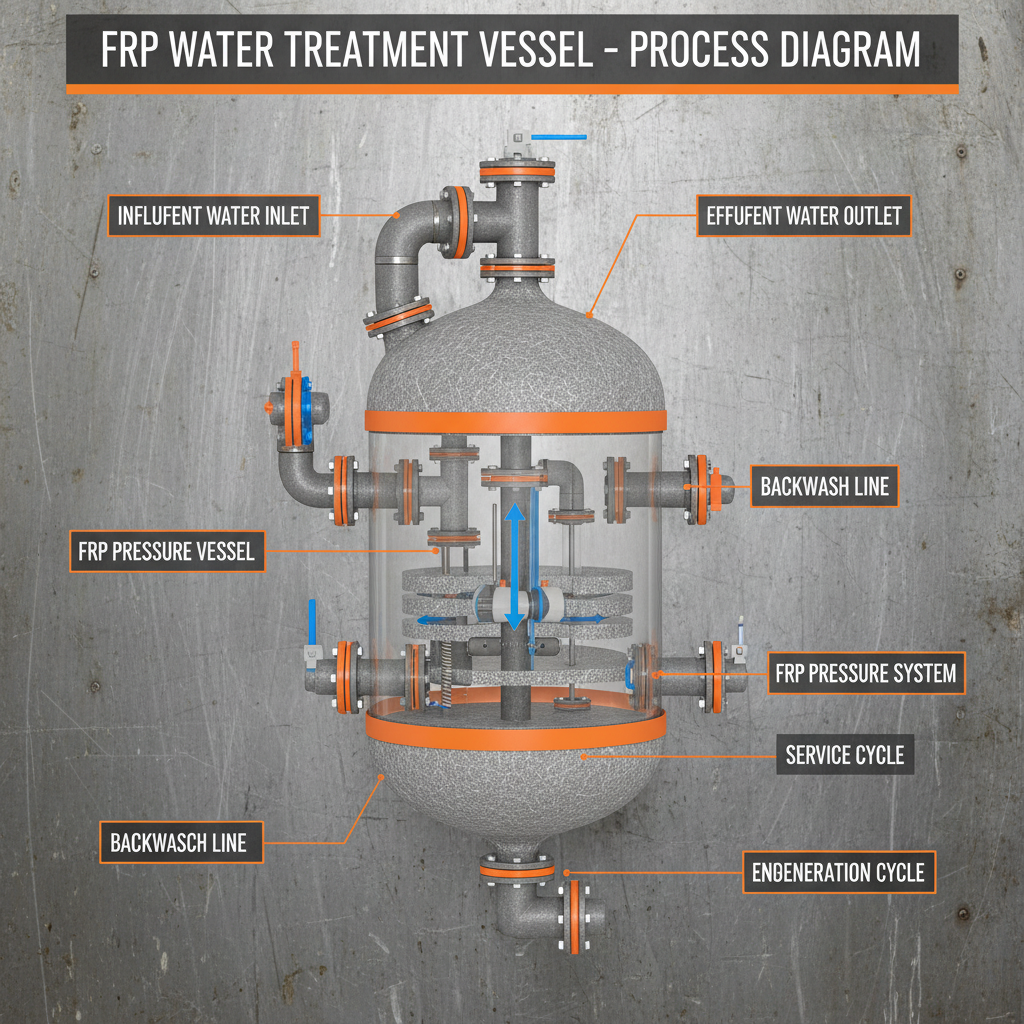
In the modern era of industrial and residential water purification, the choice of containment materials is critical for efficiency and longevity. An frp vessel for water treatment has emerged as the gold standard, replacing traditional steel tanks due to its superior corrosion resistance and lightweight properties. Whether you are dealing with desalination, softening, or filtration, using Fiber Reinforced Plastic (FRP) ensures that your system remains leak-proof and durable against aggressive chemicals. In this comprehensive guide, we will explore why FRP is the preferred choice for water treatment professionals worldwide and how to select the right vessel for your specific application.
Industrial Guide for Choosing the Right FRP Vertical Tank
Apr 09,2026
Industrial Guide for Choosing the Right FRP Vertical Tank
In today's industrial landscape, the storage of corrosive chemicals and aggressive liquids requires materials that can withstand extreme conditions without degrading. The frp vertical tank has emerged as a premier solution, offering an exceptional balance of strength, lightweight properties, and unmatched chemical resistance. Whether you are managing a water treatment plant or a chemical processing facility, understanding the nuances of Fiber Reinforced Plastic (FRP) is essential for ensuring operational safety and longevity. In this comprehensive guide, we will explore why vertical configurations are preferred and how these tanks outperform traditional metal alternatives.
Comprehensive Guide to FRP Underground Water Tank Solutions and Applications
Apr 07,2026
Comprehensive Guide to FRP Underground Water Tank Solutions and Applications
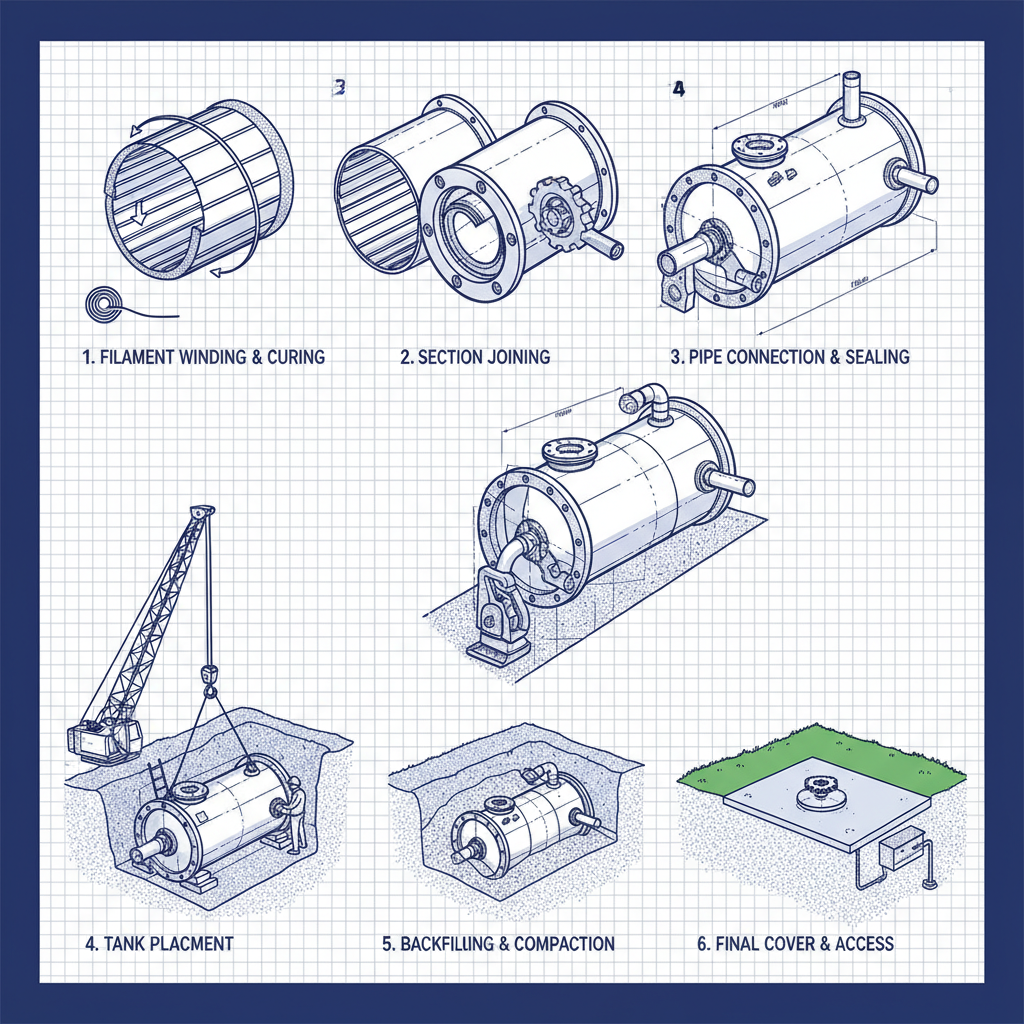
Fiberglass Reinforced Polymer (FRP) underground water tanks are becoming increasingly popular for a wide range of applications, from potable water storage to industrial wastewater containment. Their superior corrosion resistance, lightweight nature, and design flexibility make them an excellent alternative to traditional materials like concrete or steel. This article will delve into the benefits, applications, construction, and considerations for implementing FRP underground water tanks, providing a comprehensive overview for engineers, contractors, and project managers.
Comprehensive Guide to Frp Underground Water Storage Tanks and Their Applications
Apr 04,2026
Comprehensive Guide to Frp Underground Water Storage Tanks and Their Applications
When considering water storage solutions, particularly for industrial, agricultural, or municipal applications, frp underground water storage tanks stand out as a durable, cost-effective, and environmentally friendly option. These tanks are increasingly favored over traditional materials like concrete or steel due to their superior corrosion resistance, lighter weight, and ease of installation. This article delves into the benefits, applications, construction, and considerations when choosing an FRP tank, providing a detailed overview for potential buyers and project planners.
Sulfuric Acid Production Line - Hebei Aoliande|Efficient H2SO4 Plant Technology
Apr 01,2026
Sulfuric Acid Production Line - Hebei Aoliande|Efficient H2SO4 Plant Technology
Discover efficient H2SO4 plant technology and advanced sulfuric acid production solutions. Hebei Aoliande combines energy-saving furnace design and eco-friendly HCl recovery systems for sustainable industrial applications. Explore now: https://www.frpgrpmachine.com/sulfuric-acid-production-line-for-h2so4-plant.html
Sulfuric Acid Production Line - Hebei Aoliande|Efficient H2SO4 Plant Technology
Apr 01,2026
Sulfuric Acid Production Line - Hebei Aoliande|Efficient H2SO4 Plant Technology
Discover efficient H2SO4 plant technology and advanced sulfuric acid production solutions. Hebei Aoliande combines energy-saving furnace design and eco-friendly HCl recovery systems for sustainable industrial applications. Explore now: https://www.frpgrpmachine.com/sulfuric-acid-production-line-for-h2so4-plant.html
Sulfuric Acid Production Line - Hebei Aoliande|Efficient H2SO4 Plant Technology
Apr 01,2026
Sulfuric Acid Production Line - Hebei Aoliande|Efficient H2SO4 Plant Technology
Discover efficient H2SO4 plant technology and advanced sulfuric acid production solutions. Hebei Aoliande combines energy-saving furnace design and eco-friendly HCl recovery systems for sustainable industrial applications. Explore now: https://www.frpgrpmachine.com/sulfuric-acid-production-line-for-h2so4-plant.html
Sulfuric Acid Production Line - Hebei Aoliande|Efficient H2SO4 Plant Technology
Apr 01,2026
Sulfuric Acid Production Line - Hebei Aoliande|Efficient H2SO4 Plant Technology
Discover efficient H2SO4 plant technology and advanced sulfuric acid production solutions. Hebei Aoliande combines energy-saving furnace design and eco-friendly HCl recovery systems for sustainable industrial applications. Explore now: https://www.frpgrpmachine.com/sulfuric-acid-production-line-for-h2so4-plant.html
Sulfuric Acid Production Line - Hebei Aoliande|Efficient H2SO4 Plant Technology
Apr 01,2026
Sulfuric Acid Production Line - Hebei Aoliande|Efficient H2SO4 Plant Technology
Discover efficient H2SO4 plant technology and advanced sulfuric acid production solutions. Hebei Aoliande combines energy-saving furnace design and eco-friendly HCl recovery systems for sustainable industrial applications. Explore now: https://www.frpgrpmachine.com/sulfuric-acid-production-line-for-h2so4-plant.html
Sulfuric Acid Production Line - Hebei Aoliande|Efficient H2SO4 Plant Technology
Apr 01,2026
Sulfuric Acid Production Line - Hebei Aoliande|Efficient H2SO4 Plant Technology
Discover efficient H2SO4 plant technology and advanced sulfuric acid production solutions. Hebei Aoliande combines energy-saving furnace design and eco-friendly HCl recovery systems for sustainable industrial applications. Explore now: https://www.frpgrpmachine.com/sulfuric-acid-production-line-for-h2so4-plant.html
Comprehensive Guide to Frp Underground Storage Tanks for Reliable Storage Solutions
Mar 31,2026
Comprehensive Guide to Frp Underground Storage Tanks for Reliable Storage Solutions
Fiberglass Reinforced Polymer (FRP) underground storage tanks are becoming increasingly popular for a wide range of applications, from fuel storage to wastewater management. Their corrosion resistance, lightweight nature, and durability offer significant advantages over traditional materials like steel. This article will provide an in-depth look at FRP underground storage tanks, covering their benefits, applications, installation, and maintenance. Understanding these aspects is crucial for making informed decisions about long-term storage solutions.
Comprehensive Guide to Selecting the Ideal FRP Tank for Water Storage Solutions
Mar 28,2026
Comprehensive Guide to Selecting the Ideal FRP Tank for Water Storage Solutions
When it comes to reliable and durable water storage, FRP tanks for water are increasingly becoming the preferred solution for a wide range of applications. These tanks, constructed from Fiber Reinforced Polymer (FRP) materials, offer significant advantages over traditional storage options like steel or concrete. This article delves into the benefits, applications, and considerations when selecting an FRP tank for your water storage needs, providing a detailed overview for businesses and individuals alike.
Comprehensive Guide to Frp Tank and Vessel Applications and Manufacturing
Mar 26,2026
Comprehensive Guide to Frp Tank and Vessel Applications and Manufacturing
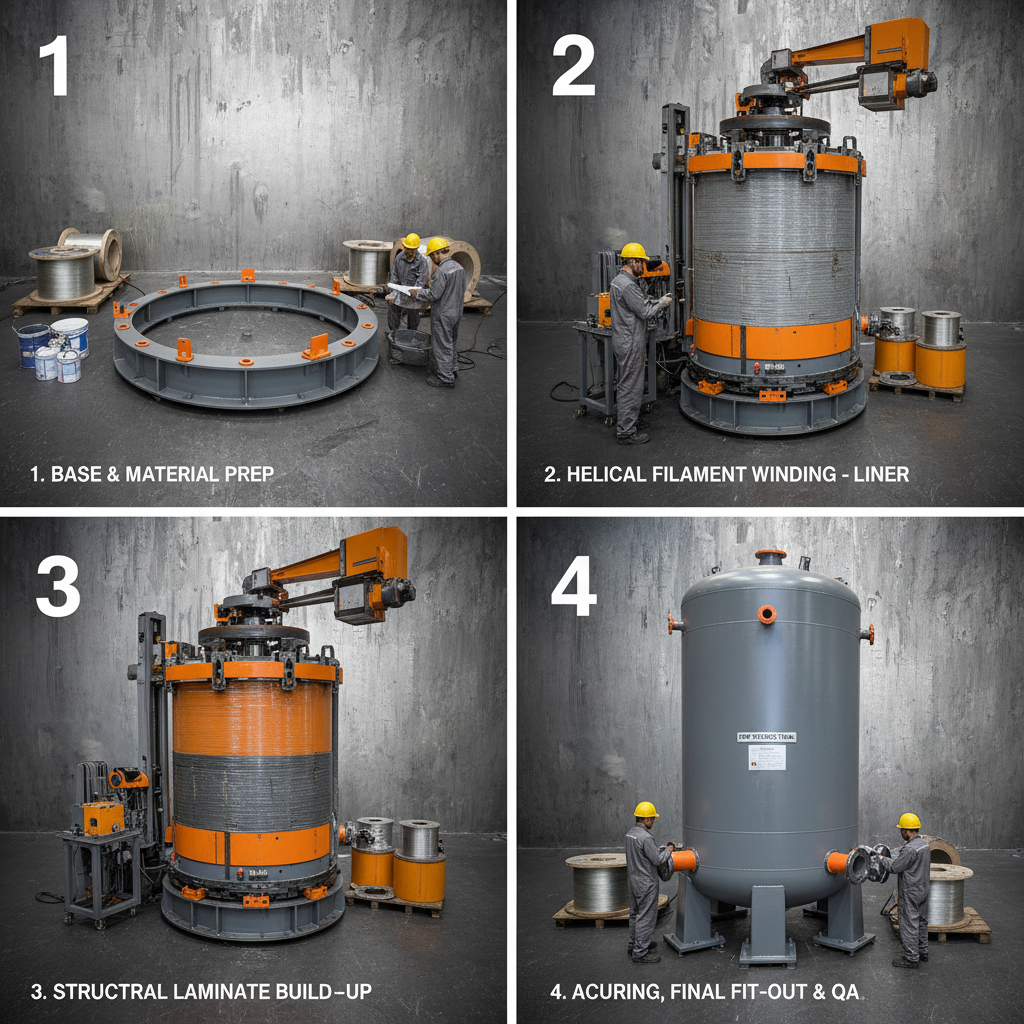
Fiber Reinforced Polymer (FRP) tanks and vessels are increasingly becoming the preferred choice for storage and processing across a multitude of industries. Their lightweight nature, corrosion resistance, and design flexibility offer significant advantages over traditional materials like steel. This article will delve into the intricacies of FRP tanks and vessels, exploring their applications, manufacturing processes, benefits, and considerations for selecting the right solution for your specific needs. We’ll also highlight why FRP tanks are a cost-effective and reliable long-term investment. FRP tanks and vessels are constructed from a combination of reinforcing fibers (such as fiberglass, carbon fiber, or aramid fiber) embedded in a polymer matrix (typically polyester, vinyl ester, or epoxy resin). This combination creates a composite material that boasts high strength-to-weight ratio, exceptional corrosion resistance, and the ability to be molded into complex shapes. They’re designed to safely contain a wide variety of liquids and gases, ranging from corrosive chemicals and water to food products and pharmaceuticals.
Optimizing Water Filtration with Durable FRP Sand Filter Vessels
Mar 24,2026
Optimizing Water Filtration with Durable FRP Sand Filter Vessels
In water treatment and filtration systems, the choice of filter vessel material is paramount. Fiber Reinforced Plastic (FRP), also known as Glass Reinforced Polymer (GRP), sand filter vessels are increasingly popular due to their superior corrosion resistance, lightweight nature, and cost-effectiveness. This article delves into the benefits, applications, design considerations, and factors to consider when selecting an FRP sand filter vessel. Whether you are involved in municipal water treatment, industrial wastewater management, or recreational water filtration, understanding FRP technology is essential for optimizing your filtration process. An FRP sand filter vessel is a containment unit designed to house filtration media, typically sand, gravel, and anthracite. These vessels are integral components in sand filtration systems used for removing suspended solids, turbidity, and other particulate matter from water. FRP construction involves layering glass fibers within a resin matrix (typically polyester or vinyl ester) to create a strong, durable, and chemically resistant shell. The strength and rigidity of the vessel are crucial for withstanding the pressure from the filtration media and the water flow.
Comprehensive Guide to FRP Round Tanks Applications and Benefits
Mar 21,2026
Comprehensive Guide to FRP Round Tanks Applications and Benefits
Fiber Reinforced Polymer (FRP) round tanks are increasingly becoming the preferred choice for storage solutions across a variety of industries. Their lightweight nature, corrosion resistance, and design flexibility offer significant advantages over traditional materials like steel. This article provides an in-depth look at FRP round tanks, exploring their applications, benefits, manufacturing processes, and key considerations when choosing the right tank for your needs. Whether you're in chemical processing, water treatment, or agriculture, understanding FRP round tanks is crucial for optimizing your storage infrastructure. FRP round tanks are constructed from a combination of reinforcing fibers (typically fiberglass, carbon fiber, or a blend) embedded in a polymer matrix (often polyester, vinyl ester, or epoxy resin). The round shape inherently provides excellent structural strength, distributing pressure evenly across the tank’s surface.
Comprehensive Guide to FRP Pressure Tanks Benefits and Applications
Mar 19,2026
Comprehensive Guide to FRP Pressure Tanks Benefits and Applications
Fiber Reinforced Polymer (FRP) pressure tanks are becoming increasingly popular in a wide range of industrial applications, offering a compelling alternative to traditional steel tanks. Known for their lightweight nature, corrosion resistance, and high strength-to-weight ratio, FRP tanks provide efficient and durable solutions for storing liquids and gases under pressure. This article will delve into the benefits, applications, construction, and key considerations when selecting an FRP pressure tank, helping you make an informed decision for your specific needs. Understanding the advantages of FRP technology can lead to significant cost savings and improved operational efficiency. Compared to steel, FRP pressure tanks offer several key advantages. The most significant is their superior corrosion resistance. Unlike steel, which is susceptible to rust and corrosion when exposed to various chemicals, FRP materials are inherently resistant to a wide range of corrosive substances. This translates to a longer lifespan, reduced maintenance costs, and increased safety. Furthermore, FRP is significantly lighter than steel, making installation easier and reducing transportation costs.
For More Details Pls Contact Us
Thank you for your interest in our gloves! We offer high-quality, durable, and comfortable gloves with fast delivery and competitive prices. For any questions or customization, feel free to contact us. We look forward to working with you!

If you are interested in our products, you can choose to leave your information here, and we will be in touch with you shortly.